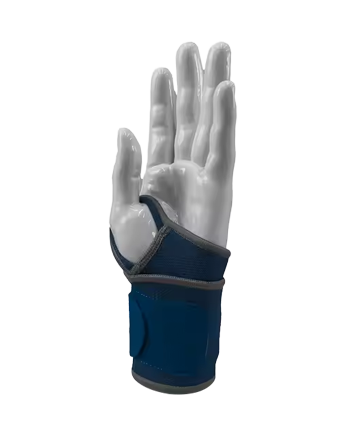
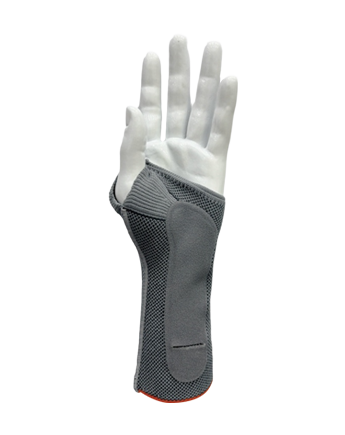
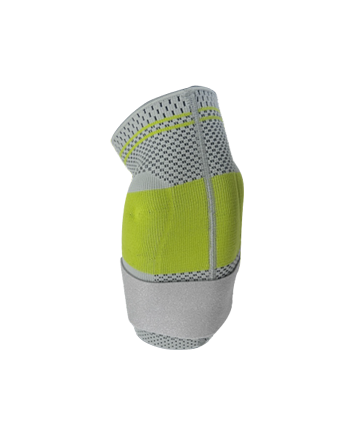
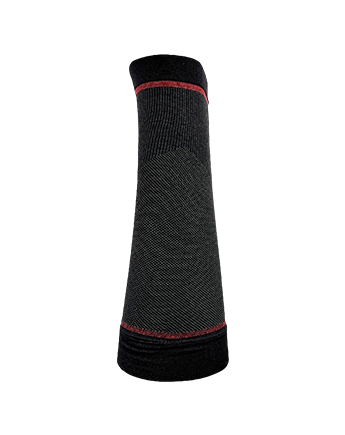
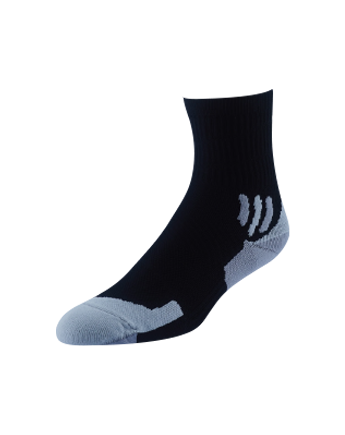
Sporty compression socks aren’t flashy, but they can change how your feet and lower legs feel during training. By applying graduated pressure—snugger at the ankle and easing up the calf—compression socks aim to improve circulation support, reduce vibration, and create a more stable, “held together” sensation in the foot–ankle system. They won’t replace smart training or well-fitting shoes, but for many runners, lifters, and court-sport athletes they make movement feel more controlled and recovery feel easier.
Compression socks provide consistent external pressure to the lower limb. Most performance designs use a graduated profile: stronger at the ankle, decreasing up the leg. That structure influences performance and stability through several pathways:
Compression is a tuned “hug,” not a rigid brace—it calms mechanics rather than locking joints.
1) Better sensory feedback (proprioception)
Gentle pressure enhances sensation around the foot and ankle, which helps with foot placement on uneven ground, ankle control during quick changes, and maintaining form when fatigue dulls coordination.
2) Less in-shoe movement and bunching
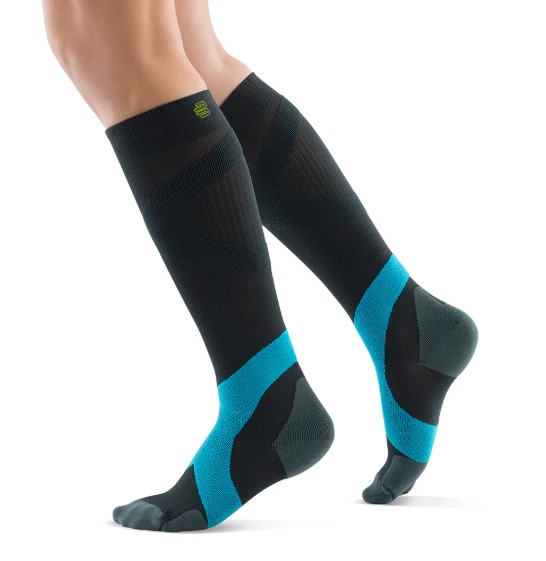
Structured zones (arch bands, reinforced heels, tighter midfoot knits) reduce sock slippage and wrinkling:
fewer folds = fewer pressure points
less sliding = fewer hotspots
consistent fit = more predictable push-off
3) Arch and ankle “containment”
Extra tension around the arch and ankle doesn’t change bone alignment but can create a sensation of containment that helps with mild arch fatigue, loose-feeling feet in softer shoes, and instability during cutting or landing.
Potential upsides during exercise
What compression socks won’t do
Often the benefit is indirect: fewer “little problems” accumulate, so you can hold effort and technique longer.
Compression level & gradient: higher compression isn’t always better—too much can feel restrictive or numb. Light-to-moderate compression often suits training; stronger levels may be used for long events or certain recovery needs.
Knit structure & fit zones: look for arch banding, a defined heel pocket, reinforced toes/heels, and ventilation panels.
Height: ankle/crew for foot stability with less heat; knee-high for maximal calf compression (common in endurance sports).
Get sizing right: compression depends on correct sizing. Too small → tingling/numbness; too large → minimal benefit and slipping.
Use strategically: great for long runs, travel days, long standing, and high-impact sessions.
Watch for red flags: seek medical guidance for circulation disorders, unexplained swelling, or pain. If a sock causes numbness, color change, or sharp discomfort, it’s too tight or poorly designed.
| Goal / Issue | Recommended Features | Typical Compression Range | Main Benefit |
|---|---|---|---|
| Everyday training / stability | Arch banding, defined heel pocket, crew height | Light–Moderate (10–20 mmHg) | Better fit, less slippage, improved proprioception |
| Long efforts / endurance | Knee-high, stronger gradient, breathable knit | Moderate–Firm (15–25 mmHg) | Reduced calf fatigue, fluid management |
| Recovery / travel | Graduated compression, full calf coverage | Moderate (15–20 mmHg) | Limit swelling, feel fresher after long stands/flights |
| Court sports / agility | Snug fit, reinforced zones, ankle/crew height | Light–Moderate (10–20 mmHg) | Less bunching, improved quick-change stability |
| Sensitive or first-time users | Lower mmHg, comfortable top band, correct sizing | Light (8–15 mmHg) | Sensory feedback with low risk of numbness |
Sporty compression socks can make training feel steadier by sharpening ankle awareness, reducing in-shoe movement, and cutting friction-related hotspots—especially later in sessions when coordination drops. If you want dependable, locked-in fit for training and recovery, Steriger designs compression socks with those goals in mind. Learn more at Steriger.
Steriger is a national high-tech enterprise specializing in the R&D and production of high-quality sports supports, medical braces, and sports compression socks.
Copyright © Zhejiang Steriger Sports Medicine Technology Co., Ltd.
The information provided on this website is intended for use only in countries and jurisdictions outside of the People's Republic of China.

Approval No: 浙金药监械生产备20200039号

 English
 Español
 Deutsch
 عربى
عربى Français