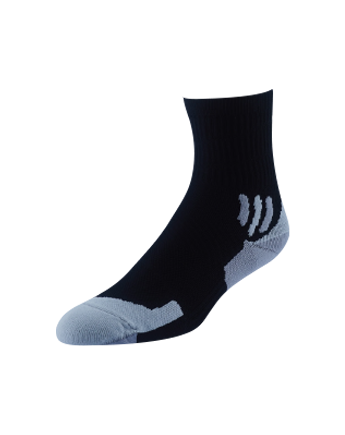
Running socks sit under your shoes, out of sight — but they’re in constant contact with your skin and play a big role in comfort and performance. From managing moisture and friction to stabilizing your foot inside the shoe, the right pair can reduce hotspots, prevent blisters, and help you stay efficient when fatigue sets in. Below is a clearer, lightly reformatted version of your original content with a natural opening and closing, richer layout, and a useful comparison table.
Feet perspire heavily inside a shoe, which is a warm, low-airflow environment. If moisture stays against skin it softens the outer layers, making them more prone to deformation and blisters. Purpose-built running socks move moisture away from skin and spread it through the fabric so it can evaporate more efficiently.
Dryer feet are more comfortable and stay stable in the shoe, reducing the small gait changes people make to protect hotspots.
Blisters result from repeated shear forces, not just distance. Socks help by:
Double-layer socks or low-friction yarns can confine rubbing between fabric layers rather than against skin. Even a well-fitting single-layer sock that stays wrinkle-free can cut blister risk dramatically.
A proper running sock is shaped and tensioned for the foot, not just a tube. Helpful features:
These structural details reduce internal movement and micro-adjustments, which over miles can reduce fatigue and distraction.
Cushioning influences impact feel and protection, but also affects shoe fit and heat retention.
Match sock thickness to your shoe volume — thicker socks in tight shoes can cause toe pressure and nail issues.
Two socks that look similar can feel different on a run because of:
These features are practical tools for managing friction and temperature.
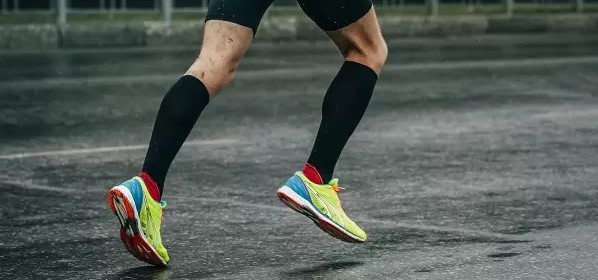
Think in terms of conditions, not a single “best” sock:
| Goal / Condition | Recommended Fabric / Features | Cushioning | Key Benefit |
|---|---|---|---|
| High-sweat / long runs | Synthetic wicking blends, ventilation panels | Light → Medium | Fast drying, reduced hotspots |
| Racing / speedwork | Thin, low-bulk synthetics, secure heel | Light | Better ground feel, lighter shoe fit |
| Trail running | Durable blends, reinforced toe/heel, taller cuff | Medium → Heavy | Protection from terrain and debris |
| Hot weather | Thin, high-wick mesh panels | Light | Max ventilation, low heat buildup |
| Cold / cool weather | Merino or warm blends with wicking | Medium | Insulation + moisture control |
| Sensitive feet / blister prevention | Double-layer or smooth low-friction yarns | Light → Medium | Friction managed between layers |
Shoes do the heavy work for cushioning and traction, but socks control what happens at the skin: moisture, friction, and micro-movement. A thoughtfully designed running sock keeps sweat off the skin, limits rubbing that creates hotspots, and helps your foot stay secure mile after mile. The result is steadier form, fewer distractions, and more consistent runs. Steriger builds running socks for exactly that purpose—fewer interruptions, smoother steps, and better focus. Learn more at Steriger.
Steriger is a national high-tech enterprise specializing in the R&D and production of high-quality sports supports, medical braces, and sports compression socks.
Copyright © Zhejiang Steriger Sports Medicine Technology Co., Ltd.
The information provided on this website is intended for use only in countries and jurisdictions outside of the People's Republic of China.

Approval No: 浙金药监械生产备20200039号

 English
 Español
 Deutsch
 عربى
عربى Français