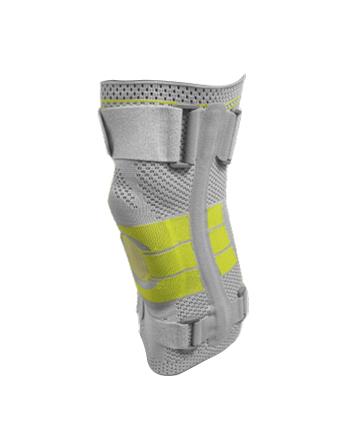
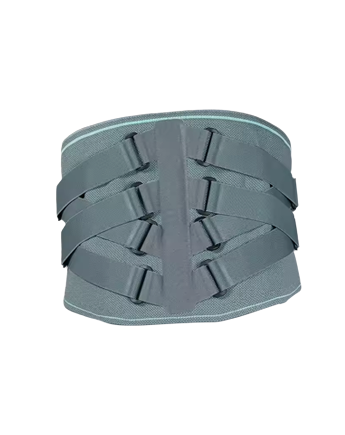
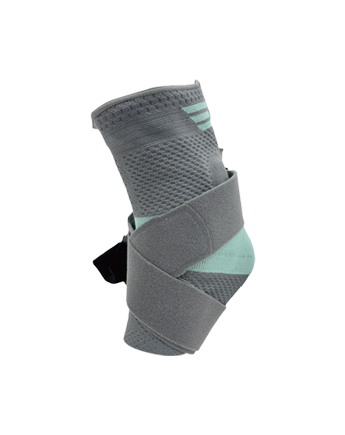
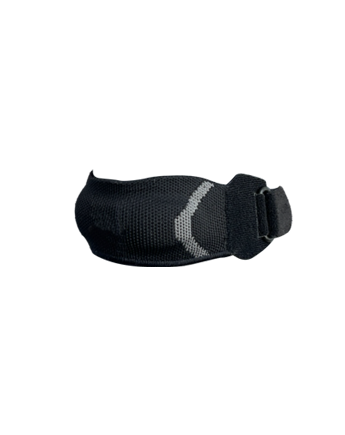
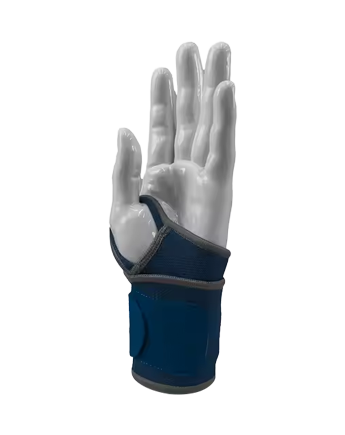
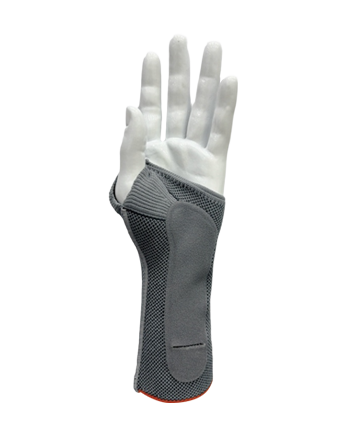
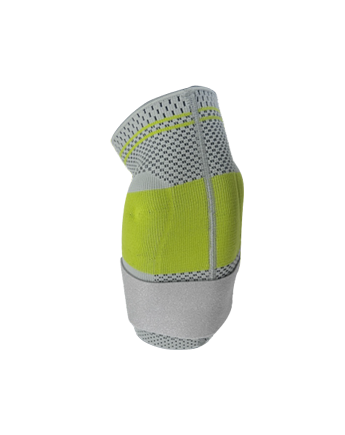
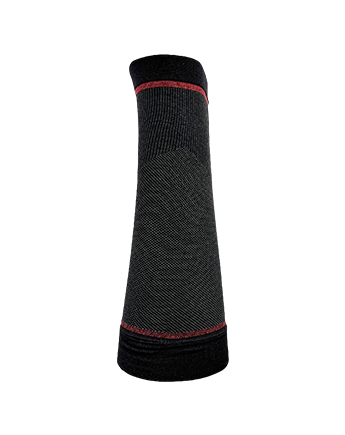
Fabric is not a secondary detail on a waist support belt. It decides how the product bends with the torso, how it feels against clothing and skin, how evenly it sits and whether it remains wearable for ordinary periods of use. Flexible textiles behave differently from rigid boards or hard stays: they conform, stretch and recover instead of forcing a fixed shell around the waist.
Waist support belts need materials that follow natural body contours while still offering a sense of coverage. Elastic fabric is widely used because it can supply both give and hold when yarn choice, knit or weave structure and finishing are balanced. That balance is the starting point for products such as Waist Support in Elastic Fabric, where textile behaviour and support function are designed together.
Elastic fabric lengthens under load and returns toward its prior length when the load eases. Sitting, standing, walking and simple bending all change the circumference and shape of the waist region. A belt that cannot follow those changes tends to ride, gap or dig at the edges. Suitable elasticity lets the support move with the body rather than against it.
Stretch must still be paired with enough recovery and structure that the belt does not sag into a loose band. Elastic fabric construction in Waist Support in Elastic Fabric is intended to deliver that flexible wearing character—coverage that adapts without feeling like a hard clamp. Movement comfort is a material outcome, not only a sizing outcome.
Items worn around the waist sit close to the body and often under other garments. Airflow and moisture behaviour of the textile influence whether the area stays tolerable during longer wear. Open or engineered fabric structures can help manage the microclimate next to the body compared with fully impermeable sheets, depending on the specific cloth.
Surface softness reduces friction when the wearer turns or walks. Extended contact makes these traits more noticeable than in a product worn only for minutes. Fabric selection for waist support should therefore weigh supportive coverage and daily comfort together. A belt that supports in theory but irritates in practice is rarely kept in rotation.
Stretch recovery describes how nearly a textile returns to its original dimensions after extension. Strong recovery helps a waist support keep a consistent fit from one wear to the next instead of permanently elongating into a looser shape. Elasticity, waist coverage and how the product sits on the body are linked through that recovery behaviour.
Materials that stretch easily but recover poorly lose positioning; materials that barely stretch may feel secure initially but restrict ordinary motion. Choosing elastic cloths that balance stretch, recovery and comfortable fit is central to durable product behaviour. Elastic Waist Support designs rely on this balance as much as on strap geometry or closure type.
Repeated stretch cycles, friction from clothing and washing all stress elastic textiles. Fabric construction, yarn quality and seam design influence how long the belt keeps its shape and surface appearance. Stitching that breaks or elastic that fatigues early shortens useful life regardless of how the product looked when new.
Cleaning should follow the care instructions supplied with the item—water temperature, method and drying approach affect elastic components. Proper storage away from sharp objects and prolonged harsh heat helps preserve fabric condition. Material selection and manufacturing consistency are what allow a Waist Support Manufacturer to offer elastic belts that behave predictably across production batches.
Flexibility, breathability potential, stretch recovery and skin-contact comfort jointly explain why elastic textiles are common in this category. Waist Support in Elastic Fabric emphasises adaptable material for natural waist motion, a fit aimed at comfortable daily wear, fabric choices that consider airflow and moisture comfort, recovery that helps maintain intended fit when construction is sound, and practicality for users who want flexible support in ordinary routines.
The product sits at the intersection of textile behaviour and wearable support rather than at either end of the spectrum of soft fashion elastic or rigid bracing. Clear sizing and honest description of stretch level help buyers match material character to expectation. Waist Support Factory discipline in fabric incoming checks and finished measurements underpins that match when orders repeat.
| Material aspect | Role in waist support | Practical implication |
|---|---|---|
| Elastic stretch | Follows bending, sitting and walking | Less riding and edge pressure during motion |
| Recovery after stretch | Helps the belt return toward original size | More consistent fit across repeated wears |
| Surface softness | Contact comfort under clothing | Lower friction and irritation risk |
| Breathable structure potential | Air and moisture behaviour at the waist | More tolerable longer wear when fabric allows |
| Construction and seams | Holds shape under cycle load | Better durability when quality is controlled |
| Care response | Reaction to washing and drying | Follow care labels to protect elasticity |
Not every elastic fabric suits every waist support. Light, highly extensible cloths may serve short indoor wear; denser or multi-layer elastic structures may be chosen when more containment is expected. Sampling hand feel, stretch and recovery on the body is more informative than relying on fibre names alone. Consistency between sample and bulk is part of what buyers should confirm with suppliers.
Elastic fabric is popular for waist support belts because it can adapt to body movement, support a comfortable fit, allow consideration of breathability and maintain recovery when properly constructed and cared for. Zhejiang Steriger Sports Medicine Technology Co., Ltd. produces waist support products using elastic fabric constructions for everyday support needs. Review of stretch level, comfort requirements and care preferences against fabric specifications supports selection of elastic waist supports suited to regular wear.
Steriger is a national high-tech enterprise specializing in the R&D and production of high-quality sports supports, medical braces, and sports compression socks.
Copyright © Zhejiang Steriger Sports Medicine Technology Co., Ltd.
The information provided on this website is intended for use only in countries and jurisdictions outside of the People's Republic of China.

Approval No: 浙金药监械生产备20200039号

 English
 Español
 Deutsch
 عربى
 Français