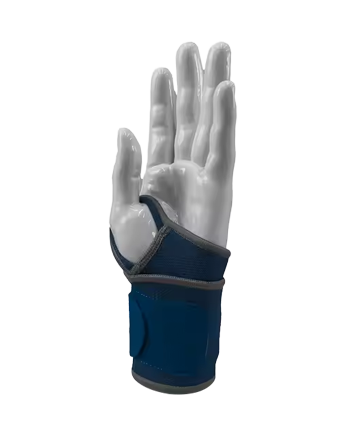
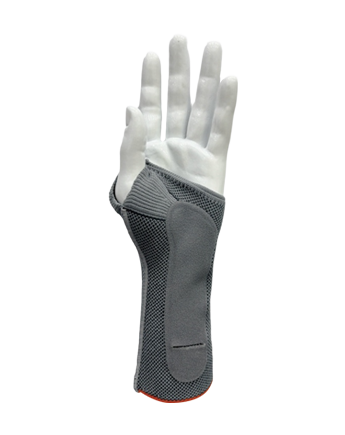
You have just washed your brace, and now it is sitting in a damp heap on the side of the sink. Nobody tells you what to do next. A Hand Palm Brace loses its usefulness gradually - not all at once - and the drying stage after washing is where the process of structural breakdown often begins. Heat, gravity, and careless handling between the wash and the dry can stretch elastic, deform panels, and loosen fastenings in ways that do not announce themselves until the brace no longer fits the way it once did. Getting this part right is straightforward once you understand why certain materials respond badly to certain conditions.
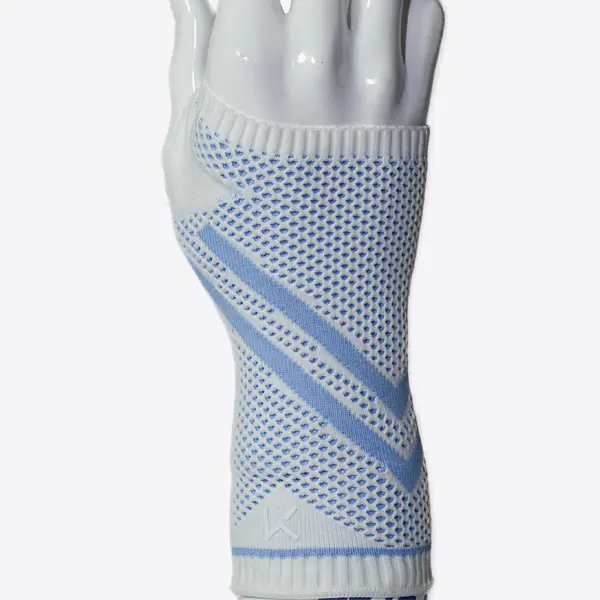
Gentle hand washing in cool water barely stresses the fibers and fastenings of a palm support. The materials are designed to get wet. What they are not designed for is sustained heat, prolonged mechanical agitation, or being left to dry under tension in the wrong shape.
Many people focus on the washing - whether to use soap, how long to soak - and then treat the drying as an afterthought. That order of concern should be reversed. A brief cool rinse causes negligible damage. A session in a tumble dryer, or being left to hang from a strap on a radiator, can permanently compromise a brace in a single cycle.
Several distinct structures within a Palm Brace respond poorly to heat or tension during drying:
The instinct is to wring the brace the way you would a cloth. This is worth resisting. Twisting forces elastic fibers past their designed range of motion, and doing it repeatedly in a wet state - when the material is already less resilient - accelerates wear.
Instead: lay the brace flat on a clean dry towel, fold the towel over it, and press firmly. The towel absorbs a significant amount of water through capillary action without any twisting force on the brace. A second towel press after the initial one can remove even more.
If the brace has a rigid panel or metal stay, check whether it is removable. Removing it before washing is preferable where the design allows, but if it was washed in situ, remove it before drying. A rigid insert drying inside the brace while the fabric shrinks slightly around it can cause permanent creasing.
Open all hook-and-loop fastenings before laying the brace down to dry. Fastenings closed during drying trap the hook and loop surfaces against each other under slight tension as the material shifts and settles. Over time this mats the surface, which is the same process that happens in the dryer - just slower.
Open fastenings allow both surfaces to dry freely. The hooks stay aligned rather than pressing into the loop material. It is a minor step that extends fastener life noticeably.
Hanging a brace to dry - especially from a strap or a corner - lets gravity work against the structure. The hanging point stretches while the rest contracts. The brace dries in a shape determined by physics rather than by its intended geometry.
Flat drying on a surface eliminates gravity as a distorting force. The brace retains the shape you give it. And the shape you give it while damp is the shape it will hold once dry.
Steps for flat drying:
Fabric holds the position it is in when it dries. A damp brace is more malleable than a dry one - this is the window to correct any distortions introduced during washing or towel pressing.
Run your hand through the palm channel. Smooth the panel area from the heel of the palm toward the fingers. Pull any straps or wing sections back into their natural resting position. This takes thirty seconds, and it is worth it.
A Palm Brace drying at room temperature in moving air will be dry within a few hours, depending on material weight. Accelerating this with heat is unnecessary and counterproductive.
Conditions to avoid:
Natural air circulation is genuinely enough. Position the brace where air can move around it - not in a confined corner or inside a cupboard - and let the process take as long as it needs.
Different drying approaches produce measurably different outcomes over the life of the product. Here is how the options compare across the dimensions that matter for a palm support:
| Drying Method | Effect on Elastic | Effect on Shape | Effect on Fastenings | Drying Speed |
|---|---|---|---|---|
| Flat air dry, room temperature | Preserved | Maintained | Preserved if open | Slow but reliable |
| Hanging from strap | Stretches hang point | Distorts geometry | Preserved if open | Medium |
| Laid on radiator | Degrades with heat | Possible warping | Possible matting | Fast but damaging |
| Tumble dryer, low heat | Gradual degradation | High risk of distortion | Matting and hook wear | Fast but damaging |
| Towel press then flat dry | Preserved | Maintained | Preserved if open | Faster than flat dry alone |
| Forced hot air (hair dryer) | Spot degradation | Uneven shrinkage | Variable | Fast in spots |
The flat air dry with a prior towel press is the approach that consistently preserves structure across all dimensions.
Sometimes a brace comes out of the drying process looking subtly wrong. The palm panel sits at an angle. A strap has a twist in it. The wrist section is bunched. These issues are fixable if caught while the brace is still slightly warm and pliable. A few minutes of gentle manipulation can correct minor distortion.
Persistent shape problems - the ones that return after every wash and dry - indicate either a material issue or a drying practice that keeps introducing the same distortion. Reviewing the process usually points to the cause.
Material degradation has visible and tactile signs. They accumulate over time and point toward the moment when replacement becomes more practical than continued maintenance:
No care routine reverses structural fatigue. It delays it. When these signs appear consistently, the Palm Brace has reached the end of its effective service life.
A dried brace stored badly can undo the care taken during washing and drying. Two conditions in storage cause slow ongoing damage even without any water involved:
A breathable container or a dedicated drawer section keeps the brace clean, maintains its shape, and prevents fastener damage between uses.
Wash frequency depends on how the brace is used. For active daily wear, washing every few days maintains hygiene without excessive wear cycling. For occasional use, washing after each session is practical.
The materials in a well-constructed palm support handle repeated washing at cool temperatures. What reduces lifespan is not washing frequency but heat exposure and mechanical stress during drying. A brace washed frequently but dried correctly will outlast one washed rarely but tumble-dried.
Build a quick inspection into the post-wash drying process:
Catching a developing issue early - a seam starting to open, a fastener losing grip - means addressing it before the brace becomes unreliable during use.
A Hand Palm Brace that maintains its shape, compression, and structural alignment after regular washing comes down to material quality and construction standards at the point of manufacture. Products using medical-grade elastic, reinforced fastenings, and dimensionally stable panel materials will respond better to even imperfect washing and drying routines than products using lower-grade alternatives. Zhejiang Steriger Sports Medicine Technology Co., Ltd. manufactures Hand Palm Brace products and Palm Support Bandage formats with materials selected for durability through repeated washing and wear cycles. If you are sourcing palm support products for distribution, institutional supply, or evaluation against quality and durability criteria, reaching out with your volume and application requirements gives you a concrete basis for comparison. A brace that holds its shape after twenty wash cycles is a fundamentally different product from one that does not - and that difference starts at the material and construction stage before the product ever reaches the user.
Steriger is a national high-tech enterprise specializing in the R&D and production of high-quality sports supports, medical braces, and sports compression socks.
Copyright © Zhejiang Steriger Sports Medicine Technology Co., Ltd.
The information provided on this website is intended for use only in countries and jurisdictions outside of the People's Republic of China.

Approval No: 浙金药监械生产备20200039号

 English
 Español
 Deutsch
 عربى
عربى Français