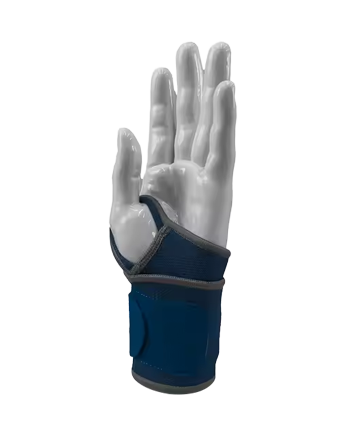
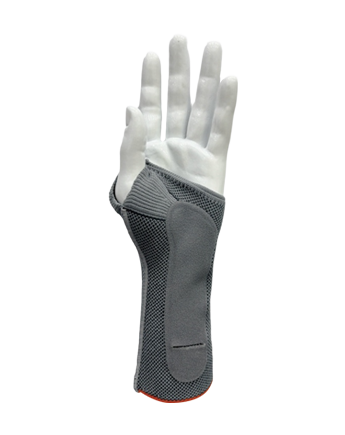
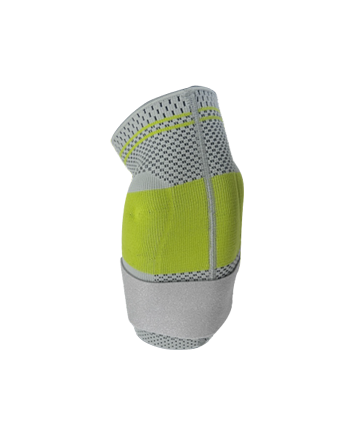
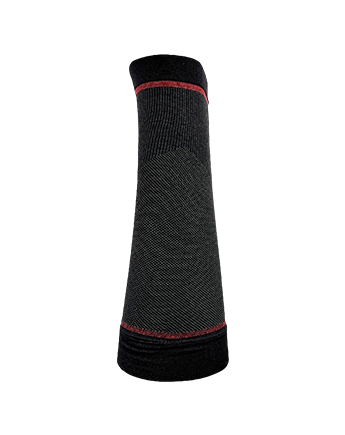
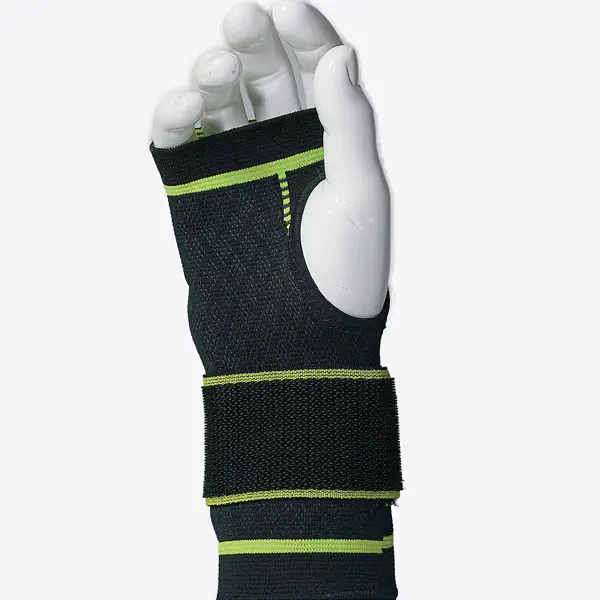
Wrist discomfort during yoga and floor-based training happens more often than many people expect, and it tends to appear in the poses and movements that demand a lot. Downward Dog, Plank, Push-Up, and similar positions place sustained load directly through the wrist joint, and for anyone with limited wrist mobility, a previous injury, or simply high training frequency, that load accumulates. A Hand Palm Brace offers a practical way to keep training while managing that stress — but wearing one effectively during movement-based exercise takes more thought than simply strapping it on and hoping for the best. How the brace fits, where compression is applied, and which movements it supports versus which ones require adjustment all affect whether it helps or gets in the way.
The wrist joint was not designed with weight-bearing as its primary function. Walking and running load the hips, knees, and ankles — the wrist gets far less of that conditioning in everyday life. When yoga and bodyweight training suddenly ask it to bear a significant portion of body weight, repeatedly and across long holds, the strain can catch people off guard.
A few specific factors make this worse:
A Palm Support Bandage or Palm Brace addresses these dynamics by adding external stabilization and helping redistribute pressure away from vulnerable structures.
Understanding the function of the support makes it easier to use correctly. A Palm Brace is not simply a wrap that holds the wrist rigid. When appropriately designed for active use, it does several things simultaneously:
The key distinction from a rigid splint is that a brace for active exercise allows controlled movement while reducing the range that creates injury risk. That balance — support without immobilization — is what makes it functional for yoga and floor training rather than just for rest and recovery.
Fit matters more than many people realize. A brace that is too loose shifts during movement and provides neither reliable compression nor consistent proprioceptive feedback. One that is too tight restricts circulation and creates its own discomfort.
Steps for getting the fit right:
Not every yoga pose or floor exercise places the same demand on the wrist. The movements where a Hand Palm Brace adds the clearest value are those involving sustained weight-bearing through an extended wrist.
| Movement / Pose | Wrist Load Level | How the Brace Helps |
|---|---|---|
| Plank (high and low) | High, sustained | Reduces extension strain, distributes palm pressure |
| Downward Dog | Moderate to high | Supports heel-of-palm compression, aids alignment |
| Chaturanga | High, dynamic | Stabilizes during the lowering phase when load peaks |
| Push-Up variations | High, repetitive | Reduces cumulative strain across multiple reps |
| Upward Dog | Moderate | Supports wrist in extension without full weight bearing |
| Table-Top position | Moderate | Useful for longer holds or high-volume sequences |
| Crow Pose / Arm Balances | Very high | Compression support during full bodyweight transfer |
| Child's Pose | Low | Brace generally not needed, may be worn for continuity |
Poses that involve minimal or no wrist load — seated postures, lying positions, standing balance poses — do not require the brace to function differently. Some practitioners simply leave it on throughout a session for convenience, which is fine as long as the fit remains comfortable.
A Palm Brace changes the sensory and mechanical experience of floor poses. Some technique adjustments help you work with it rather than against it.
The compression of the brace around the palm can create a tendency to let the fingers passively rest. Consciously spreading the fingers wide during weight-bearing poses is more important with a brace than without one, because it activates the intrinsic hand muscles and distributes pressure across a larger surface area. Think of the hand as a tripod: the thumb base, the index finger base, and the pinky-side knuckles as three contact points.
The heel of the palm concentrates pressure in many floor positions. Actively pressing through the fingertips and the outer edge of the hand reduces the load on the area that typically causes notable discomfort. This technique applies whether or not a Palm Support Bandage is worn, but it becomes more deliberate when the brace draws your attention to the palm region.
A common mistake is treating the brace as a signal to keep the wrist completely locked. Controlled rotation in the wrist — for example, angling the hands slightly outward in Plank — can reduce the internal rotation strain that contributes to discomfort. The brace supports the joint without requiring you to hold it rigidly in one position.
The physical contact of the brace against the palm creates a feedback signal that many people find helpful for maintaining wrist alignment. Rather than tuning this sensation out, use it actively — it tells you when your wrist is drifting into a more stressed position and gives you the moment to correct before discomfort builds.
Some movements need specific consideration rather than simple technique cues.
Chaturanga places a high and dynamic load on the wrist during the descent. The brace supports the joint, but the movement still requires controlled shoulder and elbow engagement to prevent the wrist from absorbing too much of the load unassisted. If the wrist feels unstable even with the brace, reducing the range of descent or modifying to knees-down takes pressure off the joint without abandoning the movement pattern.
Crow Pose and similar arm balances transfer full body weight through the wrists. A Hand Palm Brace helps, but these poses also demand a level of wrist mobility and strength that compression alone cannot substitute. If wrist strength is still building, progressions — using blocks, reducing hold duration, or building with wall-supported variations — are more constructive than relying on the brace as the primary safety mechanism.
Push-Up sets and Plank intervals in conditioning or HIIT formats repeat the same wrist stress pattern many times. The brace reduces each individual instance of strain, but total volume still accumulates. Paying attention to session structure — working time, rest time, overall load — matters as much as the support the brace provides.
A Palm Brace supports training through manageable discomfort and during recovery from minor injuries. It is not a substitute for rest when genuine tissue damage is present.
Situations where wearing a brace during training makes sense:
A Palm Brace is a tool for managing load, not for pushing through pain that the body is signaling should not be ignored.
The compression and structural support a brace provides depend on the material maintaining its properties over time. A few habits extend its useful life.
When the brace no longer provides the same level of compression it did when new, or when the material has lost structural integrity, replacing it restores the support function rather than continuing with a diminished version.
Managing wrist and palm stress during yoga and floor training is a process that combines technique awareness, load management, and appropriate support — and a well-fitted Hand Palm Brace contributes meaningfully to all three when used correctly. The goal is not to eliminate sensation from the joint but to keep training accessible and sustainable while the wrist builds the strength and mobility the movements demand. For practitioners dealing with recurring discomfort, the combination of adjusted technique, controlled session volume, and Palm Brace support tends to produce better long-term outcomes than either training through pain or stopping entirely. Zhejiang Steriger Sports Medicine Technology Co., Ltd. manufactures Palm Braces and Palm Support Bandages designed for active use in sports and exercise settings, with construction suited to the compression, flexibility, and breathability demands that yoga and floor training require. If you are sourcing wrist and palm support products and want to discuss specifications, customization, or supply options, reaching out with your requirements is a practical starting point.
Steriger is a national high-tech enterprise specializing in the R&D and production of high-quality sports supports, medical braces, and sports compression socks.
Copyright © Zhejiang Steriger Sports Medicine Technology Co., Ltd.
The information provided on this website is intended for use only in countries and jurisdictions outside of the People's Republic of China.

Approval No: 浙金药监械生产备20200039号

 English
 Español
 Deutsch
 عربى
عربى Français