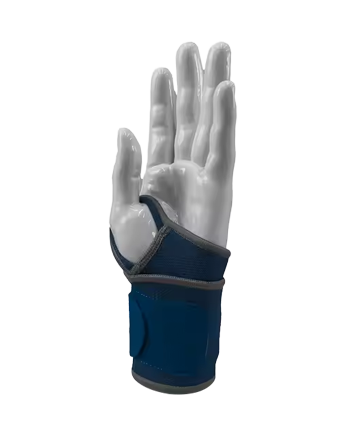
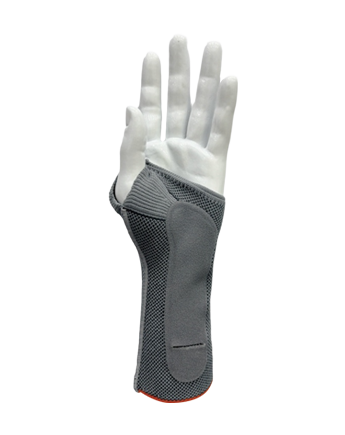
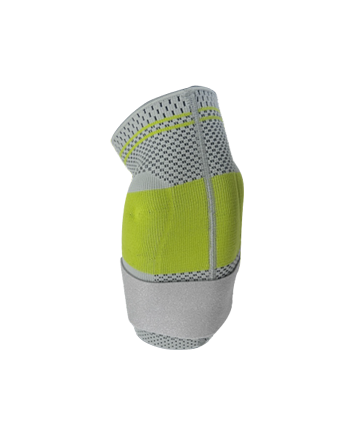
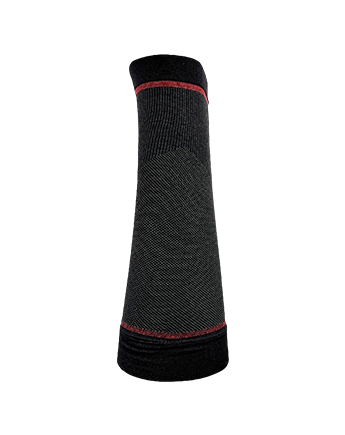
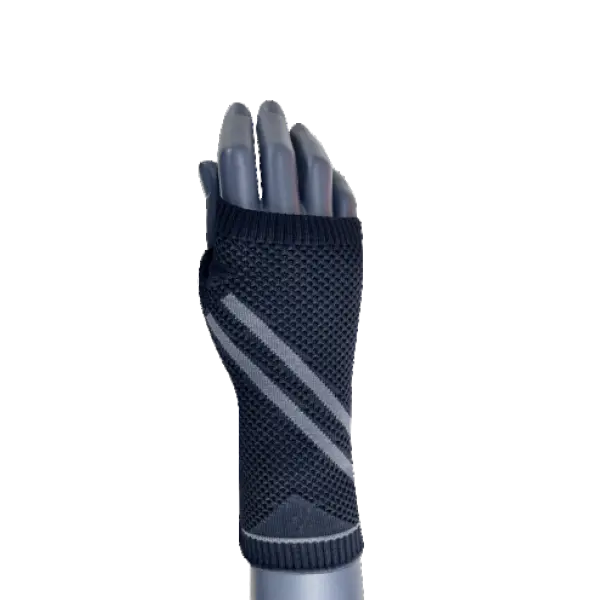
Hands ache. Not dramatically - just that dull, grinding fatigue that settles in after an afternoon of weeding, or the stiffness that greets you the morning after a tiling job. Some people accept this as the price of getting things done. Others start reaching for support before the pain has a chance to take hold. A Hand Palm Brace is designed precisely for that second group - and for anyone who has already crossed into the territory of genuine discomfort but still needs to keep working. It sits across the palm and metacarpal zone, delivering compression and stability where the hand takes the heaviest punishment in grip-heavy, repetitive tasks.
Gardening and DIY work share a structural problem: they demand a lot from a part of the body that was not designed for sustained, forceful repetition. Gripping a trowel, pruning shears, a hammer, or a paintbrush all load the same structures - the palmar ligaments, the metacarpal joints, and the tendons running through the wrist into the fingers.
When that load repeats over an hour, two hours, an afternoon, the tissue starts to accumulate stress. It does not fail suddenly. It tires. Swells a little. Becomes hypersensitive to pressure. And then the next session starts from a slightly worse baseline.
The palm does not have the natural padding that the heel or the ball of the foot provides. It is all articulation - a structure built for dexterity, not for sustained impact absorption. That mismatch between what gardens and workshops demand and what the hand is built to handle is exactly where support becomes useful.
Left unmanaged, repetitive strain through the palm and metacarpal region tends to follow a predictable trajectory. A Palm Brace can interrupt that trajectory, but it helps to understand what it is interrupting.
Common patterns that emerge from unprotected hand use in physical tasks:
None of these develop overnight. But all of them begin with the kind of accumulated micro-stress that a well-fitted support can significantly reduce.
Compression is not just pressure. When applied correctly across the palm and metacarpal arch, it reduces the amount of movement in the small joints and tendons beneath the skin. That controlled movement means less friction, less tissue irritation, and less cumulative inflammatory response over a session of work.
A Palm Support Bandage wrapped around the hand provides a similar effect to the compression a brace delivers - but a brace holds its position more reliably during active use. When you are gripping a wrench or pulling at a root, a bandage shifts. A structured brace stays where it is meant to be.
The compression also improves proprioception - the brain's sense of where the hand is in space and how much force it is applying. With better feedback from the palm, users tend to grip with less unnecessary force. That efficiency compounds over the course of a task session, reducing total strain without requiring conscious effort.
The metacarpal arch is the curved structure across the palm formed by the knuckle joints. When this arch is allowed to collapse under load - which happens progressively as the hand tires - the mechanics of grip change in ways that distribute force poorly. Tendons bear more stress. Joints work at suboptimal angles.
A Hand Palm Brace with a structured panel across the palm helps maintain the arch under load. This is not about immobilizing the hand; the fingers still move freely, and the wrist retains a broad range of motion. It is about preventing the specific kind of structural collapse that leads to pain and injury over time.
Useful hand bracing is specific. A Palm Brace is not designed to lock the hand in position - it is designed to limit the movements that cause damage while allowing the movements needed for work to continue.
What a well-designed palm support restricts:
What it preserves:
That specificity is what separates a useful support from one that simply limits function without providing any protective benefit.
Gardening looks gentle. From a distance, it barely resembles a physically demanding activity. But the hands tell a different story - especially after a few hours of weeding, where the same pinching and pulling motion repeats hundreds of times; or after a digging session, where sustained grip on a handle combines with rotational force through the forearm and palm.
Repetitive strain injuries and tendonitis are among the more common consequences of sustained gardening work, and both have their roots in exactly the kind of repeated loading that grip-intensive outdoor tasks produce. Wearing a brace during gardening can provide the support needed to help reduce stress on the thumb, hands, or wrists without limiting motion.
Specific gardening activities and their hand risk profile:
A Palm Brace worn during any of these tasks provides a consistent base of support that the hand cannot provide for itself under sustained load.
Workshop and home improvement tasks introduce additional risk factors that gardening does not always include: vibration from power tools, sustained overhead or awkward-angle work, and tasks that require both precision and force.
Tiling, for example, demands grip on a heavy float or tile while pressing down with consistent pressure. Carpentry involves repeated hammer swings and screw-driving. Painting requires sustained grip on a brush or roller handle for extended periods. Each of these loads the hand differently, but all of them can benefit from support that stabilizes the palm and distributes force more evenly.
For conditions like tendinitis or general hand pain, a brace or splint can help support and protect the structures of the hand during repetitive or strenuous tasks. This applies as much to a DIY afternoon as to a formal rehabilitation context.
Selecting a Palm Brace involves matching the product's construction to the demands of the task and the current state of the hand.
| Feature | What It Addresses | Suitable For |
|---|---|---|
| Structured palm panel | Maintains metacarpal arch under load | Grip-intensive tasks: digging, carpentry |
| Adjustable compression straps | Custom fit across varying hand sizes | All-day wear, mixed task types |
| Breathable material | Reduces sweat and skin irritation | Warm weather or extended outdoor use |
| Open finger design | Preserves dexterity for precise tasks | Pruning, planting, detailed work |
| Wrist extension into brace | Adds wrist stability to palm support | Heavy lifting, digging, overhead work |
| Lightweight Palm Support Bandage format | Compression without rigid structure | Recovery sessions or lighter tasks |
The choice between a full Palm Brace and a Palm Support Bandage often comes down to task intensity. A bandage provides useful compression for lighter work or post-activity recovery. A structured brace handles higher-demand tasks where stability matters as much as compression.
This is a question that often comes up in the context of hand support, and the answer is not as obvious as it might seem. Many people assume that braces are for injuries already sustained. They are - but they are also for prevention. Waiting for pain to arrive before using support means accumulating damage in advance.
Indicators that wearing a Palm Brace during tasks is appropriate:
None of these require a clinical injury. They require the judgment that hands under sustained stress benefit from external support.
Wearing a support incorrectly undermines the benefit and can introduce new problems. Some practical points:
A brace worn during gardening or workshop tasks faces conditions that a standard medical support in a clinical context does not. It needs to tolerate sweat, intermittent contact with soil and dust, repeated bending and compression, and regular washing without losing its structural integrity.
Neoprene retains warmth and provides firm compression, which some users find helpful for joint conditions. It is durable but can be warm in hot weather. Breathable knit fabrics with integrated stiffeners offer a cooler alternative for warm-weather or extended use. Adjustable hook-and-loop strapping allows the compression level to be modified mid-session without removing the brace.
Medical-grade materials hold their shape and compressive properties through repeated use and washing. Lower-grade alternatives tend to stretch out and lose their structural function relatively quickly under active conditions.
A Palm Brace is a useful tool. But it works better as part of a broader approach to hand health during physical tasks. A few habits that extend the benefit of wearing support:
Whether you are sourcing support for personal use or evaluating options for a wider supply arrangement, the construction standards of the product determine how well it performs under the real conditions of gardening and DIY work.
Zhejiang Steriger Sports Medicine Technology Co., Ltd. manufactures Hand Palm Brace products and related hand support solutions, including Palm Support Bandage formats and Palm Brace options suitable for active physical use in both professional and domestic contexts. Their product range covers adjustable compression, breathable material construction, and structured palm support designed for sustained wear during grip-intensive tasks. If you are assessing products for distribution, evaluating options for workplace injury prevention, or looking for hand support that holds up across the demands of practical outdoor and workshop use, reaching out with your volume requirements and application context is a straightforward way to move the conversation forward. Hands that are well-supported tend to keep working longer, more comfortably, and with far fewer interruptions for pain that could have been prevented.
Steriger is a national high-tech enterprise specializing in the R&D and production of high-quality sports supports, medical braces, and sports compression socks.
Copyright © Zhejiang Steriger Sports Medicine Technology Co., Ltd.
The information provided on this website is intended for use only in countries and jurisdictions outside of the People's Republic of China.

Approval No: 浙金药监械生产备20200039号

 English
 Español
 Deutsch
 عربى
عربى Français