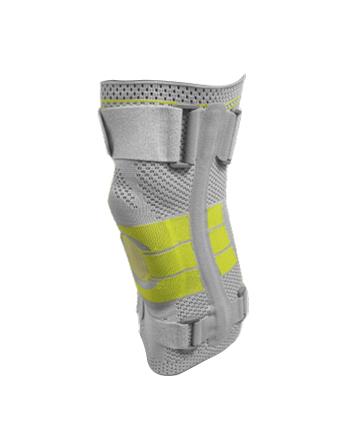
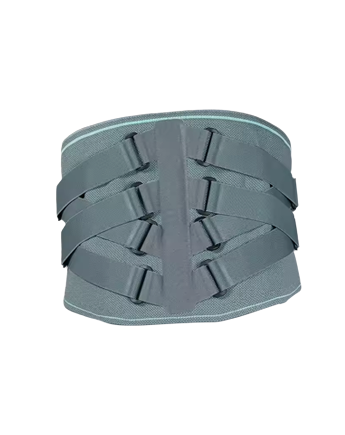
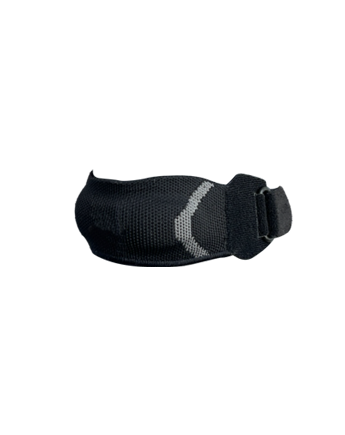
Each step loads the ankle as the foot hits the ground, rolls forward and pushes off again. Walking repeats that cycle at a moderate rate; running raises impact and shortens the time the joint has to stabilise between contacts. Changes in direction, uneven paths and fatigue add further demand on the ligaments and muscles that control inversion and eversion.
Some users wear an ankle support during these activities to add external coverage and a sense of hold around the joint. The aim is assisted confidence and a steadier feel while the foot still flexes enough for a natural stride. Supports do not replace conditioning, suitable footwear or medical advice when pain or injury is present; they are an optional layer for those who prefer extra wrap during movement.
An ankle support encircles the joint so that fabric and any straps sit over the key regions involved in gait. Light, even compression from an elastic body can contribute to a supported wearing experience by limiting some excess motion while remaining tolerable for the duration of the walk or run. Coverage should follow the product's design so that the heel can work and the sleeve does not block the shoe.
Repeated flexion tends to walk a loose sleeve down toward the heel or up toward the calf. A well-fitted support resists that migration. Adjustable straps let the user set tension after the knitted body is in place, which helps match hold to preference and to slight changes in limb volume during activity. When the knit and straps are correctly adjusted together, the support is more likely to stay where it was positioned through continuous steps rather than requiring constant pulling back into place.
Walking and running need dorsiflexion and plantarflexion at the ankle. A rigid shell can interfere with that range; an elastic knitted structure is intended to stretch and recover with the joint while still offering external wrap. Flexibility and support are balanced so that the stride does not feel locked. Users should still be able to put the foot flat and push off without fighting the textile at every step. A Small Ankle Support profile can help here by limiting bulk that might otherwise alter how the shoe sits.
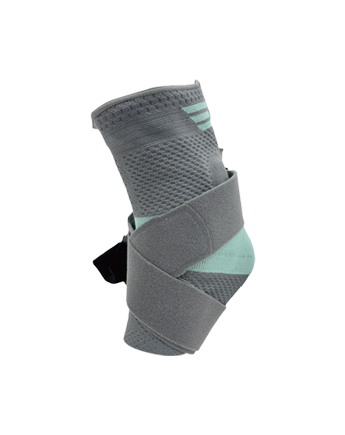
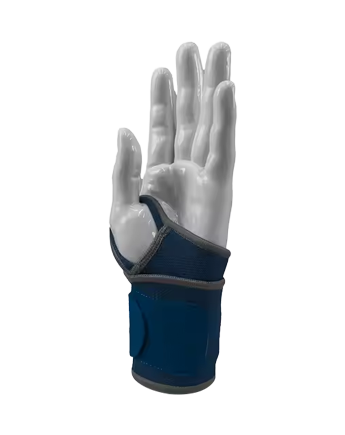
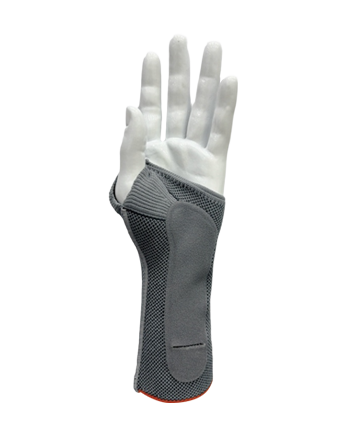
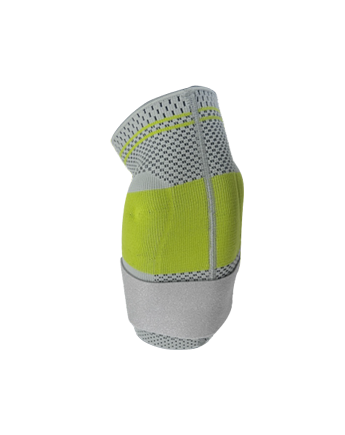
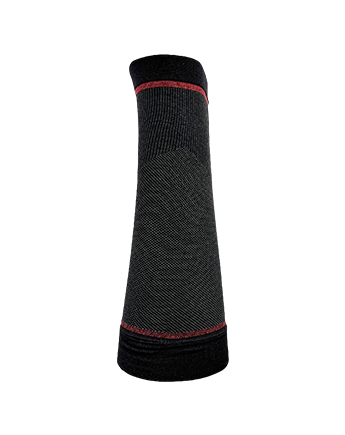
Circular knitting produces a tubular body that wraps the ankle with stretch in multiple directions. Fabric flexibility accommodates the changing shape of the joint through the gait cycle while maintaining contact. That construction is the base of movement-friendly coverage on the Circular Knitting Ankle Support with Adjustable Straps.
Straps allow tightness to be raised or eased without changing product size. Preference varies: some users want a firmer cue during longer runs; others prefer lighter hold for daily walking. Adjustability serves that range within the limits of the size band and strap design. An Ankle Support Adjustable setup is useful when the same person alternates easy walks and more demanding sessions.
Ankle supports worn with sports shoes must fit under the collar without forcing painful pressure or requiring a full size jump in footwear. A compact profile that follows the product's actual dimensions helps the support disappear under the shoe while still covering the joint. Trying the support with the intended shoes before a long session avoids surprises mid-activity.
The knitted sleeve is seated so that it covers the intended area of the ankle according to the product instructions, with the heel opening or foot entry aligned if the design provides one. Straps are lined up with their fastening paths before tension is applied so that they pull evenly rather than twist the fabric.
Straps are set to a secure but comfortable level—firm enough to reduce shift, not so tight that toes tingle or skin under the strap aches. Circulation and comfort take priority over excessive tension. Readjustment after a few minutes of movement is reasonable if the limb settles or the straps loosen slightly.
A short trial walk or easy jog before the main activity confirms that nothing pinches, slips or rubs. Discomfort, numbness or progressive slipping are signals to stop, loosen or reposition, or to discontinue use. Following the product's wearing guidance keeps expectations aligned with the design. An Adjustable Ankle Stabilizer style product still depends on that user check; straps cannot correct a fundamentally wrong size.
Circular knitted construction supplies ankle coverage that moves with the joint. Fabric flexibility matches the repeated flexion of walking and running better than non-stretch wraps for users who want motion retained.
Straps complement the knit by adding optional local tension and helping the sleeve stay put. Personalised fitting is the practical advantage during activities where sweat and impact might otherwise shift a fixed sleeve.
Flexible fabric plus adjustable fastening suits walking and recreational running when the product's tested use covers those scenarios and when footwear compatibility is confirmed. It is not a substitute for rehabilitation plans or for footwear that already fails to hold the foot.
| Activity demand | Support response | User check |
|---|---|---|
| Repeated impact and flex | Elastic knit follows joint | No blocking of push-off |
| Risk of sleeve migration | Straps + correct size keep position | Re-check after the initial minutes |
| Need for personal tension | Adjustable straps | Firm but not numbing |
| Shoe collar clearance | Compact profile | Trial with actual sports shoes |
| Direction changes | Even wrap around ankle | No hot spots when turning |
| Longer sessions | Comfortable fabric face; tuned straps | Monitor skin and sensation |
Ankle support during walking and running works through wrap-around coverage, elastic knitted flexibility that allows normal motion and straps that secure fit without erasing comfort. The Circular Knitting Ankle Support with Adjustable Straps combines those elements for users who want flexible coverage with tunable hold. Zhejiang Steriger Sports Medicine Technology Co., Ltd. produces knitted ankle supports including circular-knit models with adjustable straps for movement-oriented wear. Review of size, strap design, footwear fit and product guidance against walking or running routines supports selection of a support that stays in place and remains tolerable stride after stride.
Steriger is a national high-tech enterprise specializing in the R&D and production of high-quality sports supports, medical braces, and sports compression socks.
Copyright © Zhejiang Steriger Sports Medicine Technology Co., Ltd.
The information provided on this website is intended for use only in countries and jurisdictions outside of the People's Republic of China.

Approval No: 浙金药监械生产备20200039号

 English
 Español
 Deutsch
 عربى
 Français