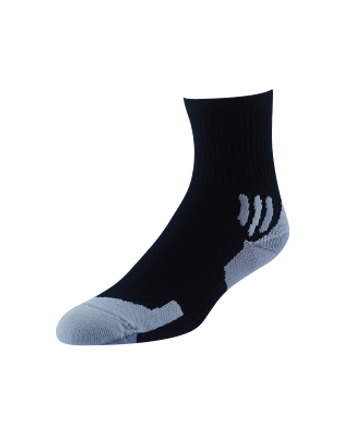
Socks that slide down the calf, bunch at the ankle or twist around the foot force repeated adjustments and break concentration during practice or games. A stable pair keeps its position through sprints, cuts and landings so that attention stays on the court rather than on the equipment. Size, length, elastic recovery, construction around the heel and toe, and thickness relative to the shoe all influence whether the sock stays put. Comfy Non Slip Socks that combine a reliable fit with purposeful construction therefore become a practical choice when these elements are checked against the individual foot and the footwear already in use.
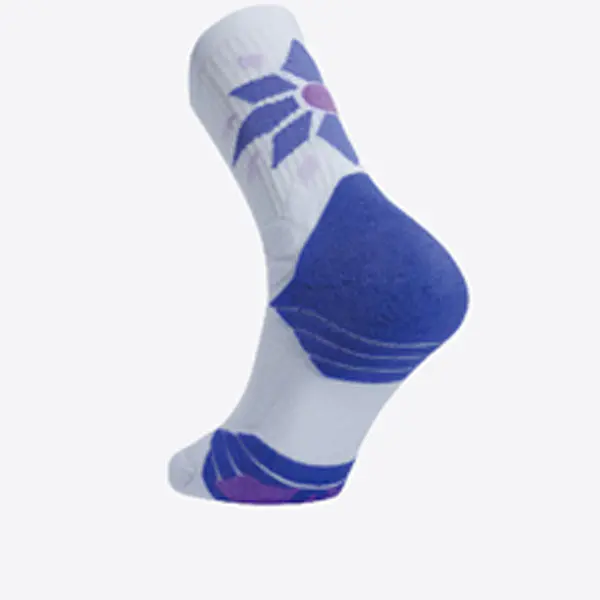
Foot length and, where provided, circumference measurements are matched to the chart supplied with the product. Selecting by visual appearance or by the size worn in another brand often produces a sock that is either too short in the foot or too loose around the ankle. An incorrect size allows fabric to migrate during movement and undermines every other design feature.
The shaped heel cup should sit squarely under the heel rather than riding up the Achilles or sliding forward under the arch. Excess material gathered at the toes or tension that pulls the heel pocket out of place indicates a mismatch. When the anatomical sections of the sock correspond to the anatomy of the foot, the fabric has less opportunity to shift independently of the skin.
Ankle-length styles end near the shoe collar, crew lengths rise higher on the lower leg, and taller designs extend further toward the knee. Preference for coverage, uniform requirements and personal comfort guide the choice among these options. Over the Calf Basketball Socks supply additional coverage for players who want fabric to remain above the mid-calf throughout play, provided the opening and the elastic band accommodate the individual calf circumference.
A longer sock depends on the elastic opening and the fabric's recovery to stay at the intended height. An opening that is too wide slips downward; one that is excessively tight leaves marks and may restrict comfort. The sock is evaluated both when initially put on and after a period of movement so that any tendency to migrate is identified early.
The cuff provides the primary upward hold. It must exert enough pressure to resist gravity and the downward tug of movement, yet remain comfortable for the duration of a session. A cuff that feels secure without digging into the skin is the practical target.
Fabric that stretches easily over the foot but returns toward its original dimensions after wear is less likely to sag or bag out. Poor recovery leaves the cuff and the ankle section progressively looser, increasing the need for mid-game adjustment. Shape retention is therefore assessed not only at the moment of purchase but after repeated use and washing.
A well-defined heel pocket anchors the sock to the foot. When the pocket is shallow, misplaced or constructed from fabric that stretches excessively, the heel section climbs or twists. Checking whether the heel remains centered during side-to-side movement and during heel-to-toe rocking reveals whether the construction is adequate.
Excess material in the toe box folds under the toes or creates pressure points against the shoe. A contour that follows the natural shape of the forefoot reduces bunching and keeps the fabric evenly distributed. The result is a more consistent feel during push-off and landing.
Additional cushioning under the heel or forefoot can improve comfort, yet it also occupies volume inside the shoe. If the footwear already fits closely, a thicker sock may create pressure or force the foot upward against the upper. Cushioning is therefore judged in combination with the specific shoes that will be worn.
Fabric that is excessively thick or that wrinkles under load can produce localized pressure and a less precise feel for the court. A balanced thickness that protects without filling the shoe beyond its intended fit supports both comfort and a secure overall package.
After putting the socks on, a short period of walking and light movement confirms that the heel pocket stays seated and that the cuff remains at the chosen height. Any immediate slipping or twisting is addressed by rechecking size or by trying a different construction.
Lateral shuffles, short sprints, abrupt stops and jumps load the socks in the same directions encountered in a game. During practice the behaviour of the fabric is watched: whether the cuff holds, whether the heel pocket rotates, and whether the toes remain free of excess material. Discomfort or restriction is corrected before the socks are used in competition.
Once the session ends, the socks are examined for residual bunching, stretched zones, pressure marks on the skin or areas of rubbing. These observations supply concrete evidence of whether the size, length and construction suit the individual foot and the demands of the sport.
Cuffs that no longer recover, fabric that has become permanently loose, thinned or abraded zones, and a general loss of shape all reduce the sock's ability to stay in place. Condition is checked regularly rather than according to an arbitrary calendar interval, so that pairs are retired when their hold and contour have deteriorated.
Correct sizing, a length that matches both preference and calf shape, reliable elastic recovery, stable heel and toe construction, and thickness compatible with the shoe together determine whether a basketball sock remains secure. Players seeking additional resistance to internal foot movement can also examine grip layouts on the plantar surface, comparing available sizes, lengths and material details against their own footwear and playing demands.
| Selection Factor | Influence on Sock Stability | Practical Check |
|---|---|---|
| Accurate size | Prevents excess fabric and independent movement | Match foot measurements to the product size chart |
| Length and calf opening | Determines whether taller styles stay at height | Assess hold after movement; avoid slip or restriction |
| Cuff elasticity and recovery | Maintains upward position through the session | Evaluate stretch and return after wear |
| Heel pocket and toe contour | Anchors the sock to the foot anatomy | Confirm alignment during lateral and linear motion |
| Thickness relative to shoe | Avoids pressure or loss of secure feel | Test inside the actual basketball shoes worn |
| Practice verification | Reveals real-world behaviour before competition | Observe during shuffles, sprints, stops and jumps |
| Condition over time | Identifies loss of hold from wear or stretch | Inspect cuffs, fabric and shape regularly |
Socks that stay in place throughout basketball activity depend on precise sizing, appropriate length, elastic that recovers, construction that follows the foot, and thickness that respects the volume inside the shoe. Verification during practice movements and periodic replacement of worn pairs keep the intended stability intact. Zhejiang Steriger Sports Medicine Technology Co., Ltd. produces basketball socks with attention to fit, length options and secure construction. Review of available sizes, cuff designs, length styles and material specifications against personal foot shape, calf circumference and footwear allows selection of pairs that remain positioned through the demands of the game.
Steriger is a national high-tech enterprise specializing in the R&D and production of high-quality sports supports, medical braces, and sports compression socks.
Copyright © Zhejiang Steriger Sports Medicine Technology Co., Ltd.
The information provided on this website is intended for use only in countries and jurisdictions outside of the People's Republic of China.

Approval No: 浙金药监械生产备20200039号

 English
 Español
 Deutsch
 عربى
 Français