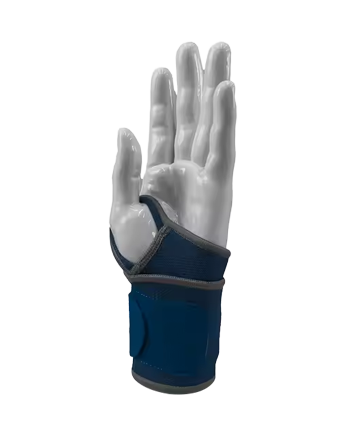
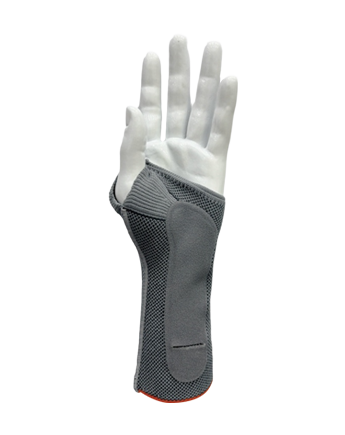
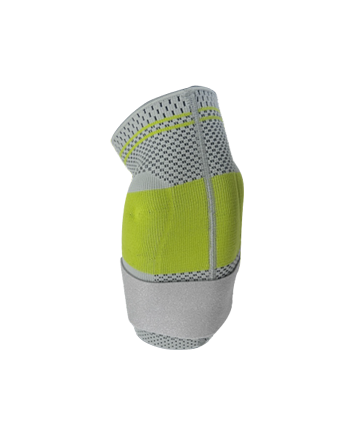
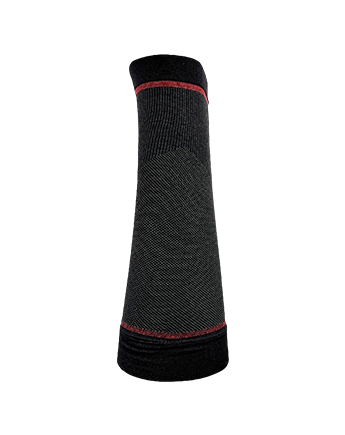
Hand discomfort doesn't announce itself. Sometimes it builds gradually through desk work or repetitive gripping; sometimes it arrives after an injury and simply doesn't leave. Either way, a Palm Brace is often part of the answer — stabilizing the hand, reducing pressure on soft tissue, and making daily activity manageable again. Getting that right depends on two things: choosing a product that actually fits the situation, and knowing how to wear it so it does what it's supposed to.
Put simply, a Palm Brace is a support worn over the hand — often wrapping partially over the wrist — that limits unwanted movement and delivers compression where the palm and metacarpal bones sit. It's not the same as a wrist brace, which anchors further down and focuses on the wrist joint. A Palm Brace works higher up, holding the hand itself rather than the joint below it.
Where do people actually use them? The range is wider than it might seem:
The use case shapes everything that follows in product selection. A brace designed for post-surgical recovery is built differently — and fitted differently — than one made for an athlete.
Not all Palm Braces provide rigidity the same way, and understanding the difference matters when evaluating products. Two main approaches:
Stays and splints are rigid or semi-rigid inserts — aluminum and thermoplastic are common — placed along the palm or thumb side to restrict specific movements. A palm stay limits how far the hand can bend forward or back. A thumb splint holds the thumb position. These are what give a brace its real structural bite.
Compression-only designs skip the rigid insert entirely. They rely on fabric tension to give the hand a sense of position and mild pressure. More freedom of movement, but less actual restriction — better suited to prevention or mild ongoing discomfort than to active recovery.
For rehabilitation or clinical settings, a brace with at least one removable stay is worth prioritizing. As recovery moves forward, the stay can come out, and the brace shifts from rigid support to gentler compression without replacing the product.
A Palm Brace worn for eight hours a day is a very different product from one worn for an hour after training. Material choice is where that gap shows up in practice.
For retail buyers, breathability complaints tend to outnumber structural complaints in reviews. Worth keeping in mind when deciding which material profiles to stock.
A Palm Brace that doesn't fit isn't just uncomfortable — it doesn't work. The palm strap can't hold position if the fabric is too loose, and a brace that's too tight creates its own set of problems.
Sizing in this category typically uses palm circumference — measured around the broad middle of the hand, not including the thumb. That part is straightforward. What varies is how manufacturers define their size bands and how much adjustment the closure system allows within each size.
When evaluating a product line, a few things are worth pinning down:
Universal designs reduce inventory complexity but give up some precision. For therapeutic applications, that trade-off usually isn't worth making.
The way a Palm Brace fastens determines whether users actually wear it consistently, and at the right tension, throughout the day.
Hook-and-loop straps dominate for good reason — they adjust easily, can be applied one-handed, and allow tension changes as swelling increases or decreases across the day. Across a wide range of Palm Brace formats, this closure type tends to create less day-to-day friction around use than other options.
Slip-on elastic designs are faster to put on and take off, which suits users who need to remove the brace frequently. The trade-off is reduced adjustability — tension is fixed by the fabric, not tunable by the user.
Multi-strap wrap-around designs offer considerably more adjustability and are worth considering for post-surgical situations where hand size shifts day to day due to swelling.
For a daily-use product aimed at a general population, a hook-and-loop closure with one strap over the palm and one over the wrist covers the range without adding unnecessary complexity.
A Palm Brace that locks up the thumb or covers the fingers is one that people stop wearing. Hand function matters — often the reason someone needs a brace is because they have to keep working or training while managing discomfort.
For occupational contexts — trades, manual work, food service — open-finger and open-thumb designs are typically non-negotiable. A brace that stops someone from doing their job will end up in a drawer.
Daily wear means daily accumulation of sweat, skin oils, and general contamination. If a Palm Brace can't be washed quickly and regularly, users stop wearing it. That's not a behavioral issue — it's a product issue.
A few things to confirm before committing to a product line:
Products that distort, pill, or lose their elastic tension after a few washes generate returns and kill repeat purchase. Asking manufacturers for wash durability data, or running samples through a wash cycle before ordering, is worth the effort.
Wearing a Palm Brace correctly takes under two minutes — but the sequence matters. Done in the wrong order, even a well-made brace sits off-center or applies pressure in the wrong place.
Lotion, sweat, or moisture on the hand affects how hook-and-loop closures hold and how the fabric sits against the skin. Starting with clean, dry skin gives the brace a reliable grip from the beginning and reduces early irritation under the material.
Rings are worth thinking about too. The edge of a ring under brace fabric creates a pressure point that gets uncomfortable over time — removing them before application is the cleaner option.
If the brace has a stay or splint inside the palm section, position it before fastening the straps. The stay should run lengthwise through the palm, roughly in line with the middle finger, sitting clear of the thumb base and the heel of the hand.
Some stays come pre-shaped. Others can be bent to match the hand's natural resting curve — and for those, a small amount of time spent shaping pays off in comfort:
With straps loosened or open, slide the hand in, starting with the thumb if the design includes a thumb opening. Position the palm section upward until:
Folding or bunching at the fingers usually means the brace is sitting too high or the size is slightly large. Reposition before fastening anything.
When using multiple straps, begin by securing the strap across the palm. This locks the brace into position before the lower strap is applied. Fasten it snug enough that it holds, but loose enough that a finger can still slip underneath without forcing.
A common error is securing the wrist strap at the start. When the lower end is locked before the upper, applying the palm strap tends to pull the whole brace downward out of position.
Once the palm strap is set, the wrist strap goes on just above the wrist crease. Its job is to stop the brace from shifting upward during movement — not to add compression on top of what the palm strap already provides.
Tension check: compression should be felt, but not tingling. If the hand starts feeling cooler or numb within a few minutes, the strap is too tight. Loosen slightly and reassess.
Before heading into the day, run through a few movements:
Pain, sharp pressure, or skin catching anywhere means something needs adjusting before use.
During initial use, fabric conforms, hands warm, and light activity-related swelling can alter how a brace fits. A tension that felt right at application may need a small adjustment after movement begins. Building in a quick check twenty minutes in catches these shifts before they become a problem.
Even with the right product and a decent fit, a few habits reduce what a Palm Brace actually delivers:
Not every user needs the same setup. A quick reference for matching product type to use context:
| Use Context | What Matters | Design to Look For |
|---|---|---|
| Office and desk work | Breathable, low profile, doesn't limit typing | Elastic knit, open fingers, mild compression |
| Manual labor | Durable, holds during grip and tool use | Neoprene or reinforced fabric, secure straps |
| Post-injury recovery | Adjustable as swelling changes | Removable stay, multi-strap hook-and-loop |
| Arthritis | Warmth, easy to put on and take off | Neoprene, slip-on or single-strap |
| Sport and training | Grip-compatible, handles sweat | Moisture-wicking fabric, open palm or fingerless |
Covering everyday support, recovery, and active use in a product range gives meaningful breadth without chasing every variation with a separate SKU.
For distributors and retailers putting together a Palm Brace range, a few things are worth confirming before committing:
A Palm Brace that performs over months of daily use takes more than basic construction — the fit logic, material choices, stay design, and closure system all have to work together. Steriger designs and manufactures orthopedic support products including Palm Braces for rehabilitation, occupational, and sports contexts, with OEM and ODM capability for custom specifications, branding, and packaging. Reach out to Zhejiang Steriger Sports Medicine Technology Co., Ltd. for product catalogs, samples, or pricing on Palm Brace formats — and put together a hand support range that holds up where it counts.
Steriger is a national high-tech enterprise specializing in the R&D and production of high-quality sports supports, medical braces, and sports compression socks.
Copyright © Zhejiang Steriger Sports Medicine Technology Co., Ltd.
The information provided on this website is intended for use only in countries and jurisdictions outside of the People's Republic of China.

Approval No: 浙金药监械生产备20200039号

 English
 Español
 Deutsch
 عربى
عربى Français