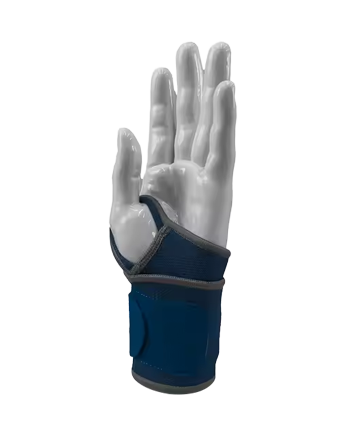
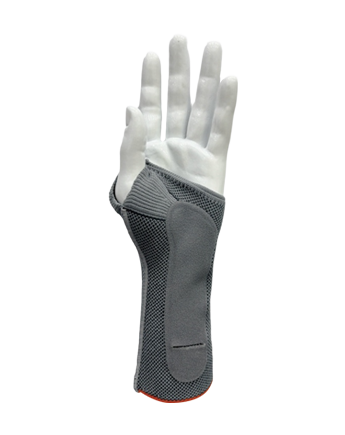
A Palm Brace worn daily picks up sweat, skin oils, and environmental grime at a rate that catches many users off guard. Left unaddressed, that buildup doesn't just create an odor problem — it breaks down fabric integrity, weakens strap adhesion, and shortens the functional life of the product. The catch is that the cleaning process itself can cause damage if done without attention to how the brace is constructed. Straps, in particular, are a vulnerability. Hook-and-loop closures lose their grip when contaminated with lint and fiber. They degrade faster when exposed to heat. They pull away from the fabric base when machine-washed in conditions the stitching wasn't designed for. Getting the cleaning process right keeps the brace functional for longer — and for retailers and distributors, that lifespan directly affects customer satisfaction and return rates.
A Palm Brace is not a single material — it's a combination of components that respond differently to water, heat, and cleaning agents. Cleaning the whole product as if it were uniform is where damage typically starts.
Common materials found in Palm Brace construction:
Understanding these components before washing prevents the kind of damage that isn't visible until the brace is already compromised.
Many Palm Braces include care instructions on a label inside the product. If it's there, it takes priority over general guidance. Where labels have worn off or were never present, the principles below apply to a wide range of brace constructions — but when in doubt, hand washing in cool water with mild detergent is the approach less likely to cause damage than other methods.
This step is easy to skip and consistently causes problems when it is. Metal stays that get wet and are not dried thoroughly will corrode. Thermoplastic stays can warp if exposed to heat — even the warm water in a sink. Both types, if left inside the brace during washing, trap moisture against the fabric and take longer to dry, which accelerates mold and odor development.
Before washing:
Hand washing is the approach that preserves both fabric integrity and strap function across a broad range of brace constructions. It takes slightly longer than machine washing but avoids the mechanical stress that shortens strap life.
This is the detail that protects hook-and-loop closure longevity more than any other single action. When straps are open and exposed during washing, the hook side catches fabric fibers from the brace itself and from any nearby material — filling the hooks and reducing their grip capacity over time.
Close all straps fully before the brace enters water. Pressed together, the hook and loop sides protect each other from fiber contamination during washing.
Fill a clean basin or sink with cool to lukewarm water — not hot. Heat is the primary cause of neoprene degradation, elastic fiber breakdown, and hook-and-loop adhesive weakening. Even water that feels warm to the hand can be hot enough to accelerate material breakdown over repeated wash cycles.
Add a small amount of mild detergent — unscented, non-biological options cause less chemical stress to fabric and are gentler on skin after washing. Avoid anything with bleach, fabric softener, or strong enzyme content.
Place the Palm Brace in the water and gently work the fabric between your hands — squeezing rather than wringing or twisting. Focus on areas that accumulate the heaviest contamination:
Allow the brace to soak for five to ten minutes if the contamination is heavy. This loosens buildup without requiring aggressive scrubbing.
Even with straps closed, the edges of the hook-and-loop closure — the seam where the strap meets the brace fabric — accumulate contamination. A soft-bristled brush (a nail brush or soft toothbrush works well) run lightly along these edges removes fiber buildup without damaging the strap or the surrounding material.
What to avoid:
Detergent residue left in the fabric causes two problems: it irritates skin on the next wear, and it accelerates fabric breakdown by maintaining a chemical environment in the material between washes. Rinse the Palm Brace under clean running water — cool or lukewarm — until the water running off it is completely clear and no soap sensation remains when the fabric is squeezed.
Pay particular attention to rinsing along the strap areas and inside the stay pocket, where detergent tends to pool.
Wringing a Palm Brace to remove water twists the fabric, stresses stitching, and can distort the shape of neoprene or structured panels. Instead:
Heat is the consistent cause of Palm Brace deterioration during the drying phase. Tumble dryers, radiators, direct sunlight, and forced-air heaters all produce temperatures that degrade neoprene, weaken elastic fibers, and compromise the adhesive bonding hook-and-loop closures to the strap base.
Lay the brace flat on a clean, dry surface — or hang it in a position where air circulates freely through and around the fabric. Keep it away from direct heat and out of direct sunlight.
This reverses the instruction for washing. During drying, the straps should be open — separated — so that moisture between the hook and loop sides can evaporate. Leaving the straps pressed together while the brace dries traps moisture at the closure interface and accelerates the mold and odor development that washing was meant to prevent.
A Palm Brace that goes back on the hand before it's fully dry creates two problems: residual moisture against the skin causes irritation, and damp fabric held against warm skin creates conditions for bacterial growth faster than a dry brace would. Allow the brace to dry fully — which for neoprene products may take longer than elastic knit designs — before wearing it again.
For daily users who need the brace continuously, having a second brace in rotation is the practical solution. One wears while the other washes and dries.
Some Palm Brace designs can tolerate machine washing under specific conditions. Others — particularly those with neoprene panels, bonded seams, or non-removable stays — should not go in a machine under any setting.
Before machine washing, check:
For braces that are suitable for machine washing, damage reduction comes from controlling three variables: temperature, spin speed, and containment.
Temperature: cold wash only — use the coolest temperature setting available
Cycle: delicate or gentle cycle — reduced agitation protects stitching and fabric structure
Containment: place the brace inside a mesh laundry bag with all straps closed — this limits the mechanical contact between the brace and the machine drum, and keeps the hook side from catching on other items in the wash
Do not use fabric softener — it coats the hook-and-loop fibers and significantly reduces closure grip over time.
Regardless of whether the brace was hand washed or machine washed, machine drying is not appropriate for any Palm Brace construction. The heat produced even on low settings exceeds what neoprene, elastic fibers, and hook-and-loop adhesives can handle repeatedly without degrading. Air dry following the guidance above.
The hooks in a hook-and-loop closure work by catching loop fibers on the mating surface. When lint, fabric fibers, or hair fill the hook side, the hooks can't engage the loops properly — grip decreases, and the strap stops holding securely. This happens gradually and is often attributed to the brace wearing out when the actual issue is a lack of maintenance.
Between washes, closing the straps when the brace is not being worn prevents lint accumulation. A soft-bristled brush used periodically across the hook surface removes embedded fibers before they pack in deep enough to be difficult to extract.
A Palm Brace stored with straps open, tossed in a bag, or pressed against textured surfaces accumulates contamination faster than one stored flat with straps closed. Small habits around storage extend strap life noticeably:
| Mistake | What It Damages | Result |
|---|---|---|
| Machine drying | Neoprene, elastic fibers, adhesive bonding | Material stiffening, cracking, strap separation |
| Hot water washing | Elastic integrity, neoprene surface | Shrinkage, hardening, reduced flex |
| Washing with straps open | Hook-and-loop fiber content | Reduced grip, faster closure failure |
| Wringing to remove water | Stitching, fabric structure | Seam stress, panel distortion |
| Leaving stays in during wash | Metal stays, stay pocket fabric | Corrosion, moisture trapping, mold |
| Fabric softener use | Hook-and-loop hooks | Coating buildup, grip loss |
| Insufficient rinsing | Fabric and skin contact surface | Detergent irritation, accelerated fabric wear |
| Drying on radiator or in sun | All components | Accelerated degradation across all materials |
There's no single correct answer, but a useful framework:
A Palm Brace that develops an odor when worn after washing may result from inadequate rinsing, incomplete drying, or has reached a point where washing is no longer effective.
For distributors and retailers, how a Palm Brace holds up through repeated washing is a meaningful quality indicator — and a driver of customer satisfaction over the product's life.
Products that degrade quickly under regular washing generate returns, negative reviews, and customers who associate the failure with the category rather than the specific product. Products that maintain strap grip, fabric structure, and shape through a realistic washing routine build the kind of repeat purchase behavior that sustains category performance.
When evaluating Palm Brace products for a range, wash durability deserves the same attention as initial fit and support quality. Ask manufacturers for wash cycle test data, run samples through a realistic washing regimen before committing to volume, and pay attention to the stitching quality around strap attachment points — these are where washing-related failures appear earliest.
A Palm Brace that survives regular washing without losing its structural integrity or strap function is engineered that way — through material selection, stitching specification, and closure system design — not just assembled and shipped. Steriger designs and manufactures orthopedic support products including Palm Braces with attention to wash durability, strap longevity, and skin-contact material quality, across rehabilitation, occupational, and sports applications. OEM and ODM capability is available for custom specifications, branding, and care labeling. Reach out to Zhejiang Steriger Sports Medicine Technology Co., Ltd. for product catalogs, wash durability documentation, samples, or pricing on Palm Brace formats — and stock a hand support range that holds up through the care routine your customers will actually put it through.
Steriger is a national high-tech enterprise specializing in the R&D and production of high-quality sports supports, medical braces, and sports compression socks.
Copyright © Zhejiang Steriger Sports Medicine Technology Co., Ltd.
The information provided on this website is intended for use only in countries and jurisdictions outside of the People's Republic of China.

Approval No: 浙金药监械生产备20200039号

 English
 Español
 Deutsch
 عربى
عربى Français