Lower back pain has a way of following people through their day — present during the commute, worse by mid-afternoon at the desk, and noticeable again when bending to pick something up. For many, the discomfort is not acute enough to require medical intervention but persistent enough to affect concentration, posture, and the willingness to stay active. The search for practical relief often leads to external support, and an Adjustable Waist Support offers something that generic products do not: compression and structure that can be calibrated to the individual body and the specific demands of the day. Understanding how and why this works clarifies not just whether a support belt is worth using, but how to use it well.
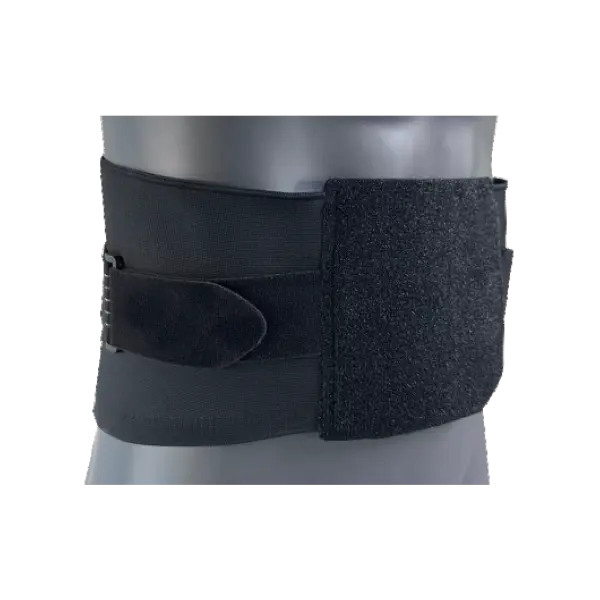
The lower back — the lumbar region — carries a disproportionate share of the body's load. Whether a person is sitting, standing, lifting, or walking, the lumbar vertebrae and the surrounding musculature are continuously managing compressive and shear forces. When that load exceeds what the local muscles and connective tissue can handle comfortably — through sustained poor posture, sudden movement, repetitive strain, or reduced muscle conditioning — pain and fatigue follow.
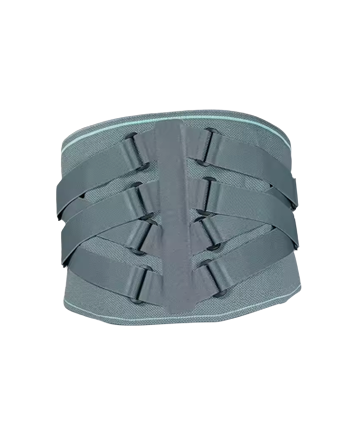
External support works by partially offloading that burden. A support belt wrapped around the lumbar region adds circumferential compression, which does two things simultaneously: it provides a gentle stabilizing force on the surrounding muscles and soft tissue, and it raises the wearer's proprioceptive awareness of lumbar position — essentially reminding the body to maintain a more neutral spine angle without conscious effort.
This is not a cure. It is a mechanical assist that reduces the load on a system that is already under stress. Used correctly, it allows people to function through the day with less pain and reduced risk of further strain.
A fixed compression belt applies the same force regardless of whether it fits the wearer well or not. Too loose and the support is minimal. Too tight and circulation and breathing are restricted. Neither end offers the relief it promises.
Adjustable Waist Supports address this directly. The compression level can be set to match body size at the start of wear and modified during the day as circumstances change — tighter when lifting or moving, looser when seated for extended periods, and re-calibrated as body temperature and muscle engagement change the feel of the fit over hours of use.
This dynamic fit is not a cosmetic feature. It is the mechanism by which a well-designed support becomes genuinely wearable across an active day rather than something that gets removed after an hour because it has shifted, pinched, or become uncomfortable.
Compression from a lumbar support belt increases intra-abdominal pressure — the internal hydraulic pressure within the abdominal cavity. That pressure acts as a supporting force on the lumbar spine from the inside, complementing the external support provided by the belt itself. The combination reduces the mechanical load that the lumbar muscles and discs must manage during movement.
This is why support belts are effective not just for people with existing lower back pain but also for individuals whose work involves sustained physical loading — warehouse workers, construction trades, and care workers who lift and transfer people repeatedly through a shift. The belt does not strengthen the muscles, but it does reduce the demand placed on them during the hours it is worn.
A Breathable Lumbar Support keeps this mechanism working without creating the heat and moisture buildup that makes sustained wear impractical. When a belt becomes unbearably hot or causes skin irritation, it gets removed — and the support benefit disappears with it. Material breathability is a functional specification, not a comfort luxury.
Not all lower back pain is the same, and waist support is not equally effective across every presentation. Understanding where it helps — and where it has limits — shapes realistic expectations.
Conditions that generally respond well:
Conditions where support has more limited effect:
For anyone with persistent or severe lower back pain, using a support belt alongside professional assessment rather than as a substitute for it produces better outcomes.
Waist support belts serve a wide range of users with different daily demands. The common thread is a mismatch between what the lumbar region is asked to do and what it can handle without assistance.
| User Profile | Primary Challenge | How Support Helps |
|---|---|---|
| Office workers, long hours seated | Lumbar flexion fatigue, poor posture | Proprioceptive cue, mild compression |
| Manual workers, lifting tasks | Peak load stress during lifts | Intra-abdominal pressure support |
| Drivers, long-distance commuters | Sustained vibration, poor seat support | Stabilization, fatigue reduction |
| Older adults with lumbar weakness | General muscle deconditioning | External stability supplement |
| Post-rehabilitation users | Rebuilding confidence, protecting healing tissue | Graduated support during return to activity |
| Active individuals with chronic strain | Recurring strain during sport or exercise | Load management during high-demand sessions |
The Elastic Waist Support used by an office worker managing postural fatigue and the reinforced support worn by a warehouse operative during lifting are different products serving the same underlying principle — but the specification details matter for each context.
This question comes up frequently and deserves a direct answer: there is a legitimate concern that prolonged, full-time reliance on external lumbar support may reduce the wearer's engagement of intrinsic stabilizing muscles — the deep core muscles that provide active spinal stability. If those muscles are never called upon to do their job because the belt is always there, their conditioning may decline over time.
The practical implication is not "avoid support belts" but rather "use them purposefully rather than habitually."
Practical principles for sustainable use:
A Comfortable Waist Support thoughtfully during the parts of the day that create high lumbar stress, rather than worn continuously as a substitute for muscle function, provides relief without creating dependency.
Walking through the features of a waist support belt with a clear framework prevents the common mistake of selecting based on appearance or price without considering functional fit.
Adjustment range and mechanism: The belt should cover the wearer's body dimensions with enough range to allow meaningful tightening and loosening. Velcro systems allow stepless adjustment; some designs add secondary pull tabs or tension straps for targeted compression in the lumbar zone.
Material and breathability: Extended wear requires a material that manages heat and moisture. Mesh panels, moisture-wicking inner surfaces, and open-weave constructions all improve wearability over hours. A Breathable Lumbar Support stays comfortable in ways that neoprene-heavy designs often do not for all-day use.
Structural reinforcement: Some supports include internal stays — rigid or semi-rigid panels that limit lumbar flexion more actively. These are appropriate for post-injury recovery or high-demand lifting contexts. For general postural support and daily wear comfort, lighter construction without hard stays is often more practical.
Width and coverage: The support should cover the lumbar region fully — typically from just below the lower ribs to the upper sacrum. Too narrow and the compression misses the area of need; too wide and it restricts hip movement and becomes uncomfortable when seated.
Sizing: An Elastic Waist Support that fits the stated body dimensions of the wearer provides consistent compression. Oversized products compensate with tighter adjustment but sacrifice the stability of a correctly fitted belt. Check the sizing range against actual body measurements before ordering.
A well-specified support worn incorrectly provides inconsistent results. A few wearing details that change the outcome:
The Wholesale Waist Support market contains products across a wide quality spectrum. Correct wearing technique benefits from a product with consistent dimensions and reliable adjustment hardware — features that vary more than buyers initially expect.
External back support is a health-adjacent product category where quality consistency matters beyond cosmetic appearance. Material durability, sizing accuracy, and adjustment mechanism reliability all affect whether the product delivers its intended function over months of daily use — and whether the users who depend on it can maintain confidence in the support it provides. Zhejiang Steriger Sports Medicine Technology Co., Ltd. develops orthopedic and sports medicine support products including adjustable waist and lumbar support belts for rehabilitation, occupational, and active use applications. Their product range is designed with wearability, compression consistency, and structural support in mind — properties that translate directly to user compliance and functional outcomes over sustained wear. If you are evaluating waist support products for distribution, healthcare supply, or occupational safety procurement, reaching out to discuss product specifications and application requirements is a practical way to identify the right product configuration for your end-user context.
Steriger is a national high-tech enterprise specializing in the R&D and production of high-quality sports supports, medical braces, and sports compression socks.
Copyright © Zhejiang Steriger Sports Medicine Technology Co., Ltd.
The information provided on this website is intended for use only in countries and jurisdictions outside of the People's Republic of China.

Approval No: 浙金药监械生产备20200039号

 English
 Español
 Deutsch
 عربى
عربى Français