Choosing between two types of back support sounds straightforward until the decision actually needs to be made. One promises firm stabilization. The other promises flexibility and comfort. Both claim to address lower back pain. The problem is that neither claim answers the question that actually matters: which one fits the daily reality of the person wearing it? A rigid brace worn by someone who needs to sit, stand, bend, and drive through a full workday will often come off by mid-morning. A soft elastic belt worn by someone in post-surgical recovery may not provide the structural support their spine needs. Context shapes the answer, and the Adjustable Waist Support sits in a meaningful position in this comparison — offering variable compression, adaptable fit, and extended wearability that traditional rigid bracing was never designed to deliver.
Traditional back braces are built around rigidity. Internal panels — typically made from hard plastic, metal stays, or dense foam — limit the range of motion of the lumbar spine. The intention is immobilization: holding the lower back in a controlled position while healing occurs, reducing movement that might aggravate an injury or surgical site. This is clinically appropriate in specific scenarios. Post-operative spinal stabilization, acute fracture management, and severe disc herniation cases may genuinely require that level of restriction.
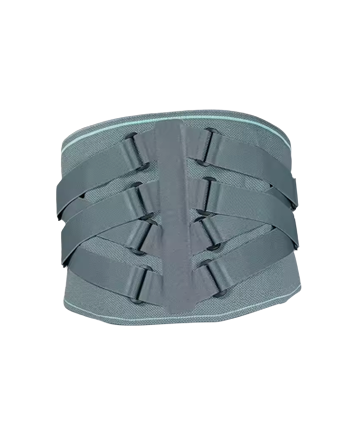
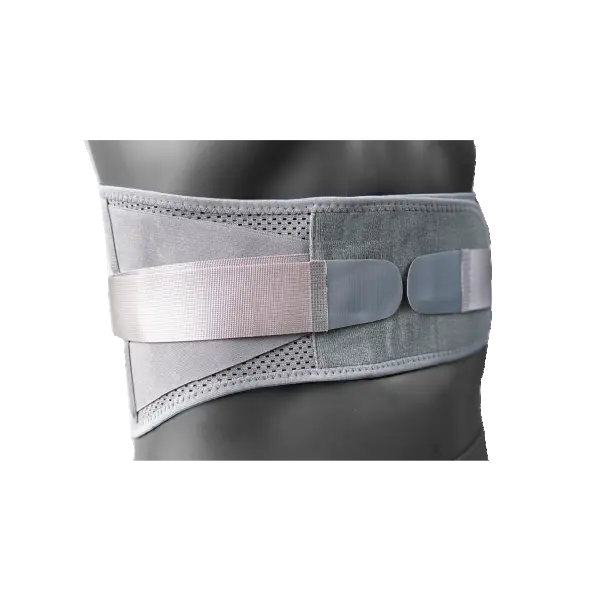
Adjustable Waist Supports operate from a different premise. The structure is soft and elastic, without rigid panels that prevent movement. Compression is applied circumferentially through tension in the material, and that tension can be increased or reduced through adjustment mechanisms — typically hook-and-loop closures, secondary pull straps, or dial systems. The spine is supported, not immobilized. Movement is guided rather than blocked.
These are not competing quality levels. They are different tools with different functional intentions.
A rigid brace worn through a full working day creates friction with almost every normal activity. Sitting for extended periods becomes uncomfortable as the panels press into the lower ribs and hips. Bending to retrieve something from the floor, climbing in and out of a vehicle, or rotating to reach across a desk — all of these movements are limited, slowed, or made awkward by structural immobilization.
For someone in post-injury recovery with physician-directed activity restriction, that limitation is the point. But for the much larger population of people managing chronic lower back discomfort while continuing to work and move, rigid restriction creates a support that is difficult to wear long enough to be useful. A brace that comes off after two hours because it is digging in and restricting breathing does not provide eight hours of pain management.
The Elastic Waist Support sidesteps this problem because it moves with the body. Compression is maintained through movement rather than being achieved by preventing it. Sitting, bending, lifting, and walking all remain natural — and the support stays on because it does not fight the body's movements throughout the day.
One of the practical limitations of traditional back braces is that the compression they provide is essentially fixed once the device is fitted. A brace specified for a particular torso measurement applies roughly the same force regardless of what the wearer is doing — whether resting, sitting at a desk, or carrying a heavy load.
Human bodies do not have uniform support needs throughout a day. A person sitting for hours of desk work may need mild lumbar support to maintain posture without restricting breathing. The same person lifting file boxes later in the afternoon needs increased compression to manage the higher spinal load. Standing on a commute home requires something in between.
An Adjustable Waist Support accommodates these transitions. Tighten before the lift. Loosen for the desk session. The mechanism is right there — accessible without removing the product, adjustable in seconds. This sounds like a minor convenience, but in practice it is what determines whether a person maintains consistent support across a full day or ends up alternating between under-supported and over-compressed as their activity shifts.
A back support worn for extended periods creates heat and moisture accumulation against the skin. This is particularly true with neoprene-heavy or dense foam constructions — materials common in traditional braces that prioritize rigidity over thermal management. The result is discomfort, skin irritation, and in humid environments, genuine hygiene concerns over extended wear cycles.
A Breathable Lumbar Support uses mesh panels, open-weave elastic, or moisture-wicking inner surfaces that allow air circulation and sweat evaporation during wear. The physical experience is considerably different — cooler, drier, and less claustrophobic over hours of use. This is not an aesthetic feature. It is the material specification that determines whether a product is practically wearable across a full workday in any climate.
For users in physically active roles — construction workers, healthcare staff who move constantly, retail workers on their feet for eight-hour shifts — breathability is the difference between a support that stays on and one that gets removed by hour three.
The differences between these two support categories become practical when mapped against the actual factors that shape daily use:
| Comparison Factor | Adjustable Waist Support | Traditional Back Brace |
|---|---|---|
| Compression control | Variable, user-adjustable | Fixed once fitted |
| Mobility during wear | Full range maintained | Restricted by design |
| Daily comfort (extended wear) | Generally higher | Moderate to low |
| Breathability | Higher with quality materials | Lower with rigid/neoprene construction |
| Post-injury immobilization | Not designed for this | Primary clinical use |
| Suitability for office or sedentary work | Strong | Limited |
| Suitability for manual or active roles | Strong | Varies by activity type |
| Ease of on/off during the day | High | Moderate |
| Suitable for chronic pain management | Yes | With physician guidance |
| Suitable for acute structural injury | Limited | Yes, with clinical assessment |
Neither column is uniformly stronger. The picture that emerges is that traditional bracing serves a specific clinical function well — structural immobilization during recovery from significant injury or surgery. The adjustable support serves a broader and arguably larger population: people managing ongoing lumbar discomfort while continuing to live and work normally.
A pattern that appears frequently in rehabilitation contexts is the transition from rigid bracing during acute recovery to softer, adjustable support for ongoing management. The clinical rationale is clear: once the period of strict immobilization is no longer required, maintaining a rigid brace creates unnecessary restriction and begins to work against the rehabilitation goal of rebuilding active muscle function.
Transitioning to a Comfortable Waist Support during this phase provides continued external stabilization while allowing the muscles to re-engage with normal movement patterns. The adjustable compression means the level of support can be gradually reduced as strength returns — using the belt as a graduated step-down tool rather than an on/off switch between full bracing and no support.
For users managing chronic lumbar strain without a recent acute injury, this transition logic applies from the start. There is no recovery phase requiring immobilization — the need is ongoing load management and postural support during daily activity, which an adjustable design handles more practically than a rigid one.
The clinical case for rigid bracing is clear in acute injury contexts. Less often discussed are the practical and physiological concerns that come with extended reliance on rigid immobilization outside those clinical contexts.
None of these are arguments against rigid bracing when it is clinically indicated. They are reasons why it is not the default answer for back support across all populations and contexts.
A simple decision framework helps cut through the comparison:
Choose a traditional back brace when:
Choose an adjustable support when:
For many people managing lower back pain without a recent acute structural injury, the adjustable category is the more practical starting point — and for the reasons above, it is also the category with a higher chance of being worn consistently enough to make a difference.
For distributors, healthcare supply companies, and procurement teams sourcing back support products at volume, product consistency and quality across a range directly shapes end-user outcomes and satisfaction. A Wholesale Waist Support product that loses adjustment tension after a few weeks of use, or a breathable support whose mesh degrades after repeated washing, undermines the clinical and functional value the product was specified to deliver. Zhejiang Steriger Sports Medicine Technology Co., Ltd. develops orthopedic and sports medicine support products including adjustable lumbar and waist support belts designed for daily use, rehabilitation, and occupational applications. Their product development focuses on compression consistency, material durability, and wearability across extended use — the specifications that determine whether a back support stays on long enough to work. If you are evaluating waist support products for distribution, healthcare supply, or private-label development, reaching out to discuss product specifications, application fit, and available formats is a practical starting point.
Steriger is a national high-tech enterprise specializing in the R&D and production of high-quality sports supports, medical braces, and sports compression socks.
Copyright © Zhejiang Steriger Sports Medicine Technology Co., Ltd.
The information provided on this website is intended for use only in countries and jurisdictions outside of the People's Republic of China.

Approval No: 浙金药监械生产备20200039号

 English
 Español
 Deutsch
 عربى
عربى Français