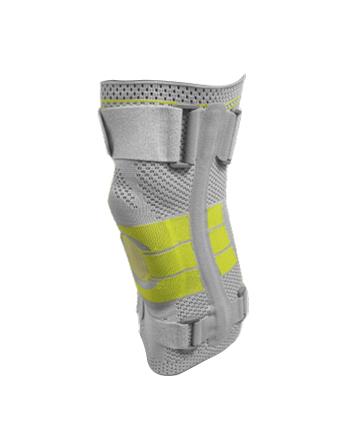
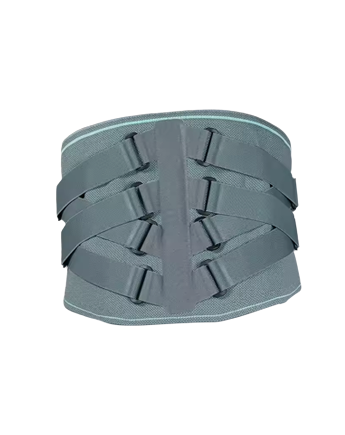
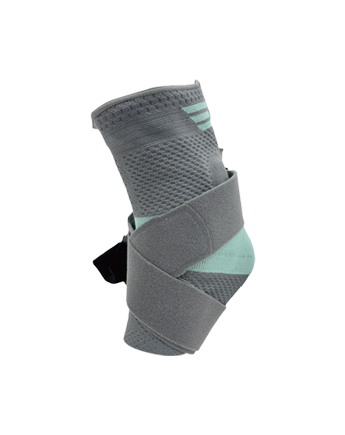
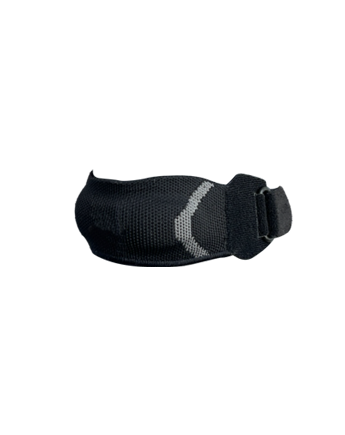
Sports knee supports sit against the joint through repeated bending, loading and recovery. How they are built—yarn choice, knit structure, elastic zones and edge finish—decides whether they stay in place, feel stable and last through regular training. Looking only at colour or outer shape misses those structural choices. Athletic Knee Support Products are therefore assessed by materials, knitting method and finishing quality before size and style are locked in for a range.
Polyester appears frequently in sports accessories because it holds shape well and withstands repeated wear.In a knitted knee support it can form part or a large portion of the ground structure, giving the fabric a stable base while other fibres supply stretch. Consistency of the polyester yarn affects how even the knitted surface looks and feels.
Nylon is often chosen where abrasion resistance and a smooth, flexible hand are wanted. In blends it can improve surface durability at points that rub against skin or clothing. Composition lists should be read carefully so that the share of nylon versus other fibres is clear before a bulk decision is made.
Spandex (elastane) provides the recoverable stretch that allows a support to expand over the knee and then return toward its original circumference. The amount and placement of elastic fibre change how firm or soft the product feels. Fabric behaviour cannot be judged from fibre names alone; stretch and recovery still need to be checked on the finished piece.
Polyester-spandex, nylon-spandex and multi-fibre blends each produce a different balance of durability, stretch, hand and care behaviour. Changing the proportions shifts that balance. Buyers rely on the stated composition of the actual product rather than on generic descriptions of "elastic knit."
Flat knitting forms fabric by building rows of intermeshed loops on a machine bed. Panels or shaped pieces can be produced with programmed changes in stitch type across the width or length. That flexibility allows a knee support to be developed with different densities or stretch levels in different regions of the same piece.
Simple jersey-like structures, rib variants and other loop arrangements change both appearance and mechanical response. Open structures tend to feel lighter and more extensible; denser structures feel firmer. Pattern selection during development is one of the main tools for tuning how the support behaves around the joint.
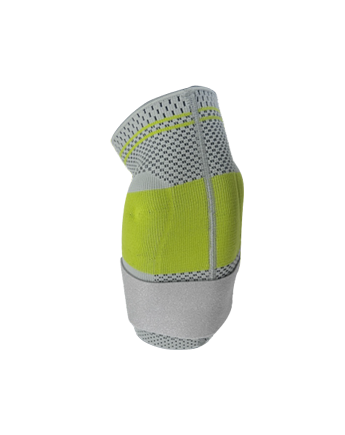
Some designs introduce higher-stretch or denser zones where the fabric must grip the thigh or calf or ease behind the knee. Consistent yarn tension during knitting keeps those zones uniform from piece to piece. Uneven tension shows up as twisted garments or irregular compression.
The main knitted tube or panel covers the knee and the adjacent lower thigh and upper calf. Density, thickness and surface texture of this body fabric determine coverage, warmth and how the product looks under shorts or tights. Inspection looks for even loops and freedom from thin spots or thick bars.
Edges at the top and bottom must expand for donning and then hold without continuous rolling. Bindings, integrated knit edges or elastic finishes are used for that purpose. Edge stretch and finishing quality are checked because failure here is one of the common reasons a support slips during activity.
The human knee changes shape markedly from straight to flexed. Supports may use shaped knitting, differential stitch lengths or panel geometry to follow that change. Product measurements and wear trials confirm whether the shape works for the intended size range.
Not every knitted support is seamless. Where panels are joined, stitch type, seam allowance and finishing affect both strength and comfort. Seams that sit in high-flex zones need particular attention so they do not fail or irritate during repeated bending.
Loop geometry and elastic fibre together allow the fabric to lengthen when the knee bends and to recover when it straightens. Weak recovery leaves the support baggy after a few sessions. Overly aggressive recovery can feel restrictive. Both extremes are visible only when the product is stretched and released repeatedly.
The same nominal size can feel different if fabric modulus or garment dimensions change. Compression is a result of the relationship between leg circumference, product circumference and fabric tension—not a label on the packet. Correct size selection and, where possible, sample fitting reduce mismatch.
Denser, thicker knits can feel more substantial but may resist deep flexion if poorly designed. Lighter knits flex easily but may offer less of a "held" sensation. The right balance depends on the activity and on user preference; construction data help set expectations before sampling.
Surface smoothness, edge behaviour and overall fit decide whether the support is forgotten during exercise or becomes a distraction. Short wear trials under the intended activity reveal issues that static inspection misses.
Yarns are selected to match the target composition, count and elastic performance. Variation in yarn quality passes directly into variation in the knitted fabric, so incoming consistency matters.
Machine settings, stitch patterns and tension control determine whether the fabric matches the development sample. Process discipline keeps density and width stable across a production lot.
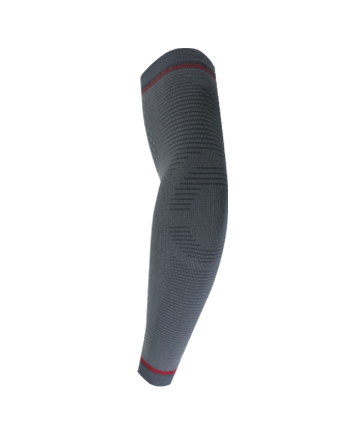
Knitted pieces are formed into the final sleeve geometry. Edges are finished and any necessary joins are completed. This stage fixes the openings that the user will pull over the foot and up to the knee.
Trimming, any required cleaning and final checks of dimensions, appearance, elasticity and workmanship close the process. Defects found here are cheaper to handle than defects found in the retailer's warehouse.
The knitted face is examined for broken loops, holes, barré or other irregularities. Several units from a lot are compared so that isolated faults are not mistaken for the normal standard.
Fabric is extended in the directions relevant to wear and allowed to recover. Large differences between samples signal process or yarn instability.
Loose ends, skipped stitches and rough bindings are noted, especially in areas that will stretch every time the support is put on or taken off.
Length and width are checked against the size chart. Systematic drift in measurements causes fit complaints even when the fabric quality is otherwise acceptable.
A flat knitting sports knee support uses programmed stitch structures to create the body, zones and edges of the product. Material composition and construction details from the supplier define what the buyer is actually evaluating.
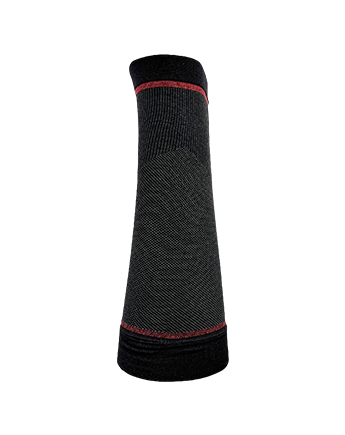
A Black Elastic Knee Support pairs a dark, range-friendly colour with an elastic knitted structure intended to stretch over the joint and recover during use. Stretch and recovery claims stay within verified product information.
Size range, dimensions, composition and any stated product weight frame which sports and retail channels the item can serve. Applications are described only where they match those specifications.
Bulk supply terms, packaging and any confirmed customisation options are agreed against factory capability. Sample evaluation precedes volume commitment so that construction quality is seen, not only described.
Knitted fabrics are built from intermeshed loops and generally extend more easily; woven fabrics interlace yarns at right angles and usually extend less unless elastic yarns are introduced. Knee supports more often rely on knit structures for circumferential stretch.
Elastic fibres store and release energy so the support can expand and recover. Without them, many polyester or nylon grounds would not provide usable sleeve elasticity.
Denser knitting tends to increase thickness and can reduce ease of extension; more open knitting does the reverse. Density is one of several variables that set fit and feel.
Fabric surface, stretch and recovery, edge and seam quality, and measurements against the size chart form a practical inspection set for knitted knee supports.
| Element | Role in the Product | Inspection Focus |
|---|---|---|
| Fibre blend | Sets durability, stretch potential, hand | Composition vs datasheet; batch consistency |
| Knit structure | Controls extension, recovery, zoning | Even loops; correct pattern in each zone |
| Body fabric | Covers and supports the knee area | Density, thickness, freedom from defects |
| Edges | Hold position; allow donning | Elasticity, roll resistance, finish quality |
| Seams or joins | Connect panels where used | Strength, comfort in flex zones |
| Dimensions | Determine size accuracy | Match to size chart across samples |
Materials, knitting method, elastic design and finishing jointly determine how a sports knee support fits and wears. Inspection of fabric, stretch, edges and measurements turns those design choices into something that can be verified before a range is ordered. Zhejiang Steriger Sports Medicine Technology Co., Ltd. manufactures knitted sports supports and related accessories. Review of fibre content, knit construction, edge finish and dimensional data against the intended activity and size plan supports selection of knee supports with construction quality suited to regular sports use.
Steriger is a national high-tech enterprise specializing in the R&D and production of high-quality sports supports, medical braces, and sports compression socks.
Copyright © Zhejiang Steriger Sports Medicine Technology Co., Ltd.
The information provided on this website is intended for use only in countries and jurisdictions outside of the People's Republic of China.

Approval No: 浙金药监械生产备20200039号

 English
 Español
 Deutsch
 عربى
 Français