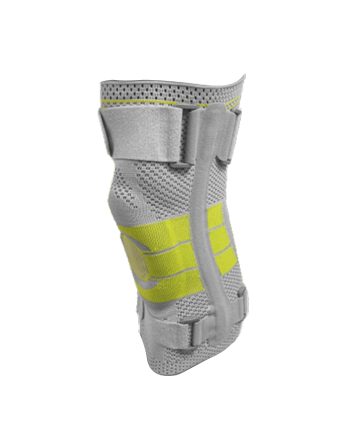
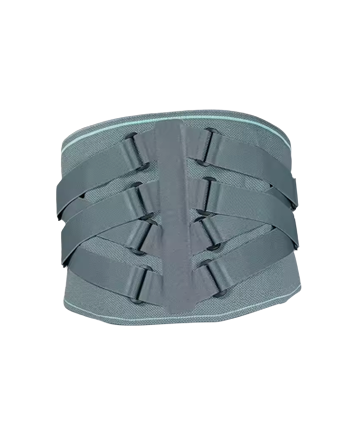
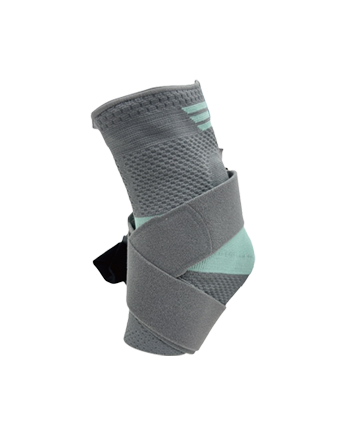
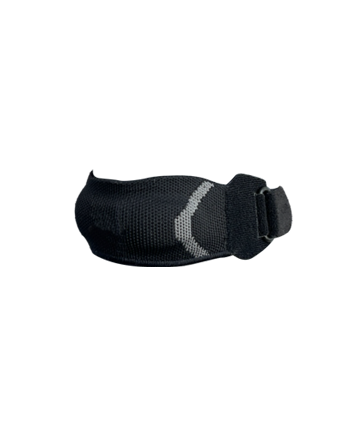
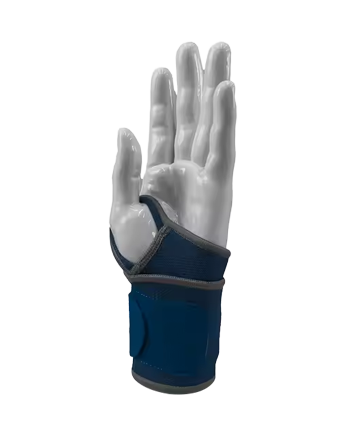
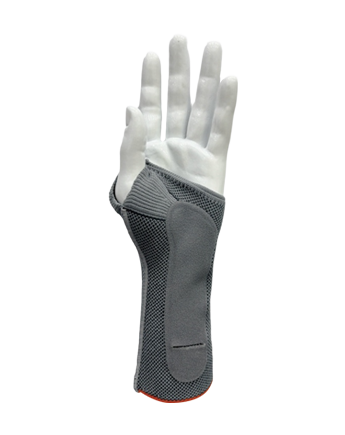
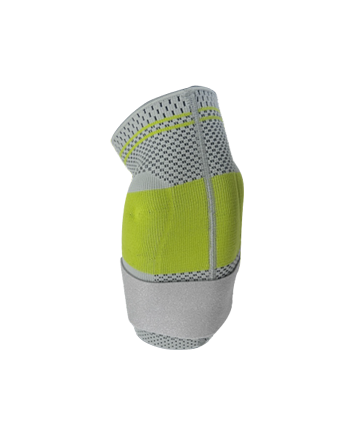
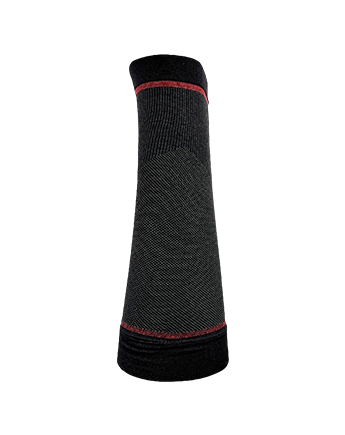
Your wrist aches after a long day at the keyboard, or you are coming back from a hand injury and need something that actually stays in place rather than slipping down your palm every hour. You have looked at options online, and the one thing every product claims is "adjustable" — but the straps on some of them look like they were sewn on as an afterthought, and you have no way to tell from a product photo whether they will hold or not. A Palm Brace is only as effective as the strap system holding it in place, and knowing where to look and what to look for changes a vague purchase into a decision you can actually trust.
A palm brace is a support device designed to stabilize the palm, wrist, and surrounding structures during recovery, repetitive work, or physical activity. The core structure — whether rigid, semi-rigid, or flexible — provides the base support. The strap system is what determines whether that support is actually delivered to your specific hand, or whether the brace shifts around and provides inconsistent pressure throughout the day.
Fixed-size braces attempt to solve the fit problem through sizing categories, but hand dimensions vary significantly even within the same general size range. The distance from the base of the thumb to the wrist, the width of the palm, and the circumference of the wrist all differ between individuals. Adjustable straps allow a single brace to accommodate this variation and to be tuned as the user's needs change — tighter during active use, slightly looser during rest, adjusted as swelling goes down during recovery.
A brace without meaningful adjustability is a brace that fits either one specific hand or no hand particularly well.
The strap layout on a palm brace is not standardized across all products, but quality designs follow a logic that matches the anatomy of the hand and wrist. Knowing where straps should be positioned helps you evaluate whether a product has been designed around function or appearance.
Key strap zones in a properly designed palm support:
A brace with only one strap — typically a single wrist band — is not offering multi-zone support regardless of how it is described. A quality design provides at least wrist and mid-palm control as separate adjustable points.
When evaluating a brace before purchase, the strap construction tells you a great deal about the overall manufacturing standard. These are the specific things worth examining closely:
The adjustability of a palm support is not only a comfort feature — it directly affects whether the brace delivers functional support or simply occupies space on the hand.
How strap design connects to medical and therapeutic function:
| Strap System Type | Adjustability | Stability | Ease of Use | Suited For |
|---|---|---|---|---|
| Single wrist strap only | Low | Low | Simple | Light compression, mild fatigue |
| Dual strap (wrist and palm) | Moderate | Moderate | Moderate | Daily use, repetitive strain |
| Multi-point (wrist, palm, thumb loop) | High | High | Requires setup | Recovery, sports, clinical use |
| Figure-eight crossing strap | High | Very high | Moderate complexity | Post-injury, wrist instability |
| Elastic-only wrap (no closures) | None | Low | Very simple | Minimal support, short duration |
There is a trade-off between simplicity and functional range. A single-strap design allows fast application and removal, which suits very short-term use. For anyone wearing the brace for longer than a brief period, or for a therapeutic purpose, the stability limits of a basic strap system reduce effectiveness enough to make the slightly more complex setup of a multi-point design worthwhile
When a brace fails to perform well in use, the strap system is usually where the failure originates. Recognizing these failure patterns helps identify what to avoid.
Brace slides toward the fingers during the day: The wrist strap is not anchoring securely enough. Either the strap material is too elastic, the Velcro is losing grip, or the strap positioning allows the brace to migrate under the regular tension of hand movement.
Pressure ridge forming at the palm edge: A narrow mid-palm strap that is too tight creates a concentrated pressure line rather than distributing compression across the surface. Either the strap needs to be loosened or replaced with a wider one.
Strap losing tightness within an hour of adjustment: Velcro quality is degrading, or the strap material itself has stretched beyond its elastic recovery point. This is a manufacturing quality issue that worsens over time.
Skin irritation along strap edges: Raw or poorly finished strap edges, or straps made from non-breathable material that traps moisture, cause skin breakdown during extended wear. This is particularly problematic for users who need to wear the brace for multiple consecutive hours.
Brace rotating on the hand during gripping: Absent or inadequate thumb positioning keeps the brace from being anchored against rotation. This is addressed by a thumb loop or diagonal crossing strap.
Different users place different demands on a palm support strap system. Understanding how use case affects strap requirements helps match the product to the actual need.
Extended keyboard and mouse use creates low-intensity but sustained wrist loading. The strap requirement here is secure positioning during repetitive small movements and comfort over long wearing periods. A brace that needs readjustment every two hours will be removed and left unused. Breathable strap material and secure but not restrictive closure are the priorities.
Active use involves higher forces, sweat, and the need for the brace to remain in position through impact and grip loading. Straps need to hold firmly under these conditions without loosening. The Velcro must perform when slightly damp, and attachment points need to handle pulling forces that would not occur in a sedentary environment.
Rehabilitation use requires precise compression control that can be adjusted as the hand heals. The strap system needs to be operable with one hand if the injured hand has limited function. It also needs to be easy to remove for hygiene and inspection of the injury site without fully disassembling the brace.
Industrial or manual labor environments expose the brace to sustained grip forces, vibration, and contact with tools or surfaces. The strap system needs high durability, secure anchoring, and resistance to the kind of mechanical stress that causes stitching to fail on lighter-duty designs.
Evaluating the strap system in practice involves a short sequence of observations that reveal whether the design delivers what it claims.
Manufacturing quality in adjustable straps is not clear from a product photograph, yet it shapes how the brace performs over weeks and months of use rather than only across early wears.
Indicators of professional manufacturing quality:
Finding a palm support that actually delivers the stability and compression control it claims comes down to understanding the strap system before you commit. A brace with well-placed, properly reinforced, multi-point adjustable straps will hold its position, apply even pressure, and remain comfortable through a full day of use. One with inadequate strapping will shift, loosen, and eventually be set aside. If you are evaluating hand support options for office use, sports protection, or recovery, and want to assess strap construction and fit across a range of products, Zhejiang Steriger Sports Medicine Technology Co., Ltd. develops Palm Brace designs with multi-point adjustable systems built to professional manufacturing standards. Reaching out with your use case and fit requirements gives their team the context to recommend a product that addresses your specific support needs rather than a general-purpose solution that may or may not suit your hand.
Steriger is a national high-tech enterprise specializing in the R&D and production of high-quality sports supports, medical braces, and sports compression socks.
Copyright © Zhejiang Steriger Sports Medicine Technology Co., Ltd.
The information provided on this website is intended for use only in countries and jurisdictions outside of the People's Republic of China.

Approval No: 浙金药监械生产备20200039号

 English
 Español
 Deutsch
 عربى
عربى Français