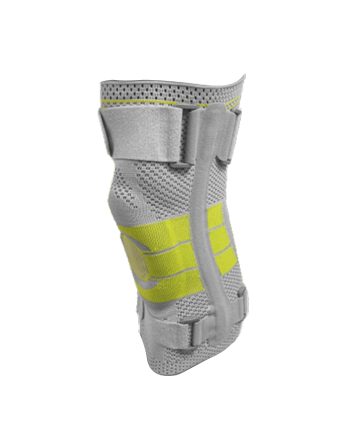
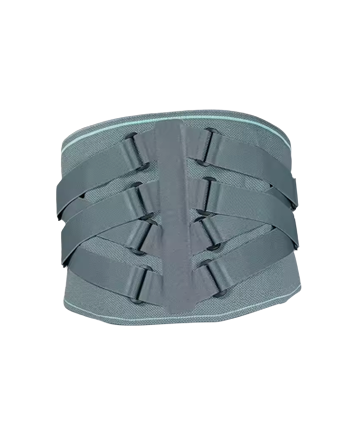
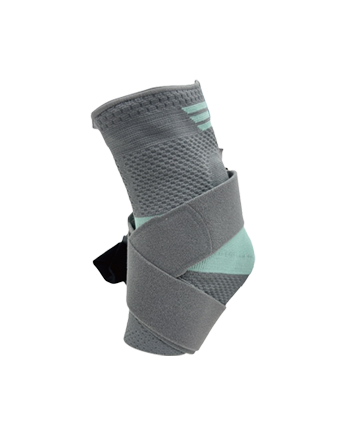
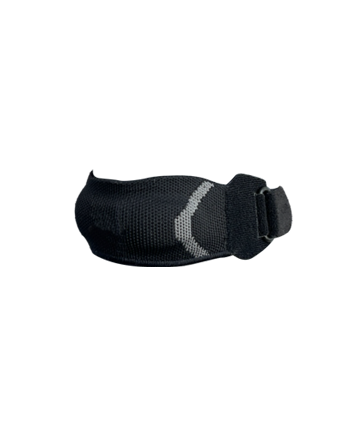
Many people buy a waist support only to leave it unused in a drawer, an outcome more frequent than buyers tend to acknowledge. The product looked right at the point of purchase — the size seemed appropriate, the description mentioned support and comfort — but within a week of regular use, something was off. It was too rigid for extended sitting, or too loose during activity, or it caused skin irritation that made wearing it genuinely unpleasant. These outcomes are not inevitable, but they are predictable when certain selection errors go uncorrected. An Adjustable Waist Support, chosen with real attention to how and when it will be used, produces a very different experience from one selected on price or packaging alone.
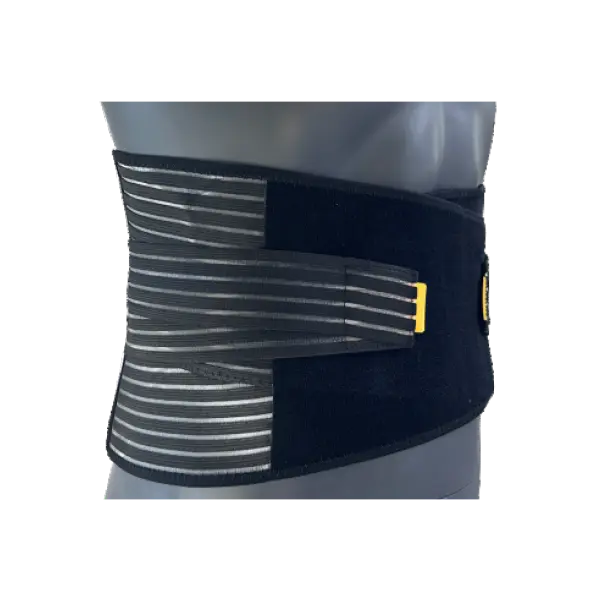
Applying clothing size logic to support products is a frequent buying error. A garment labeled medium fits a broad range of body measurements through cut and stretch. A waist support operates differently — it needs to apply compression at a specific anatomical position and with a specific degree of contact to function as intended.
Buyers who select support products by clothing size frequently end up with:
The correct approach is to measure the actual waist circumference at the position where the support will be worn, then cross-reference that measurement against the manufacturer's size chart for the specific product. Size charts vary between product types and manufacturers, which makes direct measurement the only reliable method.
Waist and lumbar support products exist across a wide range of stiffness and compression profiles. A product described simply as a "back support" could be anything from a soft elastic compression wrap to a semi-rigid brace with integrated stays. The degree of support that is appropriate depends entirely on the intended use.
A useful way to think about the range:
Selecting a product that is too flexible for the application delivers inadequate support. Selecting one that is too rigid restricts movement unnecessarily and often leads to the support being worn less consistently than it should be. An Adjustable Waist Support with a modular stiffness system — removable stays, adjustable panels — addresses this by allowing the user to match the support level to the specific activity rather than committing to a fixed profile.
An uncomfortable support tends to stay unused, and sporadic use yields less benefit than a moderately supportive product worn properly each day. Material breathability is one of the factors that directly affect whether a support feels comfortable enough for regular daily use.
Problems that arise from inadequate breathability:
A breathable lumbar support uses mesh panels, moisture-wicking fabrics, or perforated construction to allow air circulation even during extended wear. For occupational users who need to wear lumbar support for a full working shift, or for athletes who wear it during training, breathability is not a secondary comfort consideration — it is a functional requirement.
A waist support purchased for desk work may be entirely wrong for physical labor, and vice versa. The activity context determines which product properties actually matter.
A comparison of common use contexts and what each requires:
| Use Context | Priority Properties | Less Critical Properties |
|---|---|---|
| Extended desk work | Breathability, comfort, posture feedback | High rigidity, moisture resistance |
| Physical labor and lifting | Structural rigidity, secure closure, load stability | Thin profile, decorative finish |
| Sports and training | Elastic flexibility, movement freedom, moisture management | Maximum rigidity, stay support |
| Post-injury recovery | Adjustable compression, structured support, medical alignment | Lightweight, minimalist design |
| Travel and intermittent use | Compact fold, lightweight, quick adjustment | High durability, heavy construction |
Buying a single product and expecting it to perform adequately across all these contexts is an assumption that frequently produces activity-context mismatch errors. Buyers sourcing for retail or wholesale environments benefit from recognizing that their customers have different use cases, and that a product range structured around those differences serves better than a single undifferentiated option.
Waist support products span a wide price range, and not all of that variation reflects meaningful quality differences. Some lower-priced products perform adequately for their intended application. But in the support product category, construction quality has a direct impact on how the product performs over time — and some quality differences are genuinely invisible until the product has been in use for weeks.
Construction quality indicators worth evaluating:
An elastic waist support that loses its compression characteristics after a short period of regular use has not provided the value its initial price represented, because the functional life of the product — the period during which it actually supports the lumbar region adequately — was shorter than the buyer's expectation.
Waist circumference serves as a common sizing measurement for support products, yet it does not alone determine whether a product fits and functions as intended. Body proportions—including torso length relative to waist circumference, the depth of the lumbar curve, and the hip-to-waist ratio—affect how a support sits and whether it keeps its position during movement.
Common fit problems that arise from body shape variation:
Adjustable Waist Support designs that include height adjustment, shaped panels, or flexible stay positions accommodate a wider range of body geometries than flat-profile supports in fixed dimensions. For buyers selecting products for diverse end-user populations, design flexibility is a more reliable fit solution than offering multiple sizes of the same rigid profile.
A waist support used daily for work or activity will need to be washed regularly. Products that cannot be machine washed, that require specific cleaning procedures, or that lose their structural integrity after washing create practical problems that affect whether the product continues to be used as intended.
Cleaning-related issues that affect product selection:
A comfortable waist support that is genuinely easy to maintain — with removable stays where present, machine-washable fabric, and durable closure materials — gets cleaned and reused as intended. One that imposes inconvenient maintenance requirements tends to be worn less often than it should be.
Even with careful measurement and specification review, a waist support may not fit or perform as expected once worn. The shape of the body in motion, the specific position of the lumbar region during the user's primary activity, and individual differences in how compression feels at different pressures all affect real-world fit in ways that are genuinely difficult to predict from a specification alone.
For individual buyers, this means:
For wholesale and distribution buyers, it means understanding that end users will have fit and comfort questions, and that product ranges with flexible sizing, adjustable closures, and well-documented sizing guidance generate fewer return requests than those without.
Working through waist support selection more systematically reduces the probability of landing on a product that does not serve its intended purpose. A structured approach:
Avoiding the common mistakes in waist support selection is not complicated once the selection criteria are clearly defined — but that clarity requires understanding what the product is actually supposed to do in its intended context. A product chosen with attention to support level, breathability, fit adjustability, and construction quality performs reliably and gets used consistently. One chosen without that attention ends up replaced sooner than it should, returned by unhappy end users, or simply not worn. For wholesale buyers, brand developers, and product managers sourcing support products for diverse market applications, those distinctions translate directly into customer satisfaction, return rates, and repeat purchasing. Zhejiang Steriger Sports Medicine Technology Co., Ltd. develops and manufactures waist support products across adjustable, breathable, and elastic configurations, with product lines suited to occupational, athletic, and rehabilitation applications. For buyers evaluating product range options or exploring OEM development for specific market requirements, reaching out to their team with application requirements and volume expectations provides a practical path from product concept to verified production.
Steriger is a national high-tech enterprise specializing in the R&D and production of high-quality sports supports, medical braces, and sports compression socks.
Copyright © Zhejiang Steriger Sports Medicine Technology Co., Ltd.
The information provided on this website is intended for use only in countries and jurisdictions outside of the People's Republic of China.

Approval No: 浙金药监械生产备20200039号

 English
 Español
 Deutsch
 عربى
عربى Français