Lower back pain has a way of narrowing a person's world. A straightforward task — bending to pick something up, sitting through a meeting, loading a delivery — becomes something to manage around rather than simply do. The instinct to reach for a waist support is understandable: it is immediate, portable, and does not require scheduling an appointment. But the question of whether a support alone is the right response, whether physical therapy addresses the problem more durably, or whether the two serve different purposes entirely is one that people with lower back pain have never had answered clearly. The answer matters not just for individuals managing discomfort, but for distributors, healthcare product buyers, and wholesale waist support procurement teams who need to understand what their customers are actually solving for.
Understanding What Lower Back Pain Actually Involves
Lower back pain is not a single condition — it is a category of symptoms with a wide range of underlying causes, each of which responds differently to different interventions. The muscle strain that follows a single heavy lift resolves differently from the postural fatigue that builds across months of desk work. A disc-related issue affecting nerve pathways requires a different management approach from a muscular imbalance caused by one-sided physical activity.
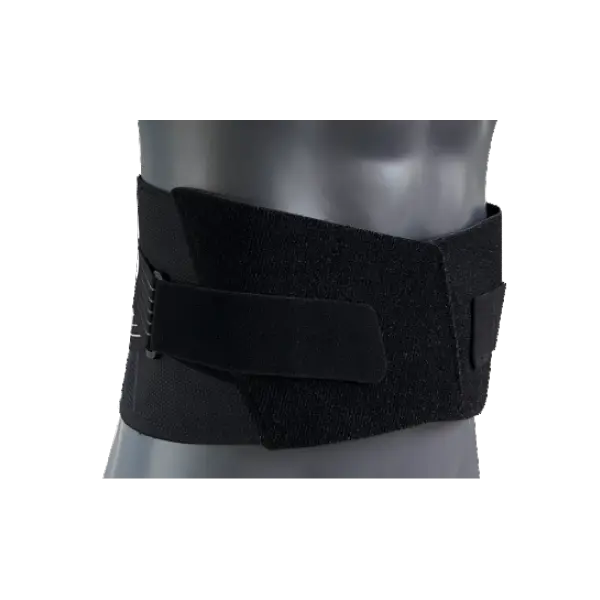
This distinction matters because it determines which intervention makes sense at which stage. A support that provides immediate mechanical assistance during an acute injury is doing something different from physical therapy that retrains movement patterns over weeks. Neither is inherently — they address different aspects of a problem that often has multiple contributing factors.
Common Underlying Causes Worth Distinguishing
- Acute muscular strain from a specific incident (lifting, twisting, sudden movement)
- Chronic postural strain from sustained poor sitting or standing positions
- Muscular imbalance — weakness in supporting musculature that overloads adjacent structures
- Disc-related conditions affecting the lumbar spine segments
- Degenerative changes in lumbar facet joints or disc tissue
- Referred pain from hip, pelvis, or sacroiliac joint dysfunction
Each of these responds to a somewhat different combination of support and rehabilitation. Persistent or severe lower back pain warrants assessment by a medical professional before the decision between self-management approaches is made.
What Physical Therapy Does — and What It Cannot Do Quickly
Physical therapy for lower back pain works through an active process: a trained therapist assesses the movement patterns, muscle function, and structural factors contributing to the pain, then designs a programme of exercises and manual techniques aimed at correcting those underlying factors over time.
CORE
Core Muscle Strengthening
The deep stabilising muscles of the trunk — particularly the transverse abdominis and multifidus — support the lumbar spine during movement. Weakness in these muscles increases spinal load and instability. Targeted exercise progressively rebuilds this support capacity.
FLEX
Flexibility and Mobility Restoration
Tight hip flexors, hamstrings, and thoracic spine restriction all place compensatory load on the lumbar region. Addressing these through stretching and mobilisation reduces the mechanical demand on the lower back.
Many chronic lower back pain cases involve habitual movement patterns that repeatedly load the spine in a way that sustains the problem. Retraining how a person bends, lifts, and sits changes the load pattern rather than simply reducing its immediate effect.
Understanding which postures and habits create or maintain the pain allows the individual to modify behaviour between sessions — a factor that significantly affects the rate of improvement.
The limitation of physical therapy is that it requires time, consistent participation, and a patient who is capable of engaging with the programme. It does not provide immediate symptom relief, and the benefits build progressively rather than arriving on the session.
What Waist Support Does — and What It Is Not Designed to Do
A waist support — whether adjustable, elastic, or incorporating rigid panels — works by applying external compression and structure to the lumbar and abdominal region. This external support reduces the load that the spinal structures and surrounding musculature have to manage independently during activity.
The immediate effects of wearing a support include:
- Reduced shear and compressive force on the lumbar spine segments during bending, lifting, and prolonged standing
- Proprioceptive feedback — the pressure of the support on the skin and underlying tissues increases the wearer's awareness of their back position, which often produces a spontaneous posture correction
- Thermal effect — the warmth generated by the support against the skin increases local blood flow and can reduce muscular stiffness
- Psychological reassurance — the sense of support reduces movement anxiety, which in turn allows a person to move more freely than they would without the support
What a waist support does not do is address the underlying muscular weakness, movement pattern problems, or structural issues that created the pain. It manages the immediate situation — reducing strain during activities that would otherwise provoke or worsen symptoms — without changing the underlying condition.
Comparing the Two Approaches Across Key Dimensions
| Dimension |
Physical Therapy |
Waist Support |
| Onset of benefit |
Gradual, builds over weeks |
Immediate during use |
| Type of benefit |
Addresses root cause over time |
Manages symptoms during activity |
| User participation required |
High — exercises and attendance |
Low — put on and wear |
| Suitable for acute phase |
Limited — too painful initially |
Often yes — reduces acute load |
| Suitable for recovery phase |
Central to recovery |
Complementary during demanding tasks |
| Long-term independence |
Builds self-sufficiency |
Risk of dependency if relied on exclusively |
| Occupational use during work |
Difficult to perform during work |
Can be worn throughout the working day |
| Cost structure |
Ongoing session fees |
One-time purchase |
| Professional involvement needed |
Yes |
Not typically |
Can Physical Therapy and Waist Support Work Together?
The framing of physical therapy versus waist support as competing alternatives misrepresents how these tools function in practice. For many people with lower back pain, the functional approach uses both — but at different stages and for different purposes within the same recovery process.
During the acute or subacute phase, when pain is significant and movement is restricted, wearing a support during necessary activities allows a person to remain functional without exacerbating the injury. This is not avoiding recovery — it is protecting against the additional load that unrestricted activity would place on an already-stressed structure.
As the acute phase resolves and physical therapy begins, the support continues to serve a role during high-demand activities — at work, during loading tasks, during longer periods of sustained standing — while the therapeutic programme works on the underlying factors. Gradually, as core strength and movement quality improve, the need for the support during everyday activities reduces. The support transitions from a daily necessity to a specific-situation tool.
A Staged, Complementary Approach
This staged, complementary approach is more nuanced than the either-or framing suggests — and understanding it produces better outcomes than committing rigidly to one intervention at the expense of the other.
How Different Types of Waist Support Fit Different Situations
Adjustable Waist Support
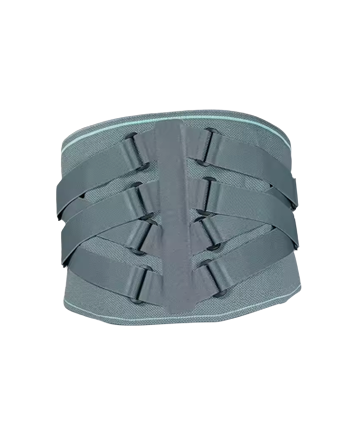
An adjustable waist support allows the wearer to modify the compression level — typically through a system of elastic panels, velcro straps, or tensioning mechanisms — without removing the support. This adjustability is particularly useful for people whose activity level changes throughout the day: tighter compression during a loading task, lighter compression during a less demanding period, and the ability to fine-tune without the disruption of removing and refitting the support.
For warehouse workers, delivery drivers, and physical labourers whose work involves variable demands across a shift, adjustability makes the support genuinely usable rather than a compromise between comfort and function. The ability to respond to what the body is about to do — tightening before a heavy task, loosening during a rest period — reflects how real work actually happens.
Elastic Waist Support
An elastic waist support provides compression and proprioceptive feedback without the rigid structure of a panel-based design. The elastic construction allows a fuller range of movement, making it appropriate for active situations — exercise, sport, and recovery activities where mobility needs to be maintained alongside support.
For users managing mild to moderate lower back discomfort during active pursuits, or those in the later stages of recovery who need some support during physical activity but are working to rebuild independent function, an elastic design allows movement quality to develop rather than being restricted by structure.
Breathable Lumbar Support
A breathable lumbar support prioritises airflow through the support material — typically achieved through perforated panels, mesh construction, or moisture-wicking fabric systems. This design is specifically aimed at situations where the support needs to be worn for extended periods, often in warm environments or during physical activity that generates body heat.
An office worker wearing a support throughout the working day, a nurse standing for long shifts in a warm clinical environment, or a driver spending hours behind the wheel all face the practical reality that heat build-up under a non-breathable support becomes uncomfortable enough to compromise consistent wear. A breathable design removes that barrier, allowing the support to do its job throughout the day rather than being removed because of discomfort.
Matching Support Type to Situation: A Practical Framework
For Occupational Lower Back Strain
Different occupations place different demands on the lumbar spine, and the support specification should reflect those demands:
- Office and desk workers: Postural fatigue from sustained seated positions benefits from a support that promotes lumbar curve maintenance. A breathable lumbar support worn during working hours — combined with regular movement breaks — addresses both the postural and the thermal demands of the environment.
- Warehouse and logistics workers: Variable lifting, carrying, and bending demands suit an adjustable waist support that can be tightened for heavy tasks and loosened during lighter activities. Durability and secure fit under movement are practical priorities.
- Drivers: Long periods of sustained seated vibration load the lumbar spine differently from standing occupations. A support with good vertical coverage and breathable construction suits the extended, relatively static nature of the driving position.
- Nurses and clinical staff: On-feet, physically active work in warm environments with frequent patient-handling demands suits a breathable, flexible support that does not restrict movement while maintaining some compression.
- Construction and manual trades: High-load activities in variable postures suit a structured, adjustable support with secure attachment that remains in position during physically demanding work.
For Recovery After Injury or Surgery
Post-injury and post-surgical support use involves a different set of priorities from occupational use. The support is part of a managed recovery process, often alongside physiotherapy, and the specification should reflect the clinical context:
- Early-stage post-injury support typically prioritises structure and compression over flexibility — the goal is load reduction and stabilisation during the vulnerable period
- Mid-recovery support transitions toward a design that allows developing strength to be used while still providing assistance during higher-demand activities
- Late recovery may involve minimal or no support for everyday activities, with a flexible elastic support reserved for higher-risk situations — heavy lifting, sport, or sustained physical activity
The transition between these phases should be guided by a medical or physiotherapy professional, not by how the support feels on a given day.
What Wholesale and Distribution Buyers Should Understand About This Category
For distributors, healthcare product buyers, and waist support supplier relationships, understanding that the market encompasses multiple distinct user profiles — not a single "lower back pain" customer — is important for product range and positioning decisions.
A product range that covers adjustable compression supports for occupational use, elastic supports for active recovery, and breathable designs for extended wear reaches genuinely different buyer motivations. A buyer sourcing only one support type misses users whose needs it does not address, regardless of how well that type serves its intended application.
For buyers evaluating wholesale waist support supply, the production consistency of the manufacturer affects how the product performs in the field — not just at the point of purchase. A support with inconsistent elastic tension between units, varying compression panel firmness across a batch, or degrading strap hardware under repeated use generates customer returns and damages category trust.
Key Considerations When Evaluating a Manufacturer or Supplier
- Material quality documentation — fabric composition, elastic grade, and hardware specification
- Quality control process across production runs, not just samples
- Size range coverage for diverse user populations
- Certification relevant to medical and healthcare product distribution channels
- OEM and customisation capability for private-label programmes
Making the Right Choice for Lower Back Pain Management
Physical therapy and waist support are not competing answers to the same question — they address different aspects of lower back pain at different stages of the problem and the recovery process. A support worn during demanding work or activity reduces immediate strain and helps a person remain functional. A physical therapy programme works on the underlying factors that created the vulnerability in the place. Used together, sequenced appropriately to the recovery stage, they produce better outcomes than either approach pursued in isolation. For individuals choosing between options, the nature of the pain, the demands of daily life, and guidance from a healthcare professional should drive the decision rather than a binary either-or framing.
For distributors, healthcare buyers, and procurement teams evaluating product ranges, understanding the distinct user profiles across elastic, adjustable, and breathable lumbar support categories allows a product strategy that serves real demand rather than a generalised category assumption.
About the Manufacturer
Zhejiang Steriger Sports Medicine Technology Co., Ltd. manufactures a range of lumbar and waist support products across functional categories — including adjustable, elastic, and breathable lumbar support designs — for wholesale supply and OEM programmes, and can discuss product specifications, certification documentation, and sourcing terms directly with buyers evaluating category expansion or supplier relationships.



 English
 Español
 Deutsch
 عربى
عربى Français