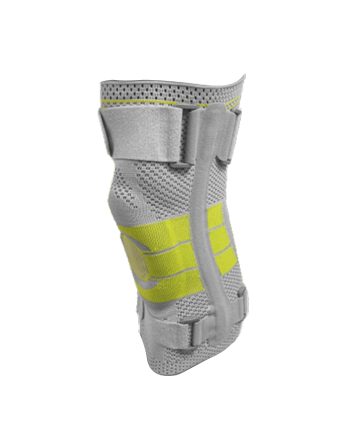
As more people seek ways to manage knee weakness, clinicians and patients are turning attention to supportive devices intended to improve day-to-day function and protect healing tissues. Knee stabilizers — external supports designed to limit dangerous motions and add mechanical steadiness — are increasingly discussed in clinical settings and community care. Experts say these devices can be valuable when used together with a structured rehabilitation plan, but they caution against depending on them as a long-term substitute for muscle strengthening.
Knee instability is a common complaint after injury, during recovery from procedures, or as a chronic issue related to joint wear and muscle imbalance. Patients often describe a sensation that the knee might "give way," catch, or feel unreliable when standing, walking, or changing direction. For many, that uncertainty limits activity and reduces confidence.
Knee stabilizers are intended to reduce those troubling sensations by controlling excessive side-to-side movement and preventing hyperextension. They are built so a person can keep moving while the joint is protected from positions that could cause further damage. Importantly, clinicians view them as tools that bridge recovery — enabling safer mobility while the body rebuilds strength and coordination.
Healthcare providers typically consider a supportive device for one of two broad goals:
Protection during healing
Symptom control and function
Therapists emphasize that external support should complement, not replace, progressive muscle training. The thigh muscles and surrounding soft tissues are the main biological stabilizers of the knee. If a device is used in lieu of a strengthening program, the muscles that normally protect the joint can become weaker and less coordinated over time.
A typical care plan integrates device use with a staged rehabilitation program:
Patients who use a stabilizer should monitor comfort and skin health, and keep in touch with their care team about progress or problems. Report any signs of increased pain, numbness, skin breakdown, or swelling. A poorly fitted device can cause pressure points or allow unwanted movement, while over-reliance on continuous use may slow muscular recovery.
| Purpose | Typical features (general) | How it fits into rehab |
|---|---|---|
| Protecting a healing joint | Rigid or semi-rigid elements that limit bending/straightening | Use early to prevent stress on healing tissues; progress motion as allowed |
| Enhancing day-to-day stability | Lateral supports, straps for alignment and fit | Use during activities that provoke instability while strengthening continues |
| Reducing fear of movement | Perceived mechanical support and improved confidence | Pair with balance and functional retraining to restore independence |
Rehabilitation professionals often describe the device as a temporary partner in recovery. "A support can give a patient the confidence to move while tissue strength is being rebuilt," said a physical therapist who works with people recovering from knee injuries. The therapist stresses clear goals and timelines: the device should have a defined role and an exit strategy, with progressive exercises replacing passive reliance.
For older adults who experience occasional giving-way, a supportive device can permit safer mobility and reduce the risk of falls during recovery. For people returning to work or sport, the device can allow a phased resumption of duties while targeted training addresses deficits. In each case, individual assessment is essential so that benefits outweigh any unintended weakening that prolonged immobilization might cause.
Knee stabilizers can serve a clear clinical purpose: they protect healing tissues and help people remain active while they regain strength. Used thoughtfully alongside a progressive rehabilitation plan, they offer a bridge back to independent movement rather than a permanent replacement for the body’s own stabilizers. Shared decision-making between patients and clinicians — with close attention to fit, skin health, and functional goals — maximizes the chance of a safe recovery and a return to the activities that matter most. Supported guidance and ongoing strengthening help ensure that the temporary mechanical support gives way to restored biological control, a transition that is central to long-term function and confidence for many people who face knee instability. Supported resources and further guidance can be found via Zhejiang Steriger Sports Medicine Technology Co., Ltd..
Steriger is a national high-tech enterprise specializing in the R&D and production of high-quality sports supports, medical braces, and sports compression socks.
Copyright © Zhejiang Steriger Sports Medicine Technology Co., Ltd.
The information provided on this website is intended for use only in countries and jurisdictions outside of the People's Republic of China.

Approval No: 浙金药监械生产备20200039号

 English
 Español
 Deutsch
 عربى
عربى Français