Knee pain and instability can quietly limit everyday movement, turning simple actions like walking, exercising, or standing for long periods into uncomfortable challenges. With so many knee support options available, it's easy to feel overwhelmed by products that look similar but serve very different purposes. Understanding how knee sleeves, knee stabilizers, and knee braces differ is the step toward protecting your joints and staying active—so which type of knee support is truly right for you?
Knee supports are built to help the joint in specific ways, tailored to whatever issue you're facing. Their main aims are to:
The right kind of support lets you stay active while safeguarding important parts like ligaments, tendons, cartilage, and the muscles around the knee. The crucial point is recognizing that different supports provide very different kinds of help—no single product does everything equally well.
A knee sleeve is a flexible, elastic tube that easily pulls on over the knee. It's generally made from soft materials like neoprene, nylon, or spandex mixes, creating a close, comfortable fit around the joint.
Unlike braces or stabilizers, knee sleeves contain no stiff hinges, bars, or hard supports. They rely completely on gentle compression and retained heat instead of physically controlling or restricting motion.
Knee sleeves help the joint through three main mechanisms:
Knee sleeves are particularly helpful for:
Runners, weightlifters, cyclists, hikers, and people with mild, intermittent knee discomfort often find sleeves the perfect everyday solution for staying active and comfortable.
While knee sleeves offer comfort and light support, they are not designed for:
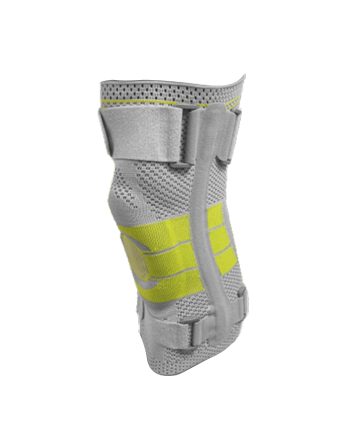
A knee stabilizer offers stronger support than a basic knee sleeve while staying less restrictive than a full rigid knee brace. It typically features adjustable straps, reinforced side panels, or semi-rigid stays to add structure without completely locking the joint.
Knee stabilizers are built to improve stability while still allowing a good amount of natural movement.
Knee stabilizers help the joint by:
They find a middle ground—offering real structure when needed but preserving flexibility for everyday function.
Knee stabilizers are particularly helpful for:
They're a solid choice if your knee occasionally feels like it might "give way" or shift unexpectedly, but you don't need total immobilization.
Knee stabilizers aren't always enough for:
A knee brace represents the good level of structured knee support. It usually features rigid or semi-rigid side supports, hinged mechanisms, sturdy panels, and multiple adjustable straps—all engineered to actively manage and limit knee movement.
Knee braces are commonly prescribed in medical rehabilitation or high-performance sports contexts and are frequently recommended by doctors, physical therapists, or orthopedic specialists.
Knee braces deliver protection through mechanical means by:
Certain specialized braces are built to shift weight away from specific parts of the joint, which can be especially helpful for people managing arthritis.
Knee braces are appropriate when dealing with:
They're typically worn during structured rehab programs or when participating in activities that put substantial stress on the knee.
Knee braces do come with some drawbacks:
Knee Sleeves vs Stabilizers vs Braces: Key Differences Explained
|
Type |
Key Features |
Best Used For |
Not Suitable For |
|
Knee Sleeve |
Elastic compression, warmth, improved joint awareness |
Mild pain, stiffness, daily activity, low-impact exercise, prevention |
Instability, ligament injury, post-surgery, motion control |
|
Knee Stabilizer |
Adjustable straps, reinforced sides, moderate structure |
Mild–moderate instability, ligament strain recovery, return to activity |
Severe tears, post-op immobilization, extreme high-impact sports |
|
Knee Brace |
Rigid or hinged support, strong motion control |
Major injuries, surgery recovery, arthritis, high-stress activities |
All-day casual wear, mild discomfort, unrestricted movement |
While all three support types aim to protect the knee, they differ significantly in function:
Choosing between them depends on the severity of symptoms, activity demands, and recovery stage.
Start with Your Symptoms Honestly evaluate what your knee is telling you:
Mild soreness tied to movement usually responds well to a sleeve. Any real instability or sharper pain often needs the added control of a stabilizer or brace.
Align It with Your Activity Choose support that matches the physical demands you face:
Factor in Your Recovery Phase Healing progresses in stages, and your support should too. Right after an injury or surgery, a brace or stabilizer often gives the structure required. As strength and steadiness improve, many step down to a stabilizer, and later to a sleeve for long-term comfort.
Seek Professional Help When Necessary If pain hangs around, the knee continues to feel unsafe, or you're recovering from surgery or a major injury, consult a physician or physical therapist. They can thoroughly check stability, analyze your movement, and guide you to the most suitable option.
No matter which knee support you decide on, a good fit is non-negotiable if you want it to actually help:
|
Type |
Main Purpose |
Best For |
Limitations |
|
Knee Sleeve |
Comfort, warmth, and light compression |
Mild knee pain, stiffness, daily activities, low-impact exercise |
Not suitable for instability, ligament injury, or post-surgery |
|
Knee Stabilizer |
Moderate support with improved joint control |
Mild to moderate instability, recovery from strains, return to activity |
Insufficient for severe injuries or high-impact stress |
|
Knee Brace |
Strong mechanical stability and motion control |
Ligament tears, post-surgical recovery, high-risk sports, arthritis |
Bulkier, less comfortable for daily wear, unnecessary for mild issues |
Picking the ideal knee support comes down to matching it to your specific needs and daily life, not automatically reaching for the stiffest or priciest one. Knee sleeves work wonderfully for everyday comfort and gentle reinforcement, knee stabilizers are great for handling moderate wobbliness or transitional recovery, and knee braces step in when you need the strongest safeguard—like after surgery or with a significant injury.
At Steriger, we focus on helping you make smart, informed decisions based on how your knee actually feels, the way you move, and the demands of your activities. Knowing what each type of support is meant to do lets you shield your knee better, support smoother healing, and keep moving with real assurance. If pain or doubt lingers, the smartest move is always to consult a healthcare professional for tailored guidance and peace of mind.
Steriger is a national high-tech enterprise specializing in the R&D and production of high-quality sports supports, medical braces, and sports compression socks.
Copyright © Zhejiang Steriger Sports Medicine Technology Co., Ltd.
The information provided on this website is intended for use only in countries and jurisdictions outside of the People's Republic of China.

Approval No: 浙金药监械生产备20200039号

 English
 Español
 Deutsch
 عربى
عربى Français