Lower back pain has a way of accumulating quietly — tightness after a full day of sitting, a slow ache that builds through a warehouse shift, or that familiar stiffness drivers feel after hours behind the wheel. The question that eventually surfaces is a reasonable one: does wearing a waist support actually do anything meaningful, or is it mostly comfort without substance? For anyone sourcing these products through a Waist Support Manufacturer — whether for a workforce, a distribution channel, or a retail line — understanding what the product genuinely delivers, and where it falls short, matters before committing to volume.
A waist support applies external compression around the lumbar region. That compression does several things at once: it reduces the load that the surrounding muscles have to carry independently, it provides mild positional feedback that encourages a more neutral spine alignment, and it limits the subtle micro-movements that accumulate into fatigue over a long shift.
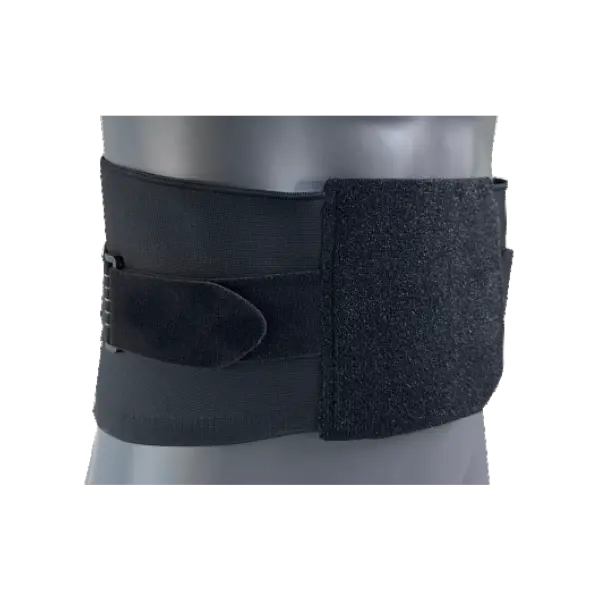
None of that is a cure. The product does not fix structural problems, strengthen weakened muscles, or resolve disc issues. What it does is reduce the moment-to-moment demand on the lower back — which, for someone sitting at a desk for eight hours or standing on a concrete floor all day, translates into noticeably less discomfort by the end of the shift.
The honest answer is: it depends on the type of pain and how the product is used. For lower back discomfort that comes from sustained posture, muscle fatigue, or repetitive physical work, external lumbar support has a reasonable track record of reducing strain during the activity. For chronic structural conditions — disc herniation, nerve involvement, scoliosis — the product alone is not going to resolve anything, though it may reduce discomfort during recovery when used alongside clinical treatment.
This is where many buyers stop thinking carefully. "Waist support" covers a wide range of constructions, compression levels, and materials — and the differences between them are not cosmetic. Matching the product type to the pain profile and work context is what actually determines whether the product helps.
| Pain Type or Work Context | Suitable Product Type |
| Office work, prolonged sitting | Breathable lumbar support, low-profile elastic design |
| Standing work, retail or hospitality | Elastic waist support with consistent compression |
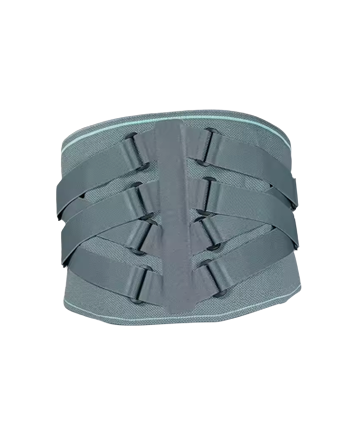
| Manual lifting, warehouse or logistics | Adjustable waist support with reinforced back panel |
| Driving, long-distance transport | Elastic or adjustable design, slim enough for seated wear |
| Post-strain recovery, light duty return | Moderate compression elastic, worn during active hours only |
| Outdoor or warm-environment work | Breathable lumbar support with ventilated fabric construction |
| Care work, nursing, patient handling | Adjustable waist support that holds through repeated bending |
An elastic waist support works well for everyday use where flexibility and comfort matter more than rigid stabilization. The material moves with the body, keeps compression relatively constant, and does not restrict the natural range of motion needed for many work tasks. An adjustable waist support adds a layer of control — the wearer can tighten for heavier activity and loosen during rest periods, which makes it more versatile across varied physical demands. A breathable lumbar support specifically addresses the problem of heat and moisture buildup, which in warm environments or during sustained physical work can make standard compression products uncomfortable enough to remove mid-shift.
Context shapes outcomes here more than product specifications alone. The same elastic support worn by an office worker for posture correction will behave very differently than when used by a warehouse picker covering several kilometers of floor per shift. Understanding who is wearing the product and why is the starting point for getting the selection right.
Yes, and they come up often enough to be worth addressing directly.
For buyers sourcing through China waist support suppliers or building out a wholesale waist support offering, the product details that matter are not always the ones that show up prominently in catalog descriptions.
Waist support works better as one component of a broader approach than as a standalone solution. The product reduces load and supports alignment during the working day, but it does not address what makes the lower back vulnerable to begin with — sedentary habits, inadequate core strength, poor ergonomic setups, or movement patterns that accumulate strain over time.
For workplaces deploying these products at scale, combining them with basic posture education, ergonomic assessments, and movement breaks produces measurably better outcomes than product distribution alone. Workers who understand why they are wearing the support and how to use it correctly tend to get more out of it — and are less likely to develop the dependency patterns that come from treating it as a permanent substitute for their own musculature.
Product quality and supplier reliability are distinct variables that do not always move together. A supplier manufacturing to consistent quality standards — with traceable materials, documented construction processes, and products that hold their stated performance characteristics across a production run — provides a different kind of partnership than one that ships well initially but shows variability in repeat orders.
For buyers building a long-term product line or supplying a workforce on an ongoing basis, the after-sales dimension matters: responsiveness to quality concerns, capacity to fulfill volume orders on consistent timelines, and the ability to develop or adjust products for specific use cases rather than only offering catalog items.
Working with a Waist Support Manufacturer that has depth across product types — elastic, adjustable, and breathable constructions — also allows buyers to build a coherent product range rather than sourcing different types from different suppliers with inconsistent quality standards.
Lower back pain is not one thing. It is a category that covers muscle fatigue, postural strain, lifting-related stress, recovery from injury, and the accumulated wear of physically demanding work — and each of those situations responds differently to different product types. An elastic waist support helps where flexibility and daily comfort are the priority. An adjustable waist support serves users whose physical demands vary across a shift. A breathable lumbar support addresses environments where heat and wearability are practical constraints. Getting the match right between product construction and end-user context is what separates a useful procurement decision from one that results in products sitting unused.
Zhejiang Steriger Sports Medicine Technology Co., Ltd. produces a structured range of lumbar and waist support products built for real working environments — from elastic and breathable designs suited to office and sedentary use, to reinforced adjustable constructions for manual and industrial settings. Their product line is designed with the practical demands of wholesale waist support distribution in mind, and their team works with buyers to identify which configurations fit the specific requirements of their end-user base. If you are evaluating products for your workforce, distribution network, or retail offering, reaching out to discuss your requirements is a practical way to move from general interest to a product selection that actually fits the need.
Steriger is a national high-tech enterprise specializing in the R&D and production of high-quality sports supports, medical braces, and sports compression socks.
Copyright © Zhejiang Steriger Sports Medicine Technology Co., Ltd.
The information provided on this website is intended for use only in countries and jurisdictions outside of the People's Republic of China.

Approval No: 浙金药监械生产备20200039号

 English
 Español
 Deutsch
 عربى
عربى Français