Wearing a waist support belt and still feeling pain — or noticing numbness, restricted breathing, or skin irritation after a few hours — is a sign that something about the fit is off. Tightness is one of the variables that users get wrong with notable consistency, sometimes going too firm in the belief that more compression equals faster relief, sometimes too loose to notice any benefit at all. The relationship between tightness and effectiveness is more nuanced than it appears on the surface. For product teams and procurement professionals working with a waist support manufacturer on design or sourcing decisions, understanding how tightness functions mechanically helps inform product specifications and usage guidance alike.
A waist support belt serves two mechanical purposes: it reduces the load on the lumbar muscles and discs by adding external compression, and it provides mild proprioceptive feedback that encourages better posture. Neither of these functions requires cutting off circulation or restricting the respiratory cycle.
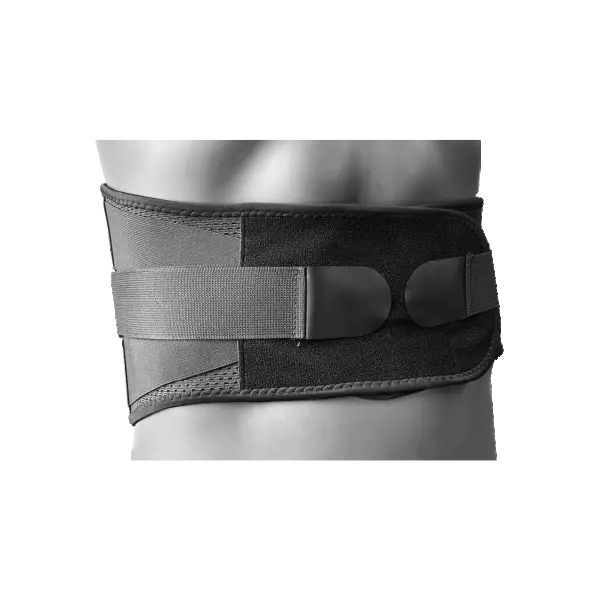
A practical standard that many people can apply without any special equipment is straightforward. When the belt is fastened, breathing should remain easy and unconstricted. Normal trunk movement — sitting down, leaning forward, turning — should not feel blocked. If the belt creates a sensation of being squeezed rather than held, it is probably too tight.
A common reference point: if two fingers can slide under the belt with moderate effort, the tightness is likely within a workable range. If that is not possible without forcing, the belt needs loosening. If the fingers slide in easily with no resistance, the belt is probably too loose to be doing much.
Sustained over-compression in the abdominal and lumbar region can reduce blood flow to the surrounding tissue. The effects are not always immediate — a belt worn slightly too tight during a short task may cause no noticeable problem. Worn that way across an eight-hour shift, the cumulative effect can include muscle fatigue, localized soreness, and in some cases surface bruising from sustained pressure on soft tissue.
Circulation to the lower limbs can also be affected when abdominal compression is too high, particularly in users who sit for extended periods. Tingling or numbness in the legs during use is a signal worth taking seriously.
There is a physiological argument against chronic over-tightening that goes beyond comfort. When external compression is consistently high, the body's core stabilizing muscles — the ones that provide internal lumbar support — gradually reduce their activation because the external belt is doing the work instead. Over time, this creates a dependency dynamic where the muscles that should be doing the supporting are getting progressively weaker. The result is that removing the belt starts to feel uncomfortable even when it should not be necessary.
This is not a reason to avoid waist support products. It is a reason to use them at appropriate tightness levels and not as a permanent substitute for core engagement.
A belt worn too loosely migrates during activity. The lumbar panel shifts away from the area it is meant to support, compression is lost, and the product provides little functional benefit beyond a placebo effect. Users who report that a belt "did not work" often turn out to have been wearing it this way — either because sizing was off or because they adjusted it too loosely at the start of the day and never tightened it back.
For elastic waist support designs in particular, the material will stretch somewhat during wear. A tightness level that feels correct when initially fastened may need minor re-adjustment after an hour of activity. Designs with secure closure systems — hook-and-loop panels, double-layer fastening — hold their setting more reliably than single-strap elastic closures.
Sitting for extended periods compresses the lumbar discs and causes gradual postural fatigue. In this context, the belt does not need to deliver high compression — it needs to maintain consistent lumbar contact and remind the user to hold a supported posture. A lighter tightness setting is appropriate here, enough to feel present without becoming uncomfortable over several hours.
Breathable lumbar support construction matters significantly in this scenario. Sitting generates body heat in the lower back region, and a belt that traps that heat becomes progressively more uncomfortable. Mesh panels and perforated materials extend wearable duration considerably.
When the task involves lifting, carrying, or repeated bending, a slightly firmer setting is reasonable. The compression here has a functional role: it increases intra-abdominal pressure, which provides mechanical support to the lumbar spine during load-bearing movements. The belt should feel secure when the user moves into a lifting position — not so firm that it restricts the trunk movements needed to lift safely.
Adjustable waist support designs are particularly practical in labor settings precisely because tightness can be modified between tasks. A worker might tighten the belt before a heavy carry and loosen it during a period of lighter work without removing it entirely.
During injury recovery, the recommended tightness depends on the nature of the injury and the stage of rehabilitation. In acute phases where movement restriction is part of the treatment plan, a firmer setting may be appropriate. As recovery progresses and the goal shifts toward rebuilding function, tightness should typically decrease to allow controlled movement while still offering support.
Users in recovery settings should always follow guidance from their healthcare provider regarding tightness and wear duration. Product specifications and general guidelines do not replace clinical instruction for injury management.
Prolonged driving creates a postural challenge similar to desk work but with the added element of vibration and sustained single-position holding. The belt should be firm enough to maintain lumbar contact through movement and vibration without becoming restrictive over a long journey. Breathable construction again becomes relevant — enclosed vehicle cabins retain heat, and a belt that causes sweating or discomfort will typically be removed before the drive ends.
Elastic designs offer compression that adapts as the body moves. The stretch properties of the material mean the belt moves with the user rather than resisting their movement. This makes elastic waist support well suited to activities with varied movement patterns, and means the experience of tightness feels less abrupt than with rigid constructions.
The limitation is that elastic materials can lose their return force over time with repeated washing and use. A belt that was appropriately firm when new may feel looser after extended use. This is worth considering when setting product lifespan expectations for wholesale orders.
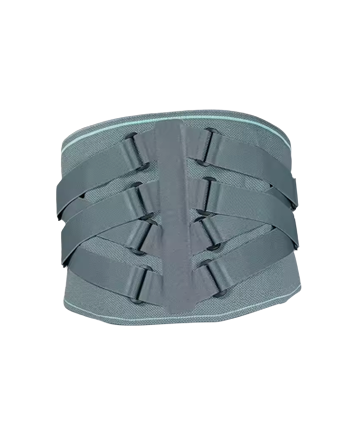
Designs with multiple adjustment points — primary closure plus secondary compression straps — allow the user to calibrate compression with much greater precision. The lumbar panel can be held at a consistent position while the abdominal wrap is adjusted independently. This is particularly relevant for users with body proportions that standard single-strap designs do not fit well, and for applications where tightness needs to change across a workday.
For wholesale waist support procurement decisions, adjustable designs tend to cover a wider range of users within a single SKU, which simplifies inventory management for facilities with varied user body types.
Ventilation design affects how tightness is perceived over time. A belt with breathable lumbar support panels will feel comfortable at the same objective tightness level for longer than one without ventilation. As heat and moisture build under a non-breathable material, the sensation of tightness intensifies even without the closure settings changing. Users then loosen the belt to relieve discomfort — often past the point where it still provides effective support.
| Usage Scenario | Recommended Feel | Key Product Feature |
|---|---|---|
| Office / desk work | Firm but unnoticeable after a few minutes | Breathable lumbar support panel |
| Driving | Secure contact, not restrictive | Low-profile, breathable construction |
| Light physical work | Moderate compression, free movement | Elastic waist support with stable closure |
| Lifting and manual labor | Firm, adjustable during breaks | Adjustable waist support with dual straps |
| Post-injury recovery | As directed; generally firmer in acute phase | Structured support with clear adjustment range |
| Long shifts in warm environments | Moderate, with emphasis on ventilation | Breathable lumbar support with moisture management |
Users and facility managers sourcing these products encounter the same set of errors repeatedly. Awareness of these patterns helps both in product selection and in communicating usage guidance to end users.
Sizing and tightness are related but distinct variables. A correctly sized belt should reach its functional compression range somewhere in the middle of its adjustment capacity — not fastened at its loosest setting just to close, and not strained to its tightest to achieve any compression at all.
When a belt is at the edge of its size range, the user loses adjustment flexibility. If the product is almost too small, tightening slightly further for a heavy task is not possible. If it is almost too large, loosening for rest periods may take it below effective compression range. Correct sizing creates headroom in both directions, which is what makes adjustable designs genuinely adjustable rather than just nominally so.
For China waist support suppliers serving varied international markets, offering a clear and tested size range with consistent compression profiles across sizes is part of what determines whether a product functions as designed in the hands of real users.
Steriger is a national high-tech enterprise specializing in the R&D and production of high-quality sports supports, medical braces, and sports compression socks.
Copyright © Zhejiang Steriger Sports Medicine Technology Co., Ltd.
The information provided on this website is intended for use only in countries and jurisdictions outside of the People's Republic of China.

Approval No: 浙金药监械生产备20200039号

 English
 Español
 Deutsch
 عربى
عربى Français