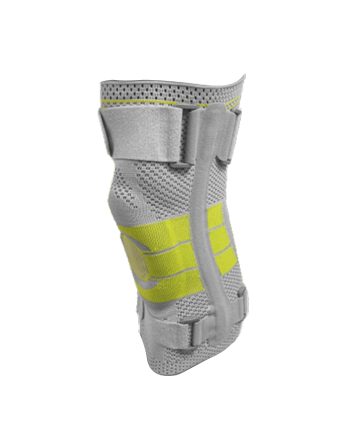
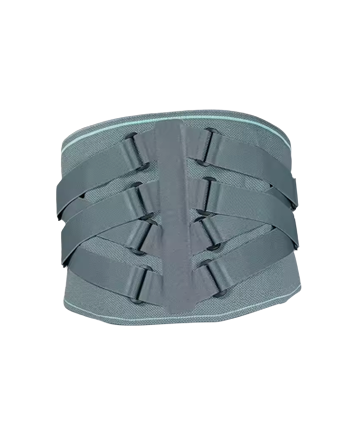
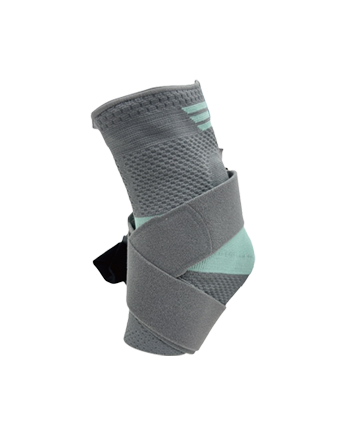
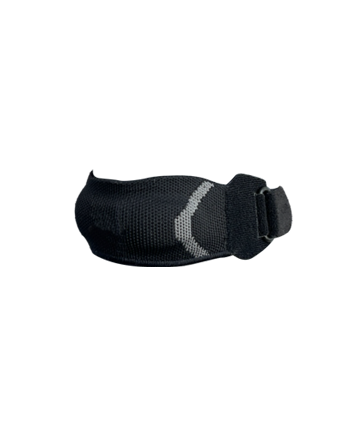
Lower back discomfort has a way of creeping into everyday life — a dull ache after long hours at a desk, stiffness after a shift on the warehouse floor, or that lingering tension that shows up during a long drive. When the decision to do something about it finally arrives, two product types tend to come up repeatedly: Elastic Waist Support and rigid back braces. They are not the same thing, and choosing between them without understanding what each one actually does often leads to the wrong purchase. For procurement teams, healthcare distributors, and workplace safety buyers evaluating options, the difference matters even more — because a Waist Support Manufacturer that supplies both types will tell you clearly that product selection depends entirely on end-user context, not on which one sounds more supportive.
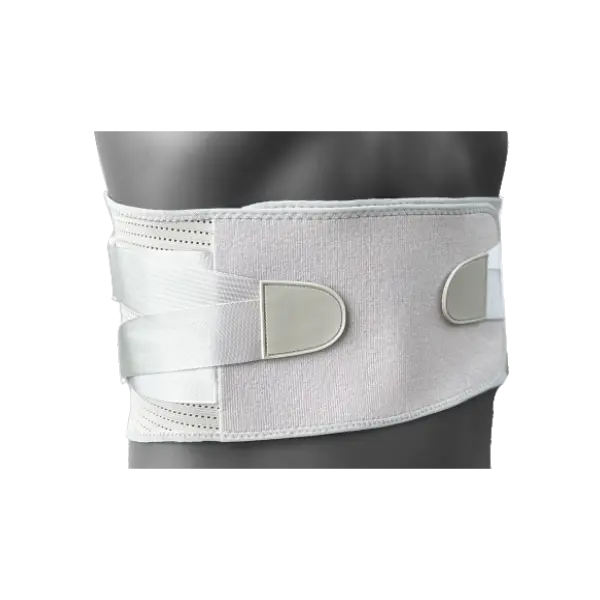
An Elastic Waist Support works by wrapping compression around the lumbar region without restricting the wearer's range of motion. The material stretches with the body, applies moderate pressure to the surrounding muscles and soft tissue, and helps reduce the fatigue that builds up when the lower back works without any external assistance.
This is not a medical device in the clinical sense. It does not immobilize the spine or prevent movement. What it does is take some of the continuous load off the muscles — particularly helpful when someone is sitting for long stretches, standing in one position for hours, or performing repetitive tasks that put low-level but sustained strain on the lower back.
The elastic construction also makes it practical for everyday wear. It sits closer to the body, generates less bulk under clothing, and is far easier to put on and adjust without help.
A rigid back brace incorporates structured panels — typically plastic or metal stays — that are built into the body of the product. These panels do not flex with the wearer. The point is to limit movement in a specific range, reducing the chance that a damaged or healing structure in the spine is stressed further.
This type of product is designed for situations where the priority is protection, not comfort. Post-injury recovery, support following certain spinal procedures, and conditions involving structural instability — these are the contexts where rigid braces are genuinely appropriate. The trade-off is significant: the product is heavier, warmer, more restrictive, and much harder to wear through a full working day without noticing.
For long-term daily use outside of a recovery context, rigid braces are generally not the right fit. They are purpose-built for a specific phase of need, and using them outside that phase tends to create dependency and muscle weakening over time.
Yes, more than what buyers initially account for. An Elastic Waist Support made with breathable fabric behaves very differently across a full shift compared to one made with dense, non-ventilated material — and the gap widens in warm environments or during physical activity.
A Breathable Lumbar Support allows air circulation across the lower back, which matters in warehouse settings, outdoor work, and anywhere the wearer is generating heat through movement. Without ventilation, compression products become uncomfortable quickly, and discomfort leads to removal — which defeats the purpose entirely.
Rigid braces, by their nature, cover more surface area and trap more heat. Some designs incorporate ventilation panels, but the structural components still limit airflow compared to elastic alternatives. For workers who need to wear support for several consecutive hours, this becomes a genuine operational factor, not just a comfort preference.
Not every back issue calls for the same response, and matching the product to the condition is where a lot of purchasing decisions go wrong.
| Back Condition or Situation | Recommended Support Type |
|---|---|
| Prolonged sitting or desk work | Elastic waist support or breathable lumbar support |
| Mild muscle fatigue from standing work | Elastic waist support |
| Repetitive lifting in warehouse or logistics | Adjustable waist support with reinforced panels |
| Active recovery from muscle strain | Elastic with moderate compression |
| Post-injury or post-procedure stabilization | Rigid back brace |
| Structural spinal instability | Rigid back brace, with clinical guidance |
| Driving for extended periods | Elastic or adjustable waist support |
| Chronic low-level back tension, office setting | Breathable lumbar support |
The pattern that emerges from this comparison is fairly consistent. Elastic products handle the everyday, the preventative, and the comfort-driven use cases. Rigid products handle the acute, the post-injury, and the clinically directed situations. Trying to apply a rigid brace to an office worker with posture-related lower back tension, or an elastic support to someone stabilizing after a spinal procedure, gets the logic backwards in both directions.
The rigid vs. elastic framing, while useful, leaves out a category that addresses both concerns reasonably well: Adjustable Waist Support. These products combine an elastic base with adjustable compression systems — typically through hook-and-loop closures, pull straps, or dual-layer adjustment — that allow the wearer to dial in the level of support they need at different points in the day.
A warehouse worker might cinch the product tighter before lifting and loosen it during a break. An office worker might adjust the tension depending on whether they are sitting or walking. The product adapts to the activity rather than forcing the wearer to choose between one fixed setting and removing it entirely.
From a procurement perspective, adjustable designs also solve a sizing challenge. Facilities stocking support products for a workforce with varied body types benefit from having fewer SKUs that cover a broader range — rather than maintaining separate inventories across multiple fixed sizes.
A useful way to frame this comparison for anyone making purchasing decisions is by work environment, because the physical demands of the setting shape the requirements more than the abstract product category.
Office and desk-based environments: Workers in sedentary roles typically deal with postural fatigue and the gradual muscle strain that comes from holding the same position for hours. An elastic or Breathable Lumbar Support addresses this well — it provides enough assistance to reduce fatigue without restricting the movement needed to shift positions, stand up, or walk to meetings.
Warehousing, logistics, and manual handling: Here the demands are more variable. Workers lift, bend, carry, and walk across shifts. An Adjustable Waist Support that can be tightened during heavy lifts and loosened during lighter activity tends to work better than a fixed elastic design. Rigid braces are generally impractical in this environment unless the worker is returning from injury and still under a specific protocol.
Driving and transport: Long-distance drivers and delivery workers sit in positions that place consistent pressure on the lumbar spine. An Elastic Waist Support or Breathable Lumbar Support worn during the shift reduces this accumulated strain without interfering with the movement required to exit and enter the vehicle repeatedly.
Healthcare and caregiving: Nurses, care workers, and others in physically demanding patient-facing roles often need both flexibility and durability. Adjustable elastic designs that hold their compression through repeated movement tend to perform better than either rigid or very light elastic options in this setting.
Construction and outdoor labor: Heat and moisture management become more significant in these environments. A Breathable Lumbar Support that retains its structural properties after sweating and movement will perform far better than a product that loses compression or causes skin irritation in warm conditions.
This is a question that comes up often, particularly when support products are being supplied to workers on an ongoing basis. The concern is legitimate: wearing a support device continuously, without variation, can reduce the body's reliance on its own stabilizing muscles — which over time may worsen the underlying issue rather than help it.
Elastic Waist Support is generally considered more appropriate for regular use than rigid braces, because it supports without fully substituting for muscle function. The compression assists; it does not immobilize. Users can still move naturally, engage their core, and maintain the postural habits that protect the spine over time.
Rigid braces, by contrast, are much stronger candidates for dependency risk. They are built to limit movement, and extended use outside of a medically indicated context can cause the surrounding musculature to weaken through disuse. The general guidance is that rigid braces belong in defined recovery phases, not as permanent daily wear.
For workplaces deploying elastic or Adjustable Waist Support across a team, combining product use with basic posture education and movement habits tends to produce better outcomes than product alone.
For anyone sourcing support products in volume — whether for a company workforce, a retail channel, or a healthcare distribution network — the specification details matter beyond the basic elastic vs. rigid distinction.
Points worth evaluating in detail:
Connecting with a reliable China Waist Support supplier or exploring Wholesale Waist Support options gives buyers access to product lines designed with these variables in mind — rather than generic catalog items that may not hold up under real workplace conditions.
The elastic vs. rigid comparison ultimately comes down to a simple question of what the product is being asked to do. Elastic and adjustable designs are built for ongoing daily use — preventative, comfort-oriented, and compatible with active work. Rigid braces are built for a different job: stabilization during recovery, post-procedure support, or situations where movement restriction is the clinical goal. Using either product in the wrong context will either underdeliver or create problems that offset the benefit. For procurement teams building out product lines, or organizations evaluating workplace support solutions, working directly with a Waist Support Manufacturer that offers a structured product range makes the selection process considerably more straightforward. Zhejiang Steriger Sports Medicine Technology Co., Ltd. develops and supplies a range of Elastic Waist Support, Adjustable Waist Support, and Breathable Lumbar Support products designed for the demands of real working environments. Whether your requirement is for Wholesale Waist Support across a large workforce or a targeted product selection for a specific use case, their team can walk through the options and help match the right construction to the right application. Reaching out to discuss your requirements is a practical starting point for getting the product specification right before committing to volume.
Steriger is a national high-tech enterprise specializing in the R&D and production of high-quality sports supports, medical braces, and sports compression socks.
Copyright © Zhejiang Steriger Sports Medicine Technology Co., Ltd.
The information provided on this website is intended for use only in countries and jurisdictions outside of the People's Republic of China.

Approval No: 浙金药监械生产备20200039号

 English
 Español
 Deutsch
 عربى
عربى Français