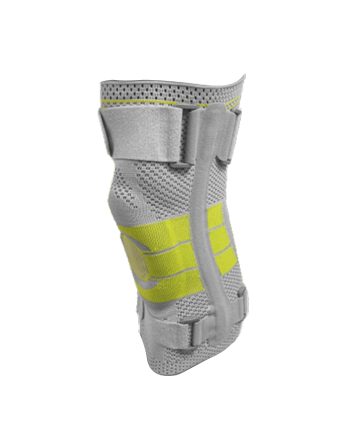
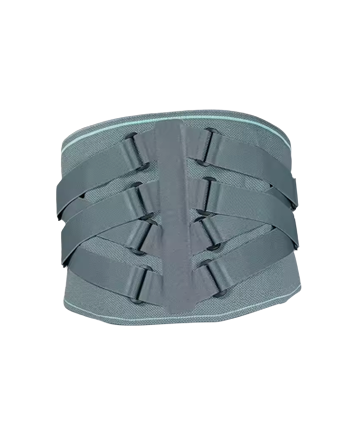
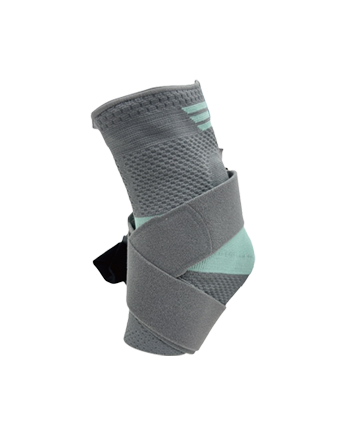
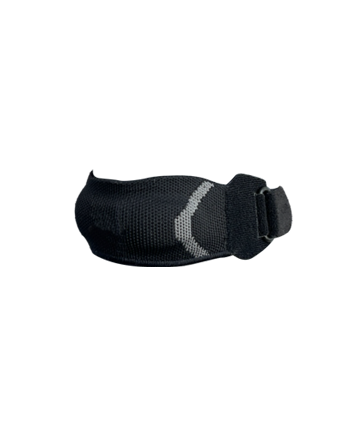
Back discomfort rarely arrives without warning — it builds gradually through hours at a desk, through repetitive physical tasks, through long commutes, or through an active lifestyle that demands more from the lumbar region than it comfortably delivers. The problem is not simply finding a support product; it is finding one that works with your daily life rather than against it. An Adjustable Waist Support that suits a construction worker will feel entirely different on an office professional's body, and neither of those fits the needs of someone in active recovery or a person who runs several times a week. The right back support alternative is not a universal product — it is the one that matches how you actually move, sit, stand, and rest throughout your day.
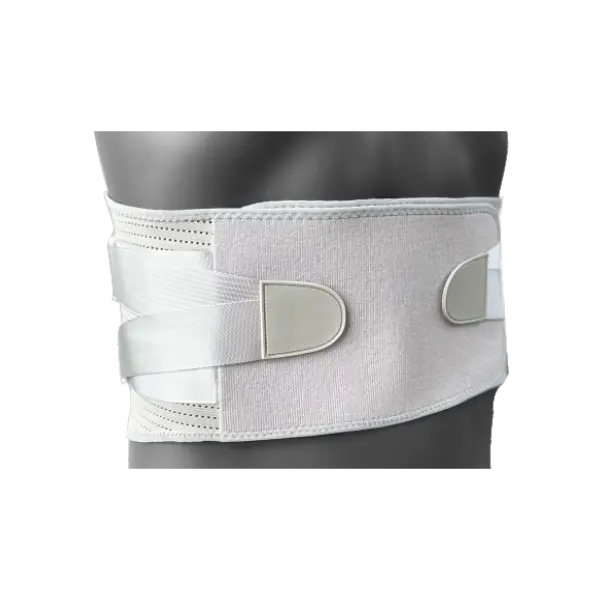
Back support products address the same general problem — lumbar pressure and spinal alignment — but they do so through different mechanisms suited to different activity levels and body positions.
Key reasons why one-size-fits-all fails:
The category that consistently bridges the widest range of lifestyle needs is Elastic Waist Support with an adjustable compression system — precisely because it allows the wearer to change how much support is applied based on what the day requires.
The word adjustable appears on a wide range of back support products, but its practical meaning varies considerably.
What adjustable compression genuinely provides:
What adjustable does not mean:
Genuinely adjustable Comfortable Waist Support products are built with boning or semi-rigid panels that hold their shape under varied compression settings, combined with a secondary tightening mechanism that lets the wearer fine-tune the level of support without unfastening the product entirely.
Prolonged sitting contributes regularly to lumbar strain. The problem is not simply sitting — it is sitting in postures that shift gradually away from neutral spinal alignment as the hours progress.
What office users need from a back support:
What to avoid for office use:
Manual workers, warehouse staff, delivery personnel, and tradespeople place substantially different demands on a back support than office users do. The physical load is higher, the body positions are more varied, and the support needs to hold up through sweat, movement, and repeated mechanical stress.
What high-demand users need:
An Elastic Waist Support with reinforced panels and a dual-adjustment system — one primary closure and a secondary compression strap — handles the demands of physical work better than either a soft elastic band alone or a fully rigid brace.
The rigid brace argument for heavy labor deserves scrutiny. A fully rigid brace significantly restricts range of motion, which can affect the efficiency and safety of physical tasks. A semi-rigid adjustable product that allows controlled movement within a stabilized range is a more practical choice for workers who need to stay productive while protecting their lumbar region.
People who exercise regularly have a fundamentally different relationship with back support products than either office users or manual workers. The support needs to work with athletic movement, not against it.
Active users typically need:
What active users should avoid:
A common use pattern among active users is wearing a flexible Elastic Waist Support during high-load training sessions — heavy lifting, high-impact exercise — and removing it for lower-intensity movement. This approach provides support where it is needed without creating reliance on the product during activities where the muscles are working effectively on their own.
Older adults and people with chronic lumbar conditions approach back support with a different set of priorities. The focus shifts from performance or productivity to comfort, stability across extended wear periods, and minimizing discomfort during everyday movement.
Key considerations for this group:
The risk of over-support is worth noting here. A support that is too rigid or too compressive can reduce the muscular activation the lumbar region needs to maintain its own strength over time. For long-term users, a Comfortable Waist Support that provides light-to-moderate stabilization is more appropriate than a heavy-duty brace unless a specific clinical condition requires it.
Post-injury or post-surgical recovery represents a distinct use context where the support requirements are temporarily more intensive and where medical guidance should shape the product choice.
What recovery users typically need during active rehabilitation:
Transitioning out of recovery is where adjustable products show clear value. A support that can be progressively loosened as the healing user returns to normal activity removes the need to switch products at every recovery stage. The same product that provided firm stabilization during the acute phase can be worn at lower compression during the return-to-activity phase, and then at light compression as an everyday preventive measure.
Drivers face a specific combination of postural challenge and restricted movement. The seated position in a vehicle applies sustained load to the lumbar region, and the inability to stand or change position for extended periods accelerates the fatigue that leads to lower back strain.
What long-haul drivers and commuters need:
Lumbar cushions are the conventional recommendation for drivers, but they address only the seated contact surface and do not provide the wrapping compression that reduces muscle fatigue over long drives. A thin, breathable Elastic Waist Support worn underneath clothing adds active stabilization without conflicting with the seat cushion approach.
| Support Type | Compression Level | Mobility | Breathability | Suited Lifestyle |
|---|---|---|---|---|
| Adjustable Waist Support | Variable (user-controlled) | High | Moderate to high | Office, active, driving, daily use |
| Rigid back brace | High, fixed | Low | Low to moderate | Recovery, acute injury, heavy lift |
| Elastic support belt | Low to moderate | High | High | Sports, light activity, prevention |
| Posture corrector | Low | Moderate | Variable | Office, posture training |
| Lumbar cushion | None (passive) | Not applicable | High | Seated work, driving |
| Semi-rigid support with stays | Moderate to high | Moderate | Moderate | Physical work, mixed-use |
Reading across the rows for your own situation makes the match clearer. A person who needs support across multiple contexts — desk work in the morning, a gym session at lunch, and driving in the evening — is unlikely to find a rigid brace or a cushion practical. An adjustable product with breathable construction covers those transitions without requiring a product change between activities.
A reasonable concern about back support products — particularly for long-term users — is whether wearing a support reduces the body's own muscular effort in stabilizing the spine, potentially weakening those muscles over time.
The dependency risk is real but context-dependent:
For the majority of lifestyle-based use cases, a Breathable Lumbar Support or Elastic Waist Support worn during the highest-demand periods of the day — not continuously — provides meaningful benefit without creating meaningful dependency risk.
The right back support alternative is determined less by the product category than by the honest assessment of how a person's day actually unfolds. A product that works for eight hours of desk work will not work for four hours of warehouse activity and two hours of evening running. Matching the support type to the activity profile — and choosing a product with enough adjustability to move across different compression needs throughout the day — produces a strong functional outcome over time. For distributors, procurement teams, and healthcare supply buyers evaluating back support product lines, the product construction details that determine real-world usability — breathability, adjustment range, panel rigidity, and closure system — are the variables that determine whether the product serves a wide user base or a narrow one. Zhejiang Steriger Sports Medicine Technology Co., Ltd. manufactures Adjustable Waist Support and lumbar support products designed for the range of lifestyle applications described here, with product configurations across compression levels, construction materials, and sizing options suited to office, active, occupational, and rehabilitation use contexts. Reaching out to their team with your product requirements or wholesale inquiry is a practical step toward matching the right support product to the specific user needs your customers represent.
Steriger is a national high-tech enterprise specializing in the R&D and production of high-quality sports supports, medical braces, and sports compression socks.
Copyright © Zhejiang Steriger Sports Medicine Technology Co., Ltd.
The information provided on this website is intended for use only in countries and jurisdictions outside of the People's Republic of China.

Approval No: 浙金药监械生产备20200039号

 English
 Español
 Deutsch
 عربى
عربى Français