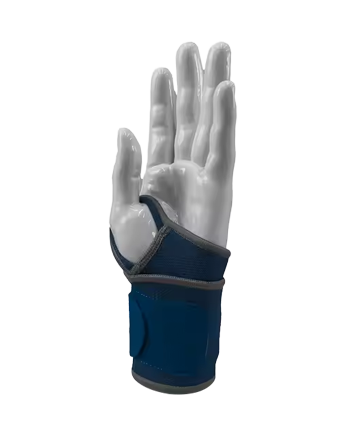
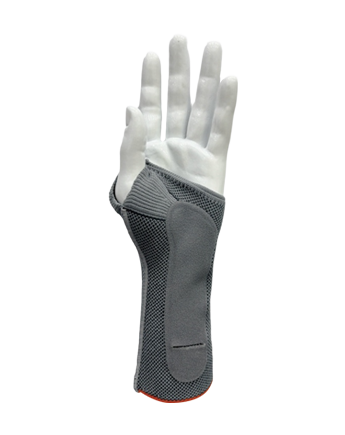
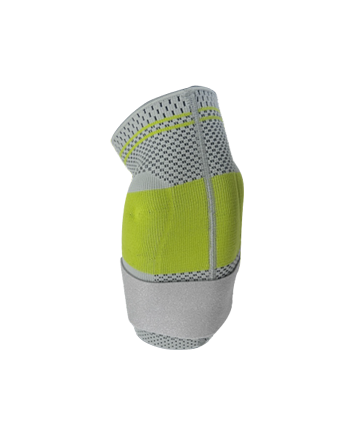
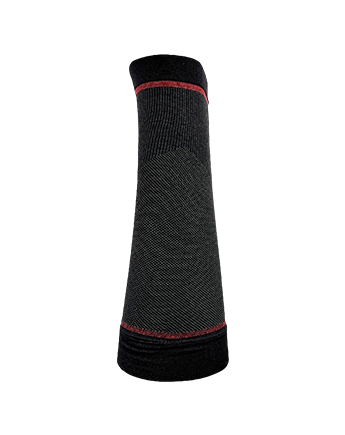
Sourcing the wrong waist support product for your target market is a mistake that shows up fast — in returns, complaints, and inventory that does not move. Whether you are distributing to pharmacies, supplying sports retailers, or building a private label line through a waist support manufacturer, the decision between adjustable and fixed compression designs carries real consequences. These two product categories serve overlapping but distinct user needs, and understanding where they diverge is what allows a procurement decision to hold up in the actual market rather than just on a specification sheet.
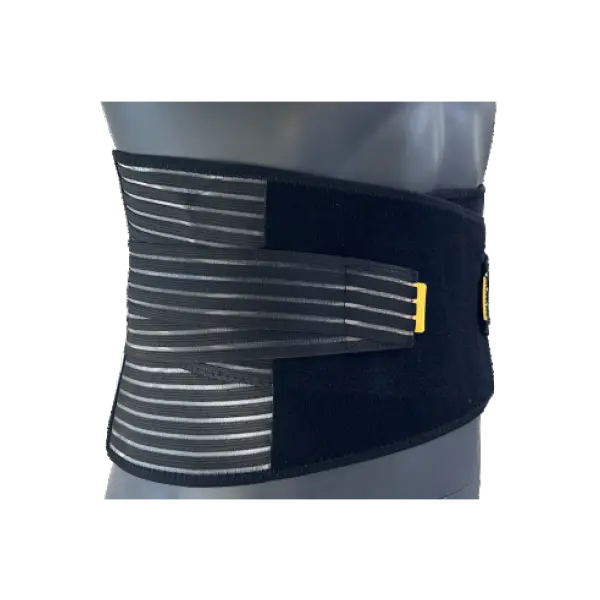
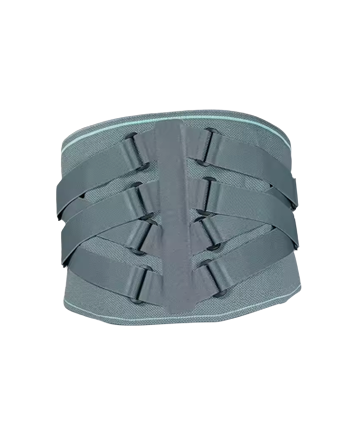
Adjustable Waist Support relies on a layered strap system that lets the wearer change compression intensity without removing the product. The architecture typically combines an elastic base layer with one or more external adjustment straps — often hook-and-loop closures — that allow the support level to be tightened or loosened based on activity, time of day, or personal preference.
Materials tend toward breathable fabrics, which helps with extended wear. A Breathable Lumbar Support construction — mesh panels, moisture-wicking liners — makes the product practical for users who need to wear it through a workday rather than only during a specific activity.
The compression is not locked in. That sounds minor, but it matters considerably when the user's body changes throughout the day — swelling after activity, for example, or the simple fact that a support worn during a commute may need different tension than one worn at a desk. Adjustable designs accommodate that variation without requiring a different product for each context.
Fit flexibility across body types is another factor. An Elastic Waist Support with adjustable closures covers a meaningful range of waist measurements within a single size, which reduces the number of SKUs a distributor needs to carry while still fitting a wide customer base.
Fixed compression support delivers a set pressure level determined by the product's construction rather than by user adjustment. The support panel, elastic composition, and overall structure are engineered to apply consistent, stable compression to the lumbar region. You put it on, and it does what it does — no dials, no straps to pull.
That consistency is the point. For applications where a specific level of support is clinically or functionally required — post-surgical recovery, heavy lifting protocols, athletic stabilization — variability in compression is not a feature. It is a liability.
Structural stability is higher. Fixed designs typically use more rigid support panels, broader elastic bands, and construction techniques that prioritize immobilization over flexibility. The support does not shift under load, does not loosen with movement, and does not depend on the user making correct adjustments.
Ease of use is also relevant. There is nothing to configure. For users with limited hand strength, elderly wearers, or situations where the support is being applied quickly in a work or sports context, a product with no adjustment steps is simply easier to use correctly.
FactorAdjustable Waist SupportFixed Compression Support
Compression LevelUser-controlledSet by construction
Fit RangeWide, across body typesNarrower per size
Comfort for Extended WearGenerally higherModerate
BreathabilityOften prioritized in designVaries by material choice
Support StabilityModerateHigh
Ease of ApplicationRequires adjustmentStraightforward
Suitable Use ContextDaily wear, mild support, recoverySports, heavy work, clinical use
Wholesale Market DemandGrowing across retail channelsStable in medical and sports channels
OEM Customization ScopeBroad — straps, fabrics, brandingMore defined by structural requirements
Adjustable designs tend to perform more reliably in online retail. The sizing flexibility reduces the rate at which customers discover the product does not fit after ordering. Fewer returns, fewer negative reviews. For sellers who operate across multiple international markets where body size distributions differ, this matters even more — a single adjustable SKU can cover consumer populations that would otherwise require separate size ranges.
Fixed compression products can work in e-commerce, but they require more precise sizing guidance and clear use-case communication to avoid mismatch complaints.
This channel generally favors fixed compression support, particularly when products are recommended or prescribed by clinicians. Consistent, reproducible compression levels are easier to communicate to healthcare professionals. A product whose compression depends on how a patient adjusts it introduces a variable that clinical recommendations cannot easily account for.
Breathable Lumbar Support variants — in either adjustable or fixed formats — are increasingly requested in this channel, particularly for longer-term wear prescriptions.
Sports applications split roughly along intensity lines. Training and general activity use tends to favor adjustable Elastic Waist Support that can be tightened before intense effort and loosened during rest. Competition or heavy-load protocols often favor fixed designs that maintain consistent lumbar position regardless of movement.
Brands selling across both contexts sometimes carry both product types under a single line, which also addresses the range of retail channels they typically work with.
Pharmacies serve a broad, mixed-needs customer base — some users are managing acute pain, others are maintaining chronic conditions, others are buying for prevention. Adjustable products tend to fit this context because pharmacists can recommend them without needing to assess precise compression requirements. The user self-adjusts based on comfort, which reduces the chance of a product being returned as inappropriate.
Procurement decisions in this category are not just about the product — they are about the supply relationship behind it. A manufacturer's capabilities shape what is actually possible in terms of customization, compliance, and long-term supply consistency.
Waist support sits at the intersection of textile engineering, orthopedic function, and consumer usability. Manufacturers with dedicated experience in this category understand the material behavior differences between compression grades, the durability requirements of elastic components across extended use cycles, and the regulatory context for products positioned in medical or healthcare channels.
If the procurement goal includes private label or branded product development, the manufacturer's design and development capacity matters alongside production capability. Can they work from a concept brief? Can they modify an existing structure to match a specific compression profile or material requirement? These questions separate a contract manufacturer from a product development partner.
Elastic Waist Support products are worn against the body, often for hours. Material choice directly affects user compliance — if the product is uncomfortable, users stop wearing it, which affects the brand's reputation regardless of the product's functional design quality. Breathable fabrics, anti-odor treatments, and skin-compatible elastic compounds are all areas where manufacturer capability varies meaningfully.
Depending on the target market, waist support products may need to meet specific regulatory standards. Manufacturers supplying international buyers should be able to provide relevant documentation — CE marking for European markets, FDA registration for the United States, ISO quality management certification for broader assurance. Asking about this early in the sourcing process avoids complications later.
Not every procurement situation involves large opening volumes. A manufacturer that offers flexible order quantities during initial trials, with the ability to scale as the product establishes itself in market, is a more practical partner than one whose structure only works for high-volume committed orders.
China's manufacturing base for orthopedic and sports support products is broad and mature. The supply chain for elastic materials, compression fabrics, and support panel components is well-developed, which translates into material variety, production flexibility, and pricing that is difficult to match from other manufacturing regions.
For wholesale waist support buyers, this matters in practical terms: shorter development cycles when customizing a product, access to a wider range of material options without extended lead times, and manufacturing partners who have handled similar projects across many markets. The concentration of relevant suppliers also makes it easier to evaluate and compare options rather than searching across fragmented regional markets.
Is Adjustable Waist Support better than fixed compression support?
Neither is categorically better — the answer depends entirely on the use case and the end user. Adjustable designs serve daily wear and mixed-activity contexts. Fixed compression suits high-demand stabilization applications. Many buyers carry both, addressing different segments of their customer base.
Which waist support is more breathable?
Breathability is a material and construction choice rather than a product category characteristic. Adjustable designs often incorporate breathable panels because they are built for extended daily wear. Fixed compression supports vary more widely — some are highly breathable, others prioritize structural rigidity at the cost of airflow. Both types can be specified with Breathable Lumbar Support construction when working with a manufacturer directly.
What is the difference between Elastic Waist Support and compression support?
Elastic Waist Support emphasizes material flexibility and freedom of movement alongside lumbar protection. Compression support — fixed or adjustable — emphasizes pressure application to the lumbar region. In practice, many products combine both properties. The distinction matters more for positioning in specific channels than for describing physical differences.
Which waist support is better suited for wholesale?
Adjustable designs are broadly easier to wholesale because of their sizing flexibility. Fixed designs have strong, stable demand in medical and sports channels. Wholesale waist support buyers serving mixed retail environments often find adjustable products generate stronger initial sell-through, while fixed designs produce more consistent repeat purchasing in specialized channels.
Can manufacturers provide OEM waist support?
Established manufacturers do offer OEM services, covering branding, packaging, material selection, and structural modification. The available scope of customization, however, relies on the manufacturer's development capabilities and the order sizes involved.
The choice between adjustable and fixed compression support is not a question with a universal answer — it is a question about your market, your channels, and your customers. Adjustable designs offer broader fit coverage, higher comfort for daily wear, and stronger performance in retail and e-commerce environments. Fixed compression support delivers consistent stabilization that is better suited to athletic, clinical, and heavy-work applications. Many buyers find that carrying both types gives them coverage across a wider customer base than either product alone. What both categories share is sensitivity to manufacturing quality. Compression performance, material durability, and long-term elastic retention all depend on how the product is made — not just how it is specified. That makes the choice of supply partner as consequential as the product category decision itself. Zhejiang Steriger Sports Medicine Technology Co., Ltd. develops and manufactures waist support products across both adjustable and fixed compression formats, with OEM and ODM capabilities suited to distributors, sports brands, and healthcare suppliers. To identify which format — and which construction approach — will serve your customers effectively, a practical starting point is to share your target market context and product requirements.
Steriger is a national high-tech enterprise specializing in the R&D and production of high-quality sports supports, medical braces, and sports compression socks.
Copyright © Zhejiang Steriger Sports Medicine Technology Co., Ltd.
The information provided on this website is intended for use only in countries and jurisdictions outside of the People's Republic of China.

Approval No: 浙金药监械生产备20200039号

 English
 Español
 Deutsch
 عربى
عربى Français