Getting the compression wrong on a back support is more common than people expect. Too loose and the lumbar region barely gets the reinforcement it needs. Too tight and circulation suffers, movement becomes restricted, and discomfort sets in within the hour. For users managing lower back strain, recovering from injury, or simply trying to get through a long workday without pain, finding the right compression level is not a minor detail — it is the difference between a product that works and one that gets abandoned in a drawer. Waist Support Manufacturer professionals who understand these real-use challenges are in a far stronger position to develop products that actually serve the people wearing them.
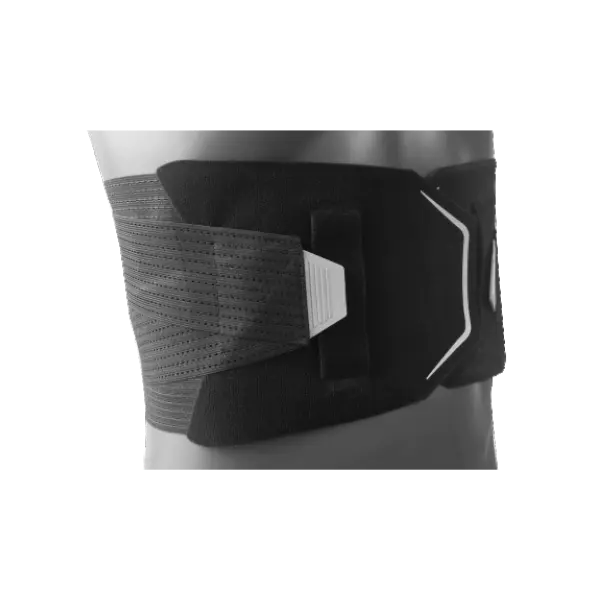
When a waist support is worn too loosely, the structural panels cannot maintain consistent contact with the lumbar spine. The brace shifts position with movement, pressure distributes unevenly, and the wearer gradually loses the stabilization that prompted the purchase originally. There is no dramatic failure — just a slow erosion of effectiveness that often gets blamed on the product rather than the fit.
On the other side, over-tightening produces a different set of complaints: numbness, skin irritation, shallow breathing, and a reduction in the natural muscular engagement that healthy lumbar function requires. Wearing a support too tightly for extended periods can actually discourage the stabilizing muscles from activating, which is the opposite of the intended rehabilitation or prevention goal.
The practical target is a compression level that:
Striking that balance looks different at a desk than it does in a warehouse. That is the core reason why adjustable designs serve users better than fixed-compression alternatives.
Adjustments are not complicated, but rushing through them is one of the more frequent reasons people end up wearing their support incorrectly for weeks.
Place the back panel centered over the lumbar region, typically spanning the area between the lower ribs and the upper edge of the pelvis. Getting this placement right before tightening anything matters — even a well-adjusted support worn at the wrong height will not deliver proper compression to the intended area.
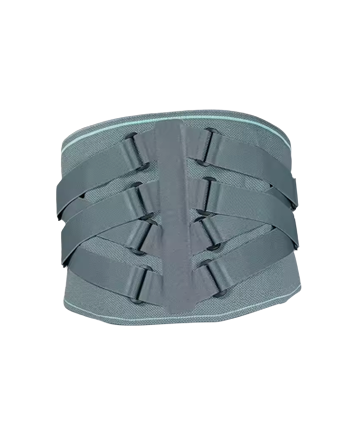
Many designs use a front hook-and-loop closure as the main fastening layer. Attach it at a tension that feels snug but not constricting. At this stage, the support should stay in place on its own without feeling tight.
Secondary straps, typically routed from the sides to the front or back, allow for compression refinement. Pull each side evenly — uneven tension causes the support to twist or ride up. Add compression in small increments rather than pulling to a target all at once.
Take a slow full breath. The support should accommodate the full expansion of the torso without pressing uncomfortably on the ribs. Then bend slightly forward and rotate the torso from side to side. The support should stay in position without digging in or pulling on the skin.
Compression appropriate for sitting at a desk may be insufficient for a heavy lifting session. The expectation should be that compression gets reviewed and readjusted as activities change throughout the day, not set once in the morning and ignored.
Compression needs vary significantly depending on what the wearer is doing. A single setting is rarely appropriate across an entire day.
| Activity | Suggested Compression Level |
|---|---|
| Sitting at a desk | Light |
| Walking and general daily tasks | Light to moderate |
| Extended standing periods | Moderate |
| Gym training and dynamic movement | Moderate to firm |
| Heavy lifting or manual labor | Firm |
| Post-injury recovery support | Per healthcare provider guidance |
This kind of scene-based adjustment is where adjustable designs genuinely pull ahead of fixed-compression options. The person who commutes, sits at a desk, and then does a gym session in the evening has three meaningfully different support requirements across that single day.
Physical feedback is usually clear when compression has gone too far:
Insufficient compression tends to show itself differently:
Pulling all closures to full tension simultaneously before testing the result leads to over-compression. Adjusting in stages and testing between each stage produces a more accurate result.
The torso can change slightly in volume and shape over the course of a day due to food intake, hydration, fatigue, and posture shifts. A compression setting that worked well in the morning may need revisiting by mid-afternoon.
Using heavy lifting compression while sitting at a desk restricts circulation and can cause discomfort. Using light desk compression for manual labor leaves the back under-supported at exactly the moment it needs reinforcement. Activity-specific adjustment is not optional — it is the intended function of an adjustable design.
Two people with the same waist measurement may have very different torso depths, rib cage proportions, and lumbar curve profiles. A support that fits one person at moderate compression may require significant readjustment to reach the same effective level on another.
New elastic components can feel stiff before they conform to the body. Wearing a new support at lower compression initially and increasing gradually over several days often produces better long-term comfort than starting at full compression on day one.
Fixed-compression supports have a limited role. For a specific injury at a specific stage of recovery, a rigid brace with a defined compression profile makes sense. But for the broad range of users who wear a support across varied activities throughout the day, the inability to adapt becomes a practical disadvantage.
An Adjustable Waist Support addresses this directly:
The adjustability feature is often what determines whether a product gets used consistently or occasionally.
Single-strap designs concentrate tension across a narrow band, which limits how precisely compression can be targeted. Multi-zone systems allow the upper and lower lumbar areas to be adjusted independently, which reflects the actual variation in support needs across those regions.
Closure systems that lose their grip over repeated adjustments introduce a practical problem: the user adjusts correctly, then the support gradually loosens during wear. Closures need to hold their set position through normal daily movement without requiring repeated intervention.
Compression and thermal comfort are linked. A support that traps heat makes extended wear less tolerable, which leads users to wear it less tightly or remove it earlier than they should. A Breathable Lumbar Support — one with ventilated panels or moisture-managing fabric — allows proper compression to be maintained without overheating, particularly in warm environments or during physical activity.
Rigid panels provide structure, but the zones connecting them need flexibility to follow the body through its range of motion. An elastic waist support uses stretchable materials in the lateral sections, which maintains compression under movement rather than losing tension as the torso flexes. Without this flexibility, the support either restricts movement or allows itself to be pulled out of position.
A product that only offers a few discrete compression settings — tight or loose — provides less precision than one with continuous adjustment across a full range. Wider sizing options and finer adjustment increments together allow a more accurate match to each individual wearer.
User behavior around compression adjustment is a meaningful signal for product development. When a support is adjusted very rarely, it often indicates either that the user has found a single acceptable setting and stopped experimenting — or that the adjustment mechanism is difficult enough to discourage use. Neither outcome reflects well on the product.
When users adjust frequently and consistently across activities, it reflects both that the design is working and that the adjustment mechanism is accessible enough to use in practice. Products designed with this level of behavioral feedback in mind tend to deliver better real-world outcomes.
The demand patterns are clear:
A manufacturer attuned to these behavioral realities incorporates them into the design specification rather than treating adjustability as a secondary feature.
The distance between a product that adjusts in theory and one that adjusts correctly in use comes down to development rigor. Manufacturers with a background in ergonomic product design tend to have a more structured approach to testing adjustment mechanisms under realistic conditions, including extended wear, repeated cycles, and varied user body types.
Buyers sourcing for specific retail markets often need compression systems customized to their user demographics. A manufacturer capable of supporting OEM customization — adjusting strap placement, closure type, or panel stiffness according to buyer specification — adds genuine commercial value beyond standard catalog production.
Compression behavior depends on material properties that can vary significantly between suppliers. A manufacturer with in-house materials knowledge and stable sourcing relationships can maintain consistent product performance across production runs in a way that a company relying on externally sourced components may not.
Standard dimensional quality control does not capture whether a support delivers its intended compression after repeated adjustment cycles. Reliable manufacturers test functional properties — including closure durability, elastic recovery, and compression consistency after laundering — rather than inspecting appearance and dimensions alone.
For distributors and brand buyers managing varied order volumes, the ability to scale production runs without disproportionate cost increases is a practical requirement. Established wholesale waist support programs with clear pricing structures and production turnaround timelines allow buyers to plan inventory without the unpredictability that poorly structured manufacturing partnerships tend to introduce.
Sourcing decisions in this product category frequently involve China Waist Support Manufacturers, and the reasons are practical rather than speculative. The manufacturing infrastructure supporting elastic goods, technical textiles, and ergonomic product development in China is genuinely broad, which gives buyers access to material options and production capabilities that are less accessible through other sourcing regions.
Customization flexibility is another factor. A buyer developing a proprietary adjustable compression system for a specific market can work through the full design and production cycle — material selection, prototype development, adjustment mechanism testing, and production scaling — with manufacturers who have structured processes for handling exactly this kind of product development engagement.
Production scalability matters as well. A manufacturer capable of handling both early-stage trial runs and full-scale production under consistent quality parameters reduces the friction involved in moving from product development to commercial distribution. This continuity is particularly valuable for buyers managing multiple SKUs or seasonal demand variation across a waist support product line.
The support should feel firmly in contact with the lumbar region without causing shallow breathing, skin discomfort, or numbness. A practical test is to breathe fully: if the breath is noticeably restricted, the compression is too high for comfortable extended wear.
Yes, and doing so consistently is part of using an adjustable design correctly. Reducing compression during low-demand periods and increasing it before physically demanding tasks extends comfort and reduces the risk of either under-supporting or over-compressing the lower back across a variable day.
Moderate to firm compression is generally appropriate for gym training and dynamic physical activity. The support should hold its position through movement without restricting the range of motion needed for the exercise. Very firm compression is typically reserved for heavy lifting or manual labor, not cardio or flexibility training.
For situations involving prolonged continuous wear — particularly in warm conditions or during physical activity — a Breathable Lumbar Support reduces the heat accumulation that causes discomfort and discourages consistent use. Better ventilation supports the ability to maintain correct compression for longer periods.
Yes. Elastic construction refers to the material behavior of the lateral sections of the support, not the adjustment mechanism. An elastic waist support flexes with the body during movement, which helps the product maintain its compression profile rather than losing tension or shifting position. Adjustability and elasticity serve different but complementary functions.
Look for verifiable experience in ergonomic product development, transparent quality control processes, and the capability to support your specific sourcing needs — whether that is standard production, OEM customization, or a wholesale waist support arrangement. Visiting production facilities or requesting production samples tested under realistic use conditions provides more reliable information than specification documents alone.
Compression adjustment is the functional mechanism through which an Adjustable Waist Support delivers its stated purpose. Without the ability to adapt compression to the activity at hand, the adjustable feature becomes cosmetic rather than practical. For end users, the practical takeaway is straightforward: adjust deliberately, adjust by activity, and pay attention to the body's feedback throughout the wear period. For buyers evaluating products or developing new lines, the implication is that compression adjustment quality — the ease of adjustment, the precision of available settings, and the durability of the mechanism across repeated cycles — is a primary performance attribute rather than a secondary one. Sourcing decisions made with this in mind tend to produce products that earn consistent use rather than occasional ones. If you are working with a Waist Support Manufacturer to develop or source adjustable compression products, Zhejiang Steriger Sports Medicine Technology Co., Ltd. brings product development experience, material expertise, and flexible production capabilities to projects at various scales. Connecting with their team early in the sourcing or development process allows for more precise alignment between product specifications and the real-world compression needs that determine whether a product succeeds in use.
Steriger is a national high-tech enterprise specializing in the R&D and production of high-quality sports supports, medical braces, and sports compression socks.
Copyright © Zhejiang Steriger Sports Medicine Technology Co., Ltd.
The information provided on this website is intended for use only in countries and jurisdictions outside of the People's Republic of China.

Approval No: 浙金药监械生产备20200039号

 English
 Español
 Deutsch
 عربى
عربى Français