Sourcing or developing sports support products is rarely straightforward. Brands and distributors often find themselves caught between two distinct product categories that look like they solve the same problem but actually behave very differently in use. Compression shirts have been gaining ground across gym and endurance training markets, while traditional waist support belts remain firmly embedded in strength and rehabilitation applications. For a Waist Support Manufacturer evaluating product line decisions, or for a buyer trying to figure out which category deserves shelf space, understanding where these two products genuinely differ — and where they overlap — is more useful than a simple ranking.
A compression shirt applies graduated pressure across the upper body — chest, back, shoulders, and core — through the use of elastic or performance-knit fabric. The compression is distributed, not localized. Rather than bracing a single joint or region, it creates a full-torso effect that supports muscle activation patterns, reduces vibration during dynamic movement, and contributes to posture alignment during extended activity.
From a Breathable Lumbar Support perspective, high-quality compression shirts use moisture-wicking and ventilated fabric constructions that allow heat and sweat to escape during sustained effort. This makes them practical for cardio, circuit training, and endurance sports where the wearer is in continuous motion rather than executing single heavy lifts.
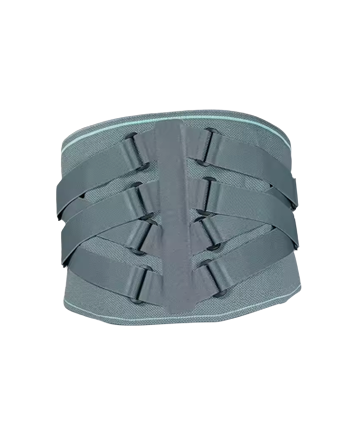
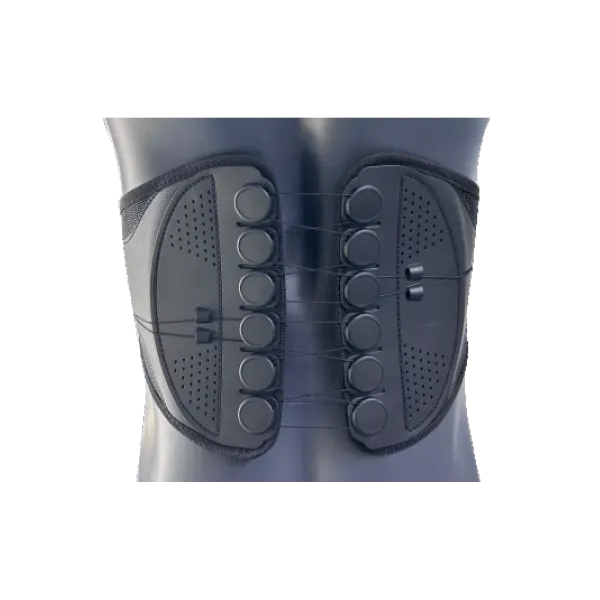
Waist support belts work differently. They concentrate support at the lumbar region through rigid or semi-rigid panels, intra-abdominal pressure assistance, and direct contact with the lower back. The mechanism is localized rather than distributed — the goal is to stabilize the spine under compressive load, not to support the entire torso.
An Adjustable Waist Support belt typically allows the wearer to dial in the level of compression through hook-and-loop closures or lacing systems, which means the fit can be changed between sets or adjusted for different exercises. An elastic waist support version achieves a similar result through fabric stretch rather than mechanical adjustment, offering a softer feel with moderate rigidity.
Understanding where these products diverge helps clarify which fits a given training context — and which is the stronger product candidate for a specific market segment.
| Feature | Compression Shirts | Waist Support Belts |
|---|---|---|
| Support coverage | Full torso | Lower back and core |
| Compression type | Distributed, graduated | Targeted, concentrated |
| Movement freedom | High | Moderate |
| Spinal stabilization under load | Moderate | High |
| Breathability | Generally high | Varies by material |
| Adjustability | Limited — fixed by garment size | High — closures, lacing |
| Primary training application | General fitness, endurance | Strength training, heavy lifting |
| Rehabilitation suitability | Posture support, mild cases | Active rehab, post-injury recovery |
| Wearability outside training | High | Lower |
The comparison above captures the structural logic, but the real-world differences go further. A lifter doing heavy deadlifts needs the intra-abdominal pressure support that a belt provides — a compression shirt simply cannot replicate that mechanical bracing effect at the same intensity. Conversely, a runner or functional fitness athlete wearing a rigid belt during sustained cardio will find it restrictive and uncomfortable in a way that a compression shirt never would be.
The answer is not always obvious, because compression shirts are often marketed as all-purpose performance apparel rather than classified as support products. That framing can obscure when they genuinely add value versus when they are just comfortable activewear.
Compression shirts tend to be the stronger choice when:
There are training conditions where no compression garment substitutes adequately for a dedicated belt. These are important to understand both for end users and for brands deciding how to position products.
Waist support belts are the more appropriate choice when:
For someone who is new to training, wants basic postural support, or is working within a general fitness program, a compression shirt is typically more practical. It requires no learning curve to fit, does not interfere with movement patterns, and can be worn across a wide variety of activities. The psychological benefit of feeling supported without being constrained is meaningful for users who are still developing body awareness.
This group is where traditional waist support belts retain a clear role. Strength sport athletes are not looking for all-day comfort — they are looking for a tool that allows them to handle heavier loads safely. An elastic waist support or laced leather belt serves a specific mechanical function during working sets that no garment can replicate. Some athletes layer both — wearing a compression base layer underneath a belt — to manage warmth, posture between sets, and acute bracing when needed.
The rehabilitation context is nuanced. Early-stage recovery from lumbar injury often requires the localized support and adjustability of a dedicated waist belt. As recovery progresses and the patient regains strength and mobility, transitioning to a softer support — an elastic waist support or compression garment — may be appropriate. Clinicians generally drive this decision based on the patient's functional progress rather than product preference.
From a product line perspective, these two categories serve different shelves and different purchase motivations. A brand that carries only belts is missing the growing segment of fitness users who want compression apparel with lumbar benefits. A brand that carries only compression shirts is leaving strength and rehab demand unaddressed. The strongest positioned catalogs carry both, with clear differentiation in how each product is communicated.
The short answer is: in some segments, yes — but not across the board.
Compression apparel has grown substantially as functional sportswear has moved from performance athletics into everyday fitness culture. The appeal of garments that look good, feel comfortable, and provide some support without looking clinical has expanded the market for compression shirts well beyond competitive sports.
In general gym use, casual fitness, and lifestyle athletics, compression shirts have taken market share from older support formats. Users who previously might have reached for a soft elastic waist support for mild back fatigue are now reaching for a compression shirt instead — partly for aesthetic reasons, partly because the performance fabrics available now deliver more meaningful support than older elastic designs.
That said, the strength sports market has not substituted compression shirts for belts, and neither has the clinical rehabilitation market. These segments have specific mechanical requirements that fabric compression cannot replace. The substitution is happening at the moderate-support end of the spectrum, where the older product category was already not fully meeting user expectations.
For a wholesale waist support buyer, this shift is worth tracking because it affects where inventory investment should be concentrated. Products at the moderate-support end of the belt category may see softer demand as compression apparel continues to develop, while high-rigidity, adjustable, and clinically oriented belts remain stable.
For both compression shirts and waist support belts, the material specification determines how the product actually performs. Breathable Lumbar Support in a compression shirt requires fabric engineering — ventilated panels, moisture transport finishes, and elasticity balanced against recovery. An elastic waist support belt needs fabric that holds its stretch across thousands of compression-release cycles without losing its shape.
Buyers sourcing from a China Waist Support Manufacturer should ask specifically about fabric performance data — not just material composition but actual test results for breathability, elasticity retention, and pressure distribution.
In the waist support belt segment, adjustability correlates with perceived quality and price positioning. A fixed-width, fixed-closure belt occupies the entry tier. An Adjustable Waist Support with multiple closure points, graduated compression zones, or removable rigid inserts occupies the mid to upper tier. This distinction matters for channel strategy — premium sporting goods retail expects adjustable systems; mass-market fitness accounts may be more price-driven.
Brands sourcing sports support products often want some degree of product differentiation from the base factory specification. This might be branding, colorway, closure configuration, or fabric choice. A Waist Support Manufacturer with genuine OEM capability — not just relabeling — can support meaningful product customization at reasonable order quantities.
For brands considering both compression shirts and waist support belts, working with a single manufacturer that covers both categories reduces coordination overhead and creates opportunities for coordinated product development across the range.
China waist support manufacturing has developed well beyond basic commodity production. Factories working with international sports and medical brands have had to build material testing capability, quality management systems, and product development infrastructure that meets the standards those brands require.
The practical advantages for international buyers include:
The key for buyers is supplier qualification — confirming that the factory's actual capability matches the catalog claims, particularly on material performance and consistency across production batches.
Are compression shirts better than waist belts for gym training?
It depends on the training type. For general fitness, cardio, and moderate-intensity work, compression shirts offer more comfort and flexibility. For heavy lifting and strength training, waist belts provide a level of spinal stabilization that compression fabric cannot match.
Can waist belts improve lifting performance?
They can, specifically by supporting intra-abdominal pressure during heavy compound movements. The effect is mechanical and is well-established in strength sports. The belt needs to be fitted and used correctly to realize this benefit.
What is Breathable Lumbar Support used for?
It refers to lumbar-focused support — whether from a garment or a belt — that uses ventilated or moisture-managing materials to remain comfortable during extended wear or in warm conditions. It matters for users who need support during cardio or all-day activity rather than just during individual heavy sets.
Are elastic waist supports good for beginners?
Yes. Elastic waist supports offer moderate, comfortable support without the stiffness of rigid belts, which makes them well-suited to beginners who need postural guidance without mechanical bracing.
Can I source wholesale waist support products from a China manufacturer?
Yes. Established China Waist Support Manufacturers work with international brands across both compression apparel and traditional belt categories. The key is identifying factories with genuine OEM capability and material testing infrastructure rather than commodity assembly.
Is there demand for both product types in the same market?
Generally yes. Different segments within a single fitness market want different things. A sporting goods channel that carries both categories serves more of its customer base than one that carries only belts or only compression apparel.
Compression shirts and traditional waist support belts are not direct substitutes. They address different support needs, serve different user profiles, and belong in different positions within a sports support product line. The compression apparel category is expanding into spaces where older elastic support products held ground, but it has not — and cannot — replace dedicated lumbar bracing in the segments where that bracing is mechanically necessary. For brands and distributors building a product range, the stronger position carries both categories with clear communication about where each fits. For buyers evaluating wholesale waist support sourcing, the manufacturer's capability across both product types, and the flexibility to customize and scale each, matters as much as unit pricing. If you are developing a compression or waist support product line and want to discuss manufacturing capability, material options, and OEM customization, Zhejiang Steriger Sports Medicine Technology Co., Ltd. works with brands at every stage from product concept through production, and can support both compression apparel and traditional waist support belt development within a single supplier relationship.
Steriger is a national high-tech enterprise specializing in the R&D and production of high-quality sports supports, medical braces, and sports compression socks.
Copyright © Zhejiang Steriger Sports Medicine Technology Co., Ltd.
The information provided on this website is intended for use only in countries and jurisdictions outside of the People's Republic of China.

Approval No: 浙金药监械生产备20200039号

 English
 Español
 Deutsch
 عربى
عربى Français