You put on the support, adjust the straps, and still feel the same nagging pressure in your lower back by midday. Or the opposite — you tighten everything down until it feels secure, and an hour later the discomfort has moved to a different spot entirely. Wearing an Adjustable Waist Support is not complicated, but there is a meaningful difference between putting it on and putting it on correctly — and that difference directly determines how much relief you actually get from it. Many of the frustrations people experience with back support products come not from the product itself, but from positioning, compression level, or layering choices that quietly undermine the support's ability to do what it was designed to do.
Where on the Body Should a Lumbar Support Sit?
Position is the single variable with the largest impact on how well a support functions. A product worn even slightly too high or too low loses much of its stabilizing effect on the lumbar region.
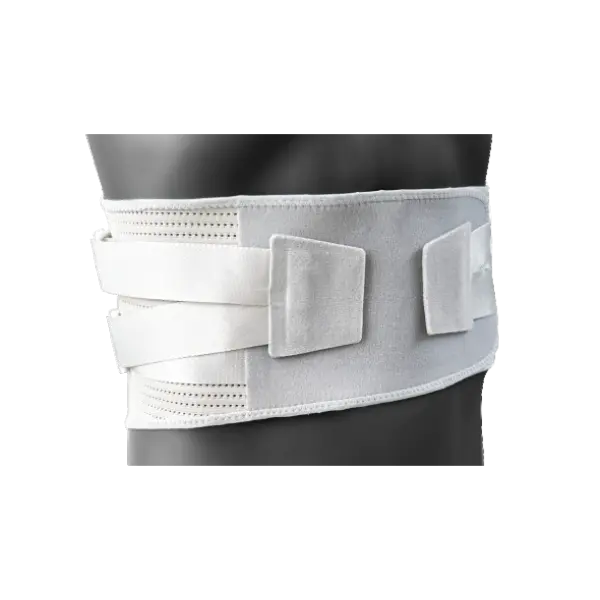
The correct position:
- The support should cover the lower portion of the back, centered on the lumbar curve — roughly from the top of the pelvis up toward the lower ribcage
- The center of the support, where the structural panels or stays are located, should align with the natural inward curve of the lumbar spine — the area that curves away from a flat wall when you stand against it
- The lower edge of the support should rest just above the top of the hip bones (iliac crest), not below them
- The upper edge should not press into the ribs or restrict breathing in any position
A simple test for correct positioning: stand normally with your arms at your sides, then bend slightly forward. The support should stay comfortably in place and reinforce the lumbar curve rather than bunching, riding up, or pulling down. If it shifts significantly with normal movement, the starting position needs adjustment.
How Tight Should the Compression Be?
This is a question that generates much confusion, and the answer is less intuitive than it might seem.
Correct compression feels like:
- Consistent, even pressure across the lower back — similar to the feeling of a hand pressing firmly and steadily against the lumbar area
- A reduction in the range of unconscious postural drift — the support makes it easier to maintain neutral spinal alignment without active muscular effort
- Normal breathing — the diaphragm and abdominal muscles should not feel compressed; if taking a full breath requires effort, the support is too tight
Compression that is too tight:
- Restricts normal breathing or causes a feeling of pressure in the abdomen
- Creates discomfort at the edges of the support, particularly where the panels meet the sides of the torso
- Makes standing upright from a seated position feel mechanical or restricted
- Causes numbness, tingling, or skin redness after short periods of wear
Compression that is too loose:
- The support shifts position during normal movement rather than staying centered on the lumbar region
- No meaningful difference in how the lower back feels compared to not wearing it at all
- The support folds or creases against the body rather than maintaining its structural shape
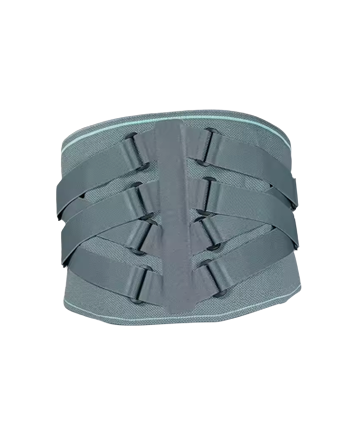
For Elastic Waist Support products with adjustable closure systems, the practical test is this: slip two fingers under the support at the side. It should be snug but not resistant. If you cannot fit two fingers, loosen it slightly. If the fingers slide in easily with room to spare, tighten it.
Should It Be Worn Over or Under Clothing?
The answer depends on the product design and the intended use context.
General guidelines:
- For Breathable Lumbar Support products designed for extended wear, wearing over a thin base layer of clothing (a fitted undershirt or light shirt) distributes pressure more evenly and prevents skin irritation during prolonged use
- Products with moisture-wicking or anti-bacterial inner lining material may be worn directly against the skin, particularly during physical activity when clothing layers would add bulk
- During physical work or athletic activity, wearing under an outer layer of clothing keeps the support in place and prevents it from catching on equipment or work surfaces
What to avoid:
- Wearing over thick or textured clothing — this reduces the support's contact with the body and decreases its stabilizing effect
- Wearing over clothing with seams, buttons, or hardware in the lumbar area — these create pressure points under the support that cause discomfort during extended wear
- Layering multiple supports or adding a lumbar cushion on top of a worn support — this changes the compression geometry and rarely produces a better result
Step-by-Step: How to Put On the Support Correctly
The application sequence matters, particularly for products with multiple adjustment points.
Step-by-step application:
- Stand upright or sit with the back straight before putting on the support — starting from a neutral posture sets the correct reference point for positioning
- Hold the support behind the lower back with both hands, centering it on the lumbar region before fastening anything
- Fasten the main closure — the velcro or buckle system — to a moderate tension; avoid tightening completely at this stage
- If the product has secondary adjustment straps, apply them next at a comfortable initial tension
- Check the position: the support should sit centered on the lumbar curve, with the lower edge resting just above the hip bones
- Make a single posture check — stand or sit naturally and feel whether the support is reinforcing the lumbar curve without pulling in any direction
- Adjust the secondary straps to fine-tune compression until the fit feels even and stable
- Complete a brief range-of-motion check: gentle forward bend, side bend each way, and rotation — the support should stay in place and provide a sense of guided resistance rather than restriction
If the support rides up during any of these movements, reposition it lower before re-fastening.
Does Compression Level Change Based on Activity?
This is where the adjustable aspect of an Elastic Waist Support delivers its practical value. The compression that works for sitting at a desk is not the same compression that works for lifting, and it is not the same compression that works for recovery rest.
A practical compression guide by activity:
- Seated desk work: Moderate compression — enough to maintain lumbar curve reinforcement during hours of sitting, but not so tight that standing up from the chair requires effort
- Standing for extended periods: Slightly higher compression than seated — standing places more direct load through the lumbar region, and a firmer support reduces muscle fatigue over time
- Light physical activity (walking, light errands): Moderate compression, similar to desk work — movement generally helps rather than hinders lumbar function at this intensity level
- Heavy lifting or sustained physical effort: Higher compression, but still within the range where normal breathing is unrestricted — this is where the secondary adjustment straps matter, allowing a firmer hold during the high-load task
- Rest or recovery periods: Loose or removed — wearing the support at high compression during rest reduces the low-level muscular activation that helps maintain lumbar strength over time
The ability to adjust across these levels during the day — without removing and reapplying the support — is what makes a genuinely adjustable Comfortable Waist Support more practical than a fixed-compression product.
How Long Should It Be Worn Each Day?
Wear duration is a question that depends on both the reason for using the support and the activity level of the user.
General wear time considerations:
- For preventive daily use during desk work or physical activity: wearing during the high-demand periods of the day and removing during rest is more sustainable than all-day wear
- For acute lower back strain or post-activity recovery: wearing consistently during waking hours for the period of active discomfort, then reducing wear time as the condition improves
- For rehabilitation or post-procedure use: follow any clinical guidance provided, as these contexts may have specific requirements that differ from general use
Signs that wear time should be reduced:
- The skin under the support becomes irritated, red, or develops pressure marks that do not resolve within a short time of removal
- The lower back muscles feel unusually weak or fatigued after extended periods of relying on the support — this can suggest the support is doing too much of the stabilization work
- Discomfort develops in areas outside the lumbar region, such as the hips or thoracic spine, which can indicate compensatory postural changes driven by extended use
For long-term users, a practical pattern is wearing the support during the activities that place high demand on the lumbar region and removing it during lighter activity and rest. This approach maintains the benefit of the support while allowing the body's own stabilization systems to stay active.
Common Wearing Mistakes That Reduce Effectiveness
Many people who report that a support product did not help them were making one of a small number of predictable errors.
Wearing mistakes and their effects:
- Positioning too high: The support reinforces the thoracic spine rather than the lumbar region, providing no meaningful benefit to the area that is actually under strain
- Overtightening to compensate for discomfort: Increased compression does not address the underlying mechanical issue; it adds surface pressure without changing how load is distributed through the lumbar spine
- Wearing over thick clothing: Reduces the support's contact with the body, decreasing both the stabilizing effect and the proprioceptive feedback that helps the wearer maintain better posture
- Relying on the support to replace movement: The support assists posture and reduces strain; it is not a substitute for standing up, shifting position, or taking short movement breaks during extended sedentary periods
- Never adjusting compression during the day: A single compression setting applied at the start of the day cannot account for the different demands of varied activities; adjusting compression as activity changes is part of using the product correctly
- Removing the support and immediately returning to demanding activity: When transitioning out of support, especially after extended wear, giving the lumbar muscles a brief period of lower-demand activity before returning to high-load tasks reduces the adjustment gap
How Does Correct Wear Differ Across Use Contexts?
| Use Context |
Recommended Position |
Compression Level |
Wear Duration |
Key Adjustment |
| Office / desk work |
Centered on lumbar curve |
Moderate |
During seated work periods |
Loosen slightly when standing |
| Physical labor / lifting |
Same position, checked before each shift |
Higher, with secondary strap support |
During active work periods |
Remove or loosen during breaks |
| Active recovery / rehabilitation |
Same position |
Moderate, or as clinically directed |
As directed; reduce over recovery period |
Adjust as swelling or sensitivity changes |
| Exercise / fitness training |
Centered, closer to natural curve |
Moderate to higher for high-load exercises |
During high-load sets or sessions |
Remove for cardio or low-load activity |
| Long-distance driving |
Centered, adjusted to seat position |
Moderate |
Duration of drive |
Loosen slightly on long stretches |
| Sleep / nighttime rest |
Generally not worn |
Not applicable |
Not applicable |
Remove before sleep in many cases |
The pattern across contexts is consistent: the support position stays the same, but the compression level and duration adjust to match the demand level of the activity.
What If the Support Keeps Shifting During Movement?
A support that consistently moves out of position during normal activity is either positioned incorrectly, sized incorrectly, or worn over materials that reduce its ability to stay in place.
Troubleshooting a shifting support:
- Rides up during activity: Usually indicates it was positioned too low at the start, or the closure tension is uneven — higher at the sides than at the center
- Slides down during standing: Often a sign that the lower edge is not resting on the iliac crest as an anchor point; repositioning to sit just above the hip bones typically resolves this
- Twists or rotates to one side: Usually indicates an asymmetry in how the closures were applied — one side tighter than the other; re-fasten with both sides at equal tension
- Folds at the top or bottom edge: Suggests the compression is higher than the fit allows for the body contour; slight loosening usually resolves this without losing support effectiveness
If none of these adjustments resolve the shifting, the product may be the wrong size for the user's measurements. Checking the size guidance for the specific product and comparing it to the wearer's torso circumference at the lumbar region is the practical diagnostic step.
Wearing a back support correctly is a small adjustment with a disproportionately large effect on how much relief it actually provides. The position, compression level, layering, and duration of wear all contribute to the outcome — and getting these variables right turns an ordinary product into a genuinely useful part of a daily comfort or recovery routine. For distributors, healthcare buyers, and wholesale sourcing teams evaluating back support product lines, the adjustability features that allow users to follow these guidelines accurately — a reliable secondary compression strap, even pressure distribution across the panel, and breathable construction for extended wear — are the design elements that determine whether a product delivers on its intended benefit. Zhejiang Steriger Sports Medicine Technology Co., Ltd. manufactures Adjustable Waist Support products built around these functional requirements, with product configurations that support correct positioning, compression range, and extended daily wear across office, occupational, and rehabilitation use cases. For wholesale inquiries or product specification discussions, contacting their team directly is the practical next step.



 English
 Español
 Deutsch
 عربى
عربى Français