Knee pain has an annoying habit of flaring up exactly when you don't need it—partway through a run, in the middle of a gym session, or just while walking up a flight of stairs. As people try to keep moving despite the discomfort, knee supports have gone from being something you only see in a doctor's office to a regular part of many active lives. The trouble starts when you're staring at a wall of choices and realize that grabbing the wrong one can leave you no better off than before. So how do you decide between a simple knee sleeve and a full-on knee stabilizer?
Breaking Down the Options
What's a Knee Sleeve?
A knee sleeve is basically a stretchy, tube-shaped cover that pulls on over your knee. It's usually made from neoprene, nylon, or similar elastic materials and gives even, gentle compression all around the joint. Most people use sleeves for:
- Easing minor aches and soreness
- Keeping the knee warm and boosting circulation
- Adding a little extra confidence during sports or daily tasks
Main features:
- Light, flexible, and easy to wear under pants or shorts
- Provides uniform compression
- Helps you feel where your knee is in space (improves proprioception)
- Completely soft—no metal or plastic parts
What's a Knee Stabilizer?
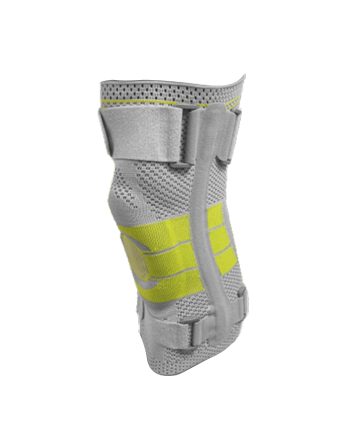
A knee stabilizer is a heavier-duty brace built to control and limit knee movement. It typically has side hinges (metal or firm plastic), strong supports, and multiple adjustable straps. It's designed for:
- Recovery after sprains, tears, or surgery
- Ongoing looseness or instability in the joint
- Protecting weak or damaged ligaments
- Situations where you need to restrict how far the knee bends or twists
Main features:
- Built with rigid or semi-rigid pieces
- Actively controls bending and side-to-side motion
- Fully adjustable with straps and hinges
- Delivers targeted reinforcement to specific parts of the knee
How They Work
Knee Sleeves: Compression and That "Extra Feel"
Knee sleeves work mostly by squeezing the joint a bit and waking up your senses. Here's the real-world effect:
- The snug pressure pushes more blood through the area, which can calm minor swelling and take the edge off soreness.
- They keep heat in, so the muscles and tendons around the knee stay looser and happier when you move.
- They sharpen your awareness of the joint's position—you just “feel” the knee better, so you naturally adjust your steps or lifts and move with more control.
Because they're soft and elastic, sleeves never fight your natural bend. They just give the knee a constant, comforting hug that makes everything feel steadier without actually locking anything down.
Knee Stabilizers: Real Movement Control
Stabilizers are built to physically manage what the knee is allowed to do. Instead of just feeling better, they step in and enforce rules on motion. Depending on the brace, they can:
- Stop the knee from collapsing inward or bowing outward (valgus/varus stress)
- Keep it from straightening too far and hyperextending
- Guide the joint through only the safe range, especially with hinged models ents are torn or stretched out, when the joint feels loose or wobbly, or when you're coming back from surgery. They don't just support—they actively take over some of the knee's job and keep it from moving in ways that could make things worse.
That's why they're the go-to when ligam
Benefits Comparison
Here's a side-by-side look at what each device offers:
|
Feature
|
Knee Sleeve
|
Knee Stabilizer
|
|
Compression
|
High
|
Moderate
|
|
Mechanical Support
|
Low
|
High
|
|
Pain Relief (Mild)
|
Yes
|
Yes
|
|
Support for Ligament Injury
|
No
|
Yes
|
|
Warmth & Blood Flow
|
High
|
Moderate
|
|
Daily Comfort
|
High
|
Moderate
|
|
Athletic Use
|
Good
|
Sport/Condition Dependent
|
|
Rehabilitation Use
|
Limited
|
High
|
Benefits of Knee Sleeves
- Knee sleeves stand out for everyday users because they offer practical benefits without much hassle:
- Easy and comfortable to wear—you can slip one on in seconds without any assistance.
- They keep the knee warm, which helps a lot during exercise or when you're dealing with minor aches.
- Much more budget-friendly compared to heavier braces.
- Excellent for injury prevention; they give you that extra sense of security so you can run, jump, or lift weights more boldly.
Benefits of Knee Stabilizers
- Knee stabilizers are built for situations that demand more robust protection, and here's why they're worth it:
- Provide serious structural support, when your knee feels wobbly or ligaments aren't holding strong.
- Ideal for rehab—they're commonly part of recovery plans after injuries or operations.
- Highly adjustable, with straps and often hinges you can tweak for a personalized fit.
- Suited to specific medical concerns, such as relieving stress on particular areas of the knee when that's what you need.
Limitations to Consider
Neither knee sleeves nor stabilizers are a one-size-fits-all fix—each has its own shortcomings you should know about.
Where Knee Sleeves Fall Short
Knee sleeves simply aren't equipped for bigger problems:
- They won't control or limit excessive movement in a genuinely unstable knee.
- They're not a substitute for proper medical-grade bracing in serious injuries.
- They provide only minimal relief for significant pain or swelling—best reserved for milder, everyday discomfort.
Potential Downsides of Knee Stabilizers
Knee stabilizers come with practical drawbacks:
- They're noticeably bulkier and heavier, which can make them feel restrictive or uncomfortable for all-day or casual use.
- Getting them on properly takes time and care—you have to position everything correctly and secure the straps.
- They tend to cost more, especially as quality, features, and customization options increase.
When to Use a Knee Sleeve
Knee sleeves are helpful when:
- You experience mild knee pain or discomfort
- Common during activity but not disabling.
- Your knees feel "cold" or stiff before exercise
- Compression helps warm up the joint.
- You're engaging in general fitness
- Running, cycling, weightlifting, HIIT workouts.
- You want a preventive measure
- If your knees feel a little weak after long periods of inactivity.
Examples:
- A runner who feels occasional knee soreness after long runs.
- A gym-goer who wants extra confidence during squats.
- Someone with mild arthritis seeking warmth and comfort.
When to Use a Knee Stabilizer
Knee stabilizers are appropriate when:
- You have a history of knee instability
- Feeling like the knee might give out.
- You're recovering from a ligament sprain or surgery
- Especially ACL, MCL, or LCL injuries.
- You need to limit certain movements
- Prevent sideways shifting or hyperextension.
- Your doctor or physical therapist recommended structured support
Examples:
- Someone returning to sport after ACL repair.
- A person with chronic ligament laxity.
- Patients with significant swelling and instability.
Special Considerations
-
- How Serious Is the Injury? If your knee pain comes on suddenly, feels intense, or comes with obvious swelling and you can't put weight on it, get checked by a doctor first. Don't just slap on a support and hope for the best—professional evaluation is essential in those cases.
- Fit Is Everything Neither sleeves nor stabilizers work well if they don't fit right. Too loose and they do almost nothing; too tight and they can cut off circulation or make things uncomfortable.
- Helpful tips:
- Measure around your knee accurately (most brands ask for the circumference just above or at the center of the kneecap).
- Test different sizes or styles when you can.
- Always check the manufacturer's sizing chart and instructions.
- Match It to Your Activity The kind of movement you do makes a big difference:
- For low-impact stuff like walking or gentle workouts, a sleeve is usually plenty.
- For high-impact sports or anything with quick side-to-side moves (think basketball, soccer, or skiing), a stabilizer offers better protection if your knee tends to feel unsteady.
- When heavy lifting, sleeves can add nice compression and comfort, but go with a stabilizer if you've had knee problems before.
- Get Expert Input If you're not sure which option suits your situation—especially after an injury, surgery, or with ongoing knee issues—talk to a physical therapist or doctor. Their advice will point you toward the safest and effective choice.
Combining Supports: Can You Use Both?
In many cases, people find it helpful to switch between the two depending on the situation or stage of recovery:
Early in rehab, a stabilizer gives the necessary control and protection; as you progress and get stronger, a sleeve provides lighter support.
During regular training, a sleeve often feels better for its snug compression, while a stabilizer comes out only for higher-risk workouts or activities.
Just be sure to follow your doctor's or therapist's recommendations when using or switching between them.
Real-Life Scenarios: Choosing What's Right
Here are a few typical scenarios to show how the decision usually plays out:
- Scenario 1: Mild Knee Soreness from Running You run for fun and occasionally feel some achiness in your knees after longer outings.
- Best choice: Knee sleeve
- Reason: It adds warmth and gentle compression that helps ease the soreness without getting in the way of your run.
- Scenario 2: Recovering After ACL Surgery You're several weeks or months out from ACL reconstruction and need to keep the joint protected.
- Best choice: Knee stabilizer
- Reason: It restricts unsafe movements and provides the structural support your knee needs while healing.
- Scenario 3: Ongoing Knee Weakness with Occasional Buckling Your knee feels unreliable at times, and you're never quite sure when it might give way.
- Best choice: Stabilizer during any demanding or unpredictable activities; sleeve for day-to-day wear
- Reason: The stabilizer offers real protection when the knee is under stress; the sleeve keeps things comfortable and secure for normal daily movement.
In the end, neither option is universally "better"—it all depends on what your knee actually needs right now. A sleeve works wonderfully for general comfort, warmth, and mild support during routine activities and workouts. A stabilizer is the smarter pick when you're dealing with instability, ligament problems, or recovery from injury. At Steriger, we're all about helping you match the support to your symptoms, activity demands, and long-term goals. Getting the right one can make a real difference in how comfortable and confident you feel while moving. If knee issues linger, always check in with a healthcare professional. Understanding these differences puts you in control—so you can choose the support that keeps you active and protected.



 English
 Español
 Deutsch
 عربى
عربى Français